Best Pet Safe Weed Killer for Lawns and Patios
Pet Safe Weed Killer Starts With The Label
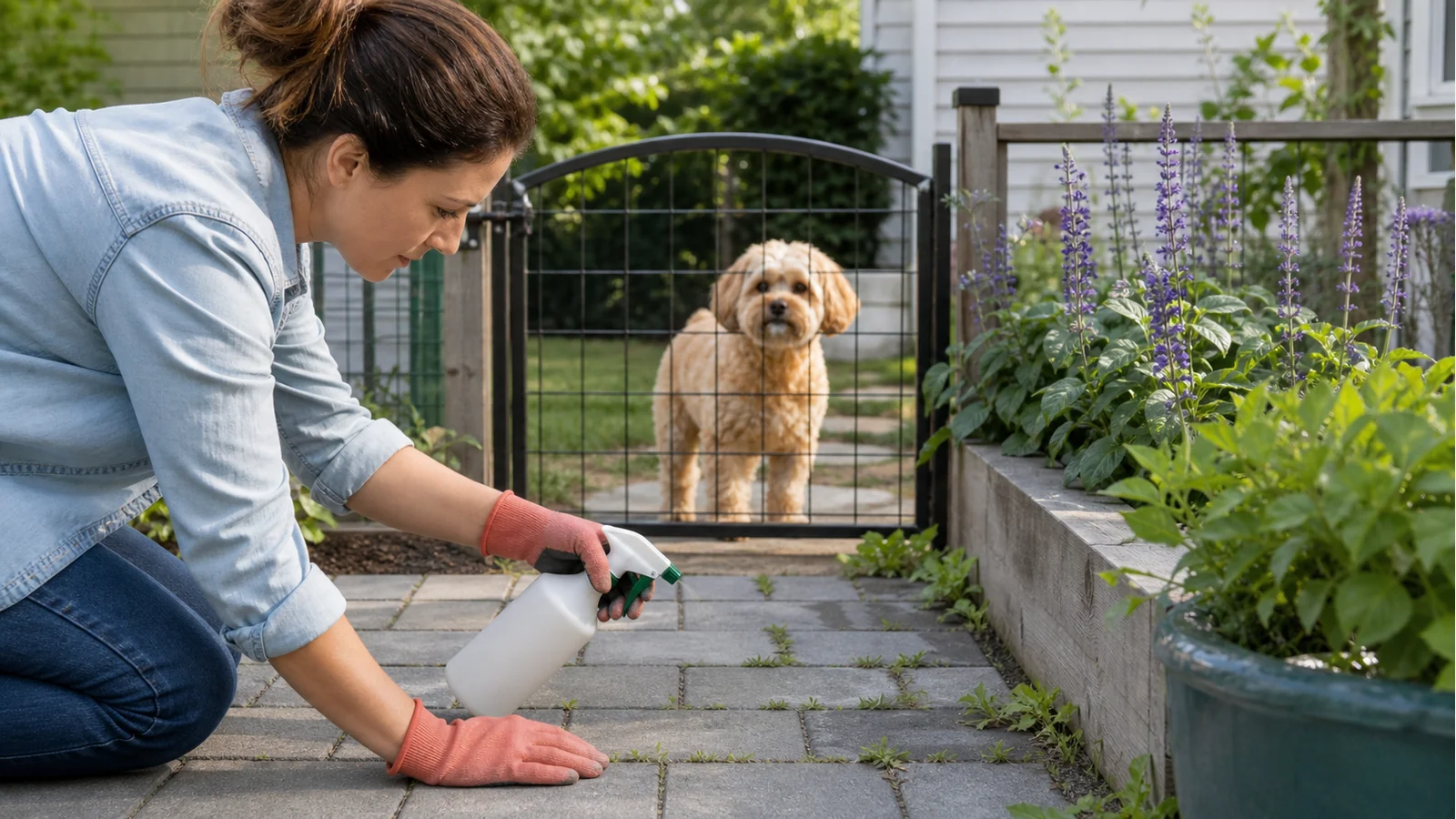
The best pet safe weed killer is not a magic spray that makes yard chemicals harmless. It is a weed-control plan that uses the least risky tool for the surface, keeps pets away during application, and follows the product label exactly. For dog and cat households, that usually means choosing spot treatments over blanket spraying, avoiding overspray, and letting treated areas dry fully before pets return.
“Natural” does not always mean gentle. Vinegar-based sprays can burn weeds, but strong acetic acid can also irritate skin, eyes, noses, and paws. Iron-based lawn products can be useful on some broadleaf weeds, but pets still need to stay off treated grass until the label says it is safe. Mechanical weeding, mulch, boiling water for cracks, and prevention often reduce how much herbicide you need at all.
Quick Picks by Yard Area
| Yard problem | Better pet-aware option | Best use |
|---|---|---|
| Patio and driveway cracks | Vinegar or fatty-acid contact herbicide | Small spot treatment away from pets |
| Young weeds in flower beds | Hand pulling plus mulch | Beds where pets sniff and dig |
| Lawn weed prevention | Corn gluten meal where appropriate | Pre-emergent timing, not existing weeds |
| Broadleaf lawn weeds | Iron-based selective herbicide | Lawns where grass should remain |
| Fence lines and gravel | Shielded spot spray or hand tool | Avoiding drift into play areas |
Best Overall: Spot Treatment With Clear Dry-Time Instructions
For many pet households, the best weed killer is a ready-to-use spot treatment with a clear pet reentry statement on the label. Look for instructions that explain where it can be used, how long to keep people and pets away, and whether the product is meant for lawns, patios, gravel, or ornamental beds.
Spot treatment matters because pets experience yards at ground level. A dog rolling in grass or a cat grooming after walking through residue has more direct contact than an adult who simply crosses the lawn. A targeted spray on a walkway crack is easier to manage than spraying an entire backyard.
Best For Patios: Vinegar-Based Contact Sprays
Vinegar-based herbicides can work well on small weeds in paver cracks, gravel edges, and other hardscape areas. They are contact killers, meaning they damage the visible plant tissue they touch. They are strongest on young weeds and less reliable on deep-rooted perennials that can regrow from the crown or root.
The pet-safety caveat is important: concentrated vinegar herbicides are much stronger than kitchen vinegar. Keep dogs, cats, and children away during application. Avoid windy days, wear gloves and eye protection, and do not let pets investigate the treated area until it is dry and no visible residue remains.
Best For Flower Beds: Hand Weeding Plus Mulch
Garden beds are where non-chemical control often wins. Pull weeds after rain or watering, when roots release more easily. Then add a two- to three-inch mulch layer while keeping mulch away from plant stems and tree trunks. This blocks light, slows new weed growth, and reduces the urge to spray around places where pets sniff.
For stubborn weeds, use a dandelion fork, hori hori, or narrow weeding tool to get below the root. This takes more time than spraying, but it is precise, cheap, and well suited to homes with pets that nap under shrubs or nose through beds.
Best For Lawn Prevention: Corn Gluten Meal
Corn gluten meal is often discussed as a pet-friendlier pre-emergent option. It is not a rescue treatment for a lawn already full of weeds. Instead, it is used before some weed seeds germinate, and it requires careful timing. If applied at the wrong time, watered incorrectly, or used on newly seeded lawns, results can disappoint.
It may fit a household that wants a lower-toxicity prevention step and accepts gradual improvement. Read the bag for application rate, timing, and lawn compatibility. Pets should still stay off the area during application until dust has settled and the label’s directions are met.
Best For Broadleaf Weeds In Grass: Iron-Based Selective Products
Some iron-based herbicides target broadleaf weeds while leaving many turf grasses intact when applied correctly. They can darken or blacken weeds quickly, which makes them satisfying for dandelions, clover, and plantain. They are not universal, and they can stain concrete, stone, and clothing.
For pet households, the useful feature is precision. Treat small patches rather than broadcasting across the whole lawn. Let the area dry, clean up spills, and prevent pets from licking damp grass. Store the container where pets cannot chew it.
Best For Gravel And Fence Lines: Shielded Application
Fence lines, gravel strips, and alley edges collect persistent weeds, but they also attract pet sniffing. Use a cardboard shield or a spray cone to prevent drift. Apply only to weed leaves, not open soil, puddles, toys, bowls, or areas where pets lie down.
If your dog patrols the fence daily, consider trimming, pulling, or using a string trimmer first. A neat mechanical pass may solve enough of the problem without chemical residue in a high-contact zone.
Ingredients And Claims To Question
Be skeptical of broad “pet friendly” or “safe for the whole family” claims that do not explain the active ingredient and reentry directions. Essential-oil herbicides, salt mixtures, and soap-based sprays can still irritate paws, eyes, and skin. Salt-heavy homemade recipes can damage soil and nearby plants. Bleach, diesel, motor oil, and other internet shortcuts do not belong in a pet yard.
Glyphosate products remain common, but whether you use them is a risk decision that should be based on the label, local rules, your comfort level, and where your pets spend time. If you do use any conventional herbicide, keep pets away until the treated area is completely dry and the label allows reentry.
Safer Application Routine
- Move bowls, toys, beds, and chews indoors.
- Keep pets inside or behind a closed gate.
- Apply on a dry, calm day to avoid drift.
- Treat only the weed, not the whole yard.
- Wait until the product is fully dry and label directions are satisfied.
- Rinse or cover high-contact hardscape if the label allows it.
- Store the container sealed, upright, and out of reach.
This routine is what turns a pet safe weed killer from a marketing phrase into a more thoughtful yard-care practice.
FAQ
Is vinegar weed killer safe for pets?
It can be lower residue after drying, but concentrated vinegar herbicides can irritate skin, eyes, noses, and paws. Keep pets away during use and until the area is dry.
How long should dogs stay off grass after weed killer?
Follow the product label first. A common minimum is until the treated area is fully dry, but some products require a longer wait.
Are homemade weed killers safer for pets?
Not automatically. Salt, strong vinegar, soaps, and essential oils can still harm plants, soil, or pets. Homemade mixes also lack tested label directions.
What is the safest way to kill weeds in a dog run?
Hand pulling, digging, mulch outside the run, and surface repair are usually better than spraying. If treatment is unavoidable, move the dog out and follow label reentry directions carefully.
Can cats be around treated weeds after they dry?
Drying reduces exposure, but cats groom their paws and fur. Keep them away until the label allows reentry and avoid spraying areas where they roll, dig, or rest.
Bottom Line
The best pet safe weed killer is usually a targeted, clearly labeled product paired with non-chemical prevention. Pull what you can, mulch where it makes sense, spot treat only where needed, and keep pets away until every treated surface is dry and the label says they can return.
You might also like
Best Pet Safe Ice Melt for Safer Winter Walks
Choose pet safe ice melt with clearer labels, gentler ingredients, and paw-care habits that reduce winter irritation.

Bed With Pet Bed: 5 Setup Styles That Work
Compare five bed with pet bed setups, from bedside co-sleepers to ramps, under-bed nooks, and washable floor beds.
Best Pet Reptile for Beginners: Low-Maintenance Picks
Compare beginner pet reptiles by handling, habitat, feeding, and upkeep so low-maintenance does not mean underprepared.