United Airlines Pet Policy: A Practical Checklist
Start With The Current United Page
United Airlines pet policy research should begin on United’s own website, not a social post or an old travel forum. Airline pet rules can change by route, aircraft, destination, season, and booking flow. A detail that was true for one traveler may not apply to your flight.
For most everyday pet owners, the key question is whether a small dog or cat can ride in the cabin inside an approved carrier that fits under the seat. United’s pet booking information is built around cats and dogs traveling in cabin, with a paid pet ticket added during booking or to an existing reservation when space is available.
Do not treat a pet ticket as permission to bring any animal on any flight. You still need the right carrier, a pet that can fit comfortably, any required destination paperwork, and a plan for the airport, security screening, layovers, and delays.
Step 1: Confirm Your Pet Is Eligible For The Cabin
United’s in-cabin pet program is for small cats and dogs. The pet must travel inside a carrier that fits under the seat in front of you, and the carrier normally counts as your under-seat item. That means your packing plan may need to change.
Before you book, check:
- Whether your pet is a cat or dog allowed under the current policy
- Whether your specific flight has in-cabin pet space available
- Whether your aircraft and seat type can accept an under-seat carrier
- Whether your route has destination, connection, or return-entry rules
- Whether your pet can remain in the carrier for the full airport and flight time
Size matters more than weight alone. A long, tall, broad, anxious, or stiff pet may not fit safely even if it is light. Your pet should be able to stay in the carrier without being forced into a cramped posture.
Step 2: Measure The Carrier, Not Just The Pet
United’s booking flow lists maximum carrier dimensions by carrier type. Hard-sided carriers are more rigid, so they must fit the stated under-seat limits exactly. Soft-sided carriers may have a little give, but they still need to fit under the seat and keep the pet contained safely.
Measure the outside of the carrier, including seams, wheels, handles, soft bulges, bedding, and ventilation panels. A carrier that looks close at home can become a problem at the airport if it will not fit or if the pet cannot rest comfortably inside.
The carrier should be leak-resistant, ventilated, secure, and escape-resistant. Zippers should lock or clip. Mesh should be strong enough for a nervous cat or dog. The bottom should support the pet without sagging into an awkward shape.
Give your pet time to practice. Put the carrier out days or weeks before travel. Feed treats inside it, add familiar bedding, and practice short calm sessions. A pet that first meets the carrier on travel day is more likely to panic, scratch, bark, or soil it.
Step 3: Add The Pet During Booking
The cleanest path is to add the pet while booking on United’s website, when the option is available. If you already have a reservation, check whether United lets you add a pet afterward or whether you need help from customer service.
Confirm the pet fee before checkout. United has listed its in-cabin pet ticket as a per-way charge, and long layovers or separate trip pieces can affect the total cost. Because fees can change, check the final amount in the booking flow instead of relying on a saved note.
Save your confirmation. Before travel, review the itinerary and make sure the pet is still attached to the correct passenger and flights. If your flight changes, your pet arrangement may need to be reconfirmed.
Avoid tight connections when possible. A pet travel day already includes security screening, restroom planning, carrier time, and stress management. A rushed layover gives you less room to solve small problems.
Step 4: Check Documents For The Route
Domestic pet travel within the mainland United States may be simpler than international travel, but it is not paperwork-free in every case. States, territories, destinations, and airlines can have their own animal health requirements.
For international travel, start early with a USDA-accredited veterinarian. Destination countries may require vaccinations, tests, treatments, microchip information, and a USDA-endorsed health certificate within a specific time window. The timing matters. Some documents cannot be fixed at the airport.
For dogs entering or returning to the United States, CDC rules may apply. Dogs may need a CDC Dog Import Form receipt, a microchip, age requirements, rabies documentation, and additional paperwork depending on where they have been in the past six months.
Cats can also face destination rules, especially for international trips, islands, and territories. Do not assume “in-cabin allowed” means “entry allowed.” Airline permission and destination entry are separate checks.
Step 5: Think About Your Pet’s Health Before You Fly
Just because a pet can fit in a carrier does not mean flying is the right choice. Air travel can be hard on pets that are elderly, very young, brachycephalic, pregnant, ill, injured, highly anxious, heat-sensitive, or unable to settle in confinement.
Talk with your veterinarian before flying if your pet has breathing issues, heart disease, seizure history, mobility pain, severe anxiety, chronic vomiting, urinary problems, or a recent illness. Ask whether the trip is reasonable and what signs would make you cancel.
Do not sedate a pet for air travel unless your veterinarian specifically recommends it for that animal. Sedation can affect balance, breathing, temperature control, and alertness. A calmer training plan, better carrier practice, or a different travel method may be safer.
If your pet is not a good cabin traveler, compare alternatives: driving, ground transport, a trusted sitter, boarding, or changing the trip. The best travel choice is the one your pet can actually tolerate.
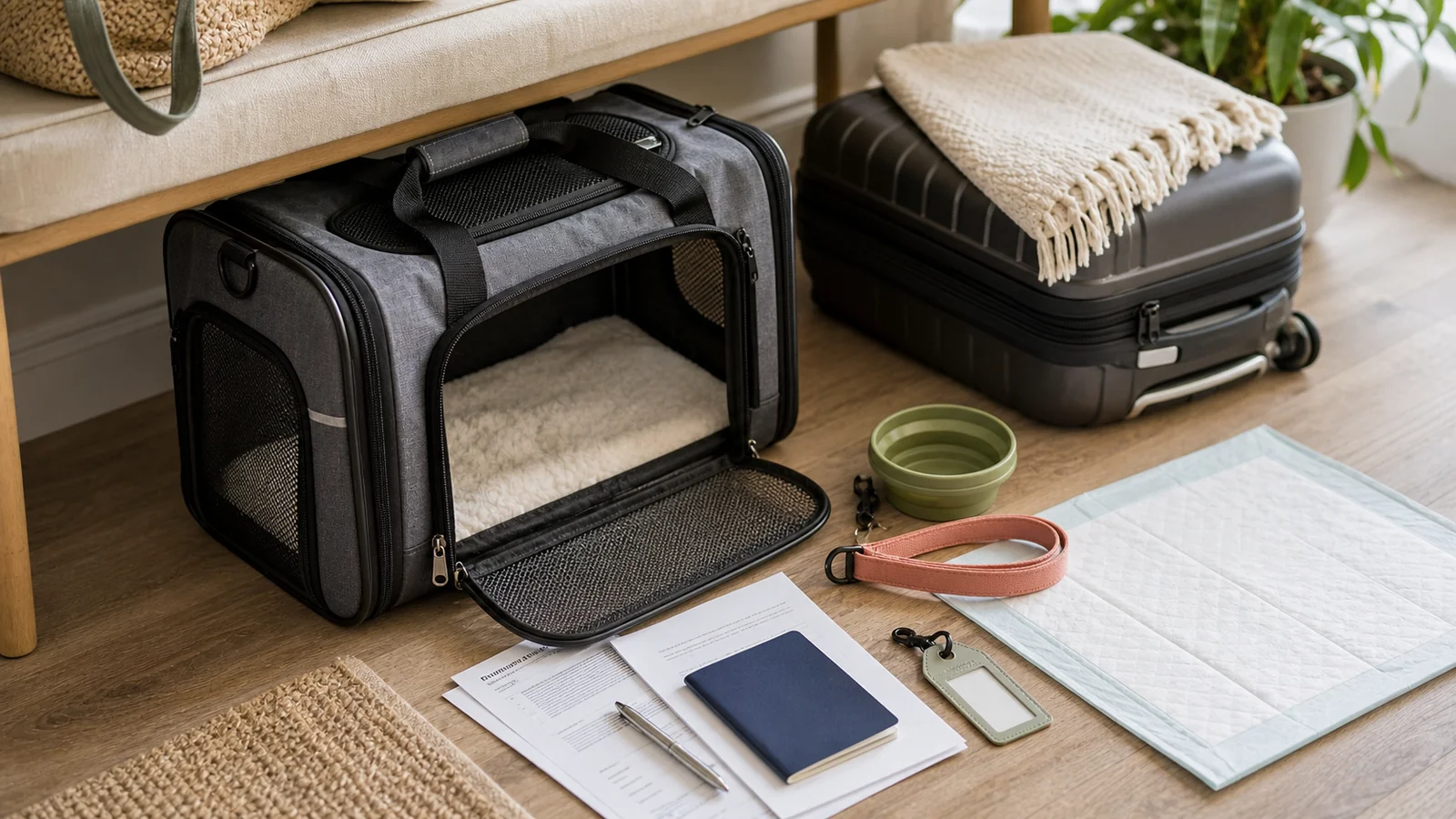
Step 6: Pack A Cabin Pet Kit
A good kit keeps the carrier simple and the essentials reachable. Do not overstuff the carrier itself. Your pet needs space, ventilation, and stable footing.
Pack:
- United pet confirmation and any health documents
- ID tag and microchip information
- Recent pet photos
- A small leash or harness for security screening
- Absorbent carrier liner and one spare
- Waste bags and wipes
- Collapsible bowl
- A small amount of regular food
- Medication with dosing instructions
- A familiar thin blanket or soft pad if it does not reduce space too much
For cats, bring a harness only if the cat has practiced with it. Many cats can slip standard harnesses when frightened. For dogs, use a secure collar or harness that will not back out if the dog startles.
If your wider trip includes hotels or rentals, use our pet friendly vacation rentals checklist to plan the arrival setup after the flight.
Step 7: Plan The Airport Routine
Arrive early enough to solve pet questions without rushing. Check United’s current instructions for where to go, because pet check-in steps can vary by airport and itinerary.
At security, you generally should expect the carrier to be screened separately while you control the pet. This is the moment when escape risk is highest for many cats and nervous small dogs. Keep the pet secured before opening the carrier, and ask TSA officers for a private screening room if you are worried about handling your pet in the open checkpoint area.
Keep your pet in the carrier inside the airport except in approved relief areas or when directed during screening. Do not unzip the carrier at the gate to “let them breathe.” A loose pet in an airport can become a serious safety problem in seconds.
During boarding and the flight, the carrier should stay under the seat, not in an overhead bin. Keep ventilation clear. Avoid feeding a full meal during the flight unless your veterinarian has advised a specific schedule.
Step 8: Build In A Backup Plan
A backup plan is part of responsible pet travel. Flights are delayed, aircraft change, seats get moved, weather shifts, and pets sometimes become too stressed to continue.
Before leaving home, know:
- How to contact United quickly
- Where the nearest airport pet relief area is
- Which nearby hotel accepts pets if you are stranded overnight
- Where the closest emergency veterinarian is at your destination
- Who can pick up your pet if the trip cannot continue
- Whether your return route has the same pet rules as the outbound route
If an airline employee, security officer, or gate agent gives instructions that seem unsafe, stay calm and ask for clarification. Your pet should not be separated from ventilation or placed somewhere the carrier cannot safely remain.
Common Mistakes To Avoid
Do not buy the carrier the night before the trip. Fit and practice both take time.
Do not assume a soft carrier can be oversized because it compresses. It still has to fit under the seat without crushing your pet.
Do not book a bulkhead or exit-row seat with a cabin pet. Those seats usually do not provide the same under-seat storage needed for a carrier.
Do not rely on a general “pet friendly” label for international travel. Destination entry rules are separate from United’s in-cabin pet policy.
Do not let your pet ride loose in the airport, on your lap during taxi, or in an unzipped carrier at the gate. The carrier is both a rule requirement and a safety tool.
FAQ
Does United Airlines allow pets in the cabin?
United allows eligible small cats and dogs to travel in the cabin on many flights when space is available and the pet fits in an approved under-seat carrier. Always confirm the current rule for your exact itinerary.
How much is the United pet fee?
United has listed an in-cabin pet ticket as a paid per-way charge. Confirm the exact amount in the booking flow before checkout because fees and trip conditions can change.
What size carrier do I need for United?
Use United’s current hard-sided or soft-sided carrier limits for your booking. Measure the outside of the carrier and make sure your pet can stay inside safely and comfortably.
Can my pet sit on my lap during a United flight?
No. Cabin pets should remain inside the approved carrier, and the carrier should stay under the seat as required during the trip.
Do I need a health certificate to fly with a pet?
It depends on the route. Domestic, state, territory, international, and return-entry rules can differ. Ask your veterinarian early and check USDA, CDC, and destination requirements.
Bottom Line
The safest way to use the United Airlines pet policy is to treat it as a checklist, not a shortcut. Confirm your exact flight, measure the carrier, add the pet to the reservation, check documents, ask your veterinarian whether flying is appropriate, and build a backup plan. A smooth pet flight starts long before you reach the airport.
You might also like
Pet Friendly Vacation Rentals: A Booking Checklist
Use this practical checklist to compare pet friendly vacation rentals, avoid surprise fees, and prepare your dog or cat for the stay.
United Pet Policy: Carrier Checklist for Flights
Use this United pet policy checklist to size a carrier, plan your seat, pack calmly, and avoid airport surprises.

Pet Friendly Restaurants Near Me: How To Check
A practical guide to finding dog-friendly restaurant patios, confirming rules, and deciding when your pet should stay home.