United Pet Policy: Carrier Checklist for Flights
Start With The United Pet Policy, Then Check Your Exact Flight
The United pet policy matters most before you buy the ticket, choose the carrier, or assume your pet can fly. United generally treats small in-cabin pets as a space-limited reservation, not as ordinary luggage. The pet has to stay inside an approved carrier under the seat, and the carrier has to work with your aircraft, seat assignment, and route.
That last part is where many trips get stressful. A carrier that fits one under-seat area may feel tight on another aircraft. A pet that curls comfortably at home may stand too tall when a gate agent checks the “stand and turn around” rule. International trips can add health, vaccine, or import requirements beyond the airline’s own rules.
Use this guide as a gear and planning checklist. Then confirm the current policy in your United reservation before travel, because airline fees, routes, aircraft rules, and document requirements can change.
Quick Pre-Booking Checklist
Before you book, answer these questions in order:
| Question | Why it matters | What to do next |
|---|---|---|
| Is your pet a small dog or cat that can stay in a carrier? | United in-cabin travel is built around under-seat carrier fit. | Measure your pet while standing and lying down. |
| Does your route allow pets in cabin? | Some aircraft, seats, destinations, and connections may limit pets. | Confirm inside the booking flow or with United before paying. |
| Will the carrier fit under your assigned seat? | The carrier is only useful if it fits the real under-seat space. | Choose a flexible soft-sided carrier when possible. |
| Can your pet remain calm while enclosed? | Pets usually need to stay inside the carrier throughout the trip. | Practice at home before the airport day. |
| Do you need destination documents? | International and some territory travel can require extra paperwork. | Check government and destination rules early. |
Step 1: Measure Your Pet Before You Shop
Do not start with the carrier listing. Start with your pet.
Measure from the tip of the nose to the base of the tail, then from the floor to the top of the head or ears when your pet is standing naturally. Also watch how your pet rests. Some cats loaf tightly. Some small dogs curl well but need more headroom when they turn. A carrier is only a good match if your pet can stand, turn around, and lie down without being pressed into an awkward shape.
For nervous pets, leave extra time for practice. Put the carrier out at home with the door open, add a familiar mat, and feed treats near it. Short, calm sessions help your pet see the carrier as a resting place instead of a trap that appears only on travel day.
Step 2: Choose The Right Carrier Style
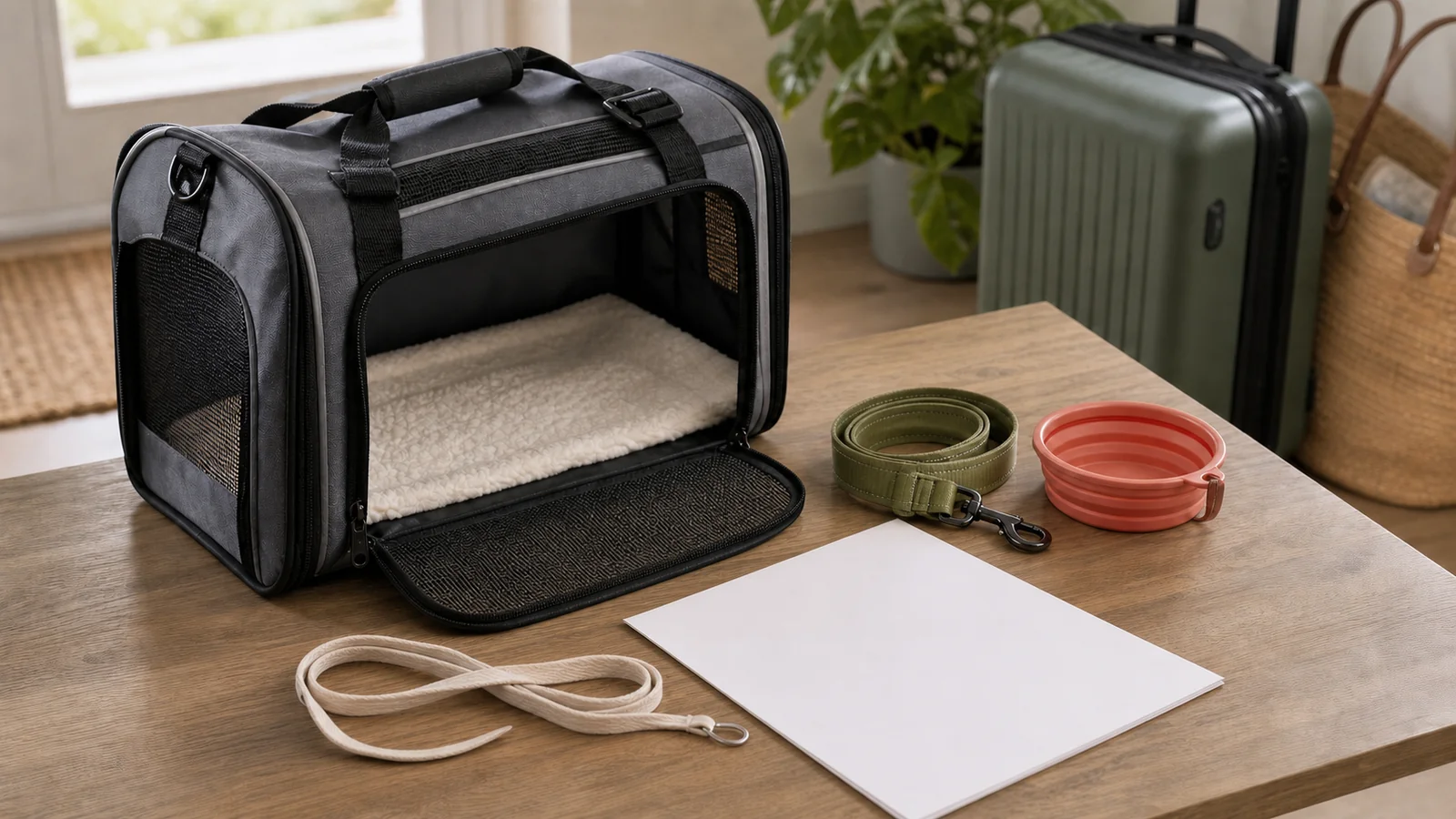
For most United pet policy trips, a soft-sided carrier is the easier choice. Soft walls can compress slightly under the seat, and the fabric sides often make it easier to work with the real shape of the under-seat space. A hard-sided kennel can be protective, but it is less forgiving if the height or corners are close.
Look for these features:
- Mesh ventilation on multiple sides
- A leak-resistant bottom
- Zippers that do not slide open easily
- A washable mat or removable liner
- A luggage sleeve if you will also use a roller bag
- Enough structure that the carrier does not collapse onto your pet
Avoid carriers that look roomy online but sag badly when carried. The best airline carrier holds its shape, gives your pet air on several sides, and still slides under the seat without force.
Step 3: Match The Carrier To Your Seat Plan
The pet carrier has to live at your feet, so seat choice is part of the gear decision. Exit rows are usually not compatible with under-seat storage. Bulkhead rows can also be a problem because there may be no under-seat space in front of you. Some aircraft have tighter middle-seat or aisle-seat footwells.
If you are traveling with another person, plan who will sit with the pet before you board. If you are trying to bring two pets, confirm the seat and reservation rules directly with United, because two carriers can require more planning than one. Do not assume you can solve that detail at the gate.
For a wider planning view, our United Airlines pet policy checklist covers booking steps, fees, and route checks. This article focuses on the carrier and gear side.
Step 4: Pack The Carrier Like A Small Travel Kit
Your carrier should be simple inside. A thin absorbent liner, a familiar soft mat, and one low-bulk comfort item are enough for most pets. Overpacking the carrier can reduce airflow and usable space.
Keep these items within reach in your personal bag:
- A collapsible water bowl
- A small amount of regular food
- Waste bags and wipes
- A spare absorbent pad
- Any veterinarian-approved medication
- Printed or saved reservation details
- Vaccine or health documents if your trip requires them
Skip loose toys that could become a choking risk or make the carrier crowded. If your pet chews fabric or zippers, test the carrier at home before trusting it in a busy airport.
Step 5: Practice The Full Airport Routine
The hardest part of the United pet policy is not always the written rule. It is the chain of small transitions: car, check-in, security, gate, boarding, taxi, flight, and arrival.
Practice lifting the carrier, setting it under a chair, opening one zipper slightly without letting your pet bolt, and asking your pet to settle again. If your pet has never been around rolling bags, announcements, or crowded rooms, try short visits to controlled public places before the trip.
At security, follow current TSA instructions. You may need to remove your pet from the carrier while the empty carrier is screened. Use a secure harness or leash, especially for cats and small dogs that might panic in a bright checkpoint.
Step 6: Keep Policy Categories Separate
Do not mix up pets, service animals, and emotional support animals. Under U.S. Department of Transportation rules, airlines must recognize trained service dogs that meet the rule requirements, but emotional support animals are not treated the same as service animals. A regular pet traveling in a carrier follows the airline’s pet policy and fees.
That distinction matters when you read advice online. A tip for a trained service dog may not apply to a pet carrier trip. A story from another traveler may also be outdated or route-specific. Use official airline and government guidance for the rules, and use owner reports only to understand common friction points.
Common Problems And Better Fixes
The Carrier Is Technically Small But Your Pet Looks Cramped
Choose a carrier with better usable interior space, not just smaller exterior numbers. Rounded corners, thick padding, and sagging roofs can steal space from your pet.
Your Pet Scratches At The Mesh
Practice with short sessions and reward quiet settling. If your pet keeps clawing hard, choose a stronger mesh carrier and ask your veterinarian about travel anxiety before the trip.
You Are Unsure About The Aircraft
Confirm the reservation directly. Aircraft swaps can happen, but getting the pet reservation and seat plan documented early gives you a better starting point.
You Need To Connect Internationally
Check airline rules, destination rules, and transit-country rules. A pet may be allowed on one flight but still need documents for the destination or connection.
Final Gear Check The Night Before
The night before the flight, pack lightly and remove anything that adds bulk inside the carrier. Charge your phone, save your reservation, and place documents in one easy pocket. Check that zippers close smoothly, the liner is clean, and your pet’s ID tag or microchip information is current.
The goal is not to outsmart the United pet policy. The goal is to make the policy easy to satisfy: a calm pet, a correctly sized carrier, a realistic seat plan, and no last-minute gear surprises.
FAQ
Does A Pet Carrier Count As A Bag On United?
United’s pet rules can affect how you pack, so confirm the current carry-on treatment in your reservation before travel. Even when another bag is allowed, you still need enough hands and space to manage the carrier safely.
Is A Soft-Sided Carrier Better Than A Hard-Sided Carrier?
For many in-cabin trips, yes. A soft-sided carrier is usually more forgiving under the seat, as long as it holds its shape and gives your pet enough room.
Can My Pet Leave The Carrier During The Flight?
Plan for your pet to stay inside the carrier under the seat for the trip. Do not count on lap time or open-carrier time unless the airline specifically permits it for your situation.
Should I Give My Pet Sedatives Before Flying?
Do not sedate your pet without veterinary guidance. Ask your veterinarian about your pet’s health, stress level, and route before using any calming medication or supplement.
You might also like
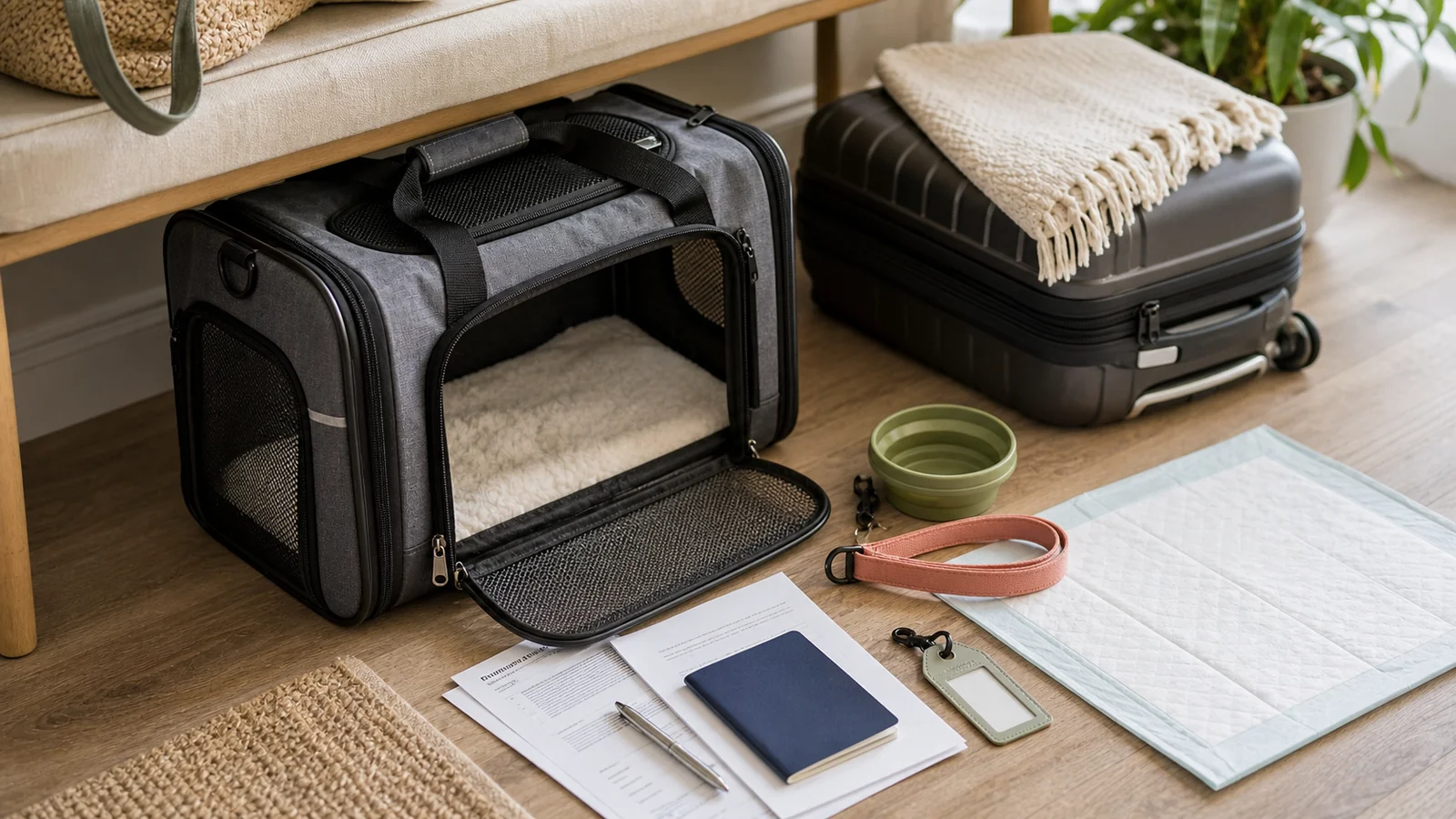
United Airlines Pet Policy: A Practical Checklist
Check United's pet rules, carrier fit, booking steps, documents, and comfort prep before flying with a dog or cat.

Pet Friendly Restaurants Near Me: How To Check
A practical guide to finding dog-friendly restaurant patios, confirming rules, and deciding when your pet should stay home.
Pet Friendly Vacation Rentals: A Booking Checklist
Use this practical checklist to compare pet friendly vacation rentals, avoid surprise fees, and prepare your dog or cat for the stay.