Pet Friendly Vacation Rentals: A Booking Checklist
Start With The Rules, Not The Photos
Pet friendly vacation rentals can make travel easier, but the phrase “pet friendly” does not mean every dog, cat, breed, size, or routine will fit. One listing may welcome one small dog with a nightly fee. Another may allow two dogs but no cats. A third may say pets are allowed but prohibit leaving them alone inside the property.
The safest approach is to compare the rules before you fall in love with the view. Look for pet fees, pet limits, weight or breed language, yard details, crate requirements, cleaning expectations, furniture rules, and nearby relief areas. If anything is unclear, message the host before booking and keep the answer in the platform’s message thread.
This checklist is built for everyday U.S. dog and cat owners using short-term rental platforms, direct-book cabins, beach houses, and vacation condos. Always confirm the current policy for the specific listing, because platform rules, host rules, building rules, and local ordinances can all matter.
Step 1: Read The Pet Policy Line By Line
Start with the listing’s pet section and house rules. Do not stop at the filter that says pets are allowed. The detailed policy is where you find the real fit.
Check these details:
- Number of pets allowed
- Dog, cat, or other pet restrictions
- Weight limits
- Breed or insurance-related restrictions
- Nightly, per-stay, or per-pet fees
- Refundable deposits or damage charges
- Whether pets can be left alone
- Crate or kennel requirements
- Furniture and bed rules
- Yard, leash, and waste cleanup rules
If you are traveling with a cat, read especially carefully. Some rentals use “pet friendly” to mean dog friendly by default. Ask whether cats are allowed, whether there are hiding spaces behind appliances, and whether any pest treatments or open stair gaps could be a concern.
Step 2: Ask The Host Specific Questions
Good host questions are short and practical. Instead of asking, “Is this place good for dogs?” ask what you need to know:
- Is the yard fully fenced, and how high is the fence?
- Are there gaps under gates or decks?
- Is the floor mostly carpet, rugs, tile, or wood?
- Where is the closest safe potty area?
- Are pets allowed on furniture if covered by a blanket?
- Can a well-crated pet be left alone for a short time?
- Are there resident pets, livestock, or neighbor dogs nearby?
- Are there stairs, slick floors, balconies, or steep paths?
For cats, ask whether windows have secure screens, whether there are fireplaces or open vents, and whether bedroom doors close firmly. Cats can hide quickly in a new property, so arrival setup matters more than the listing photos suggest.
Keep the tone friendly. Hosts are more likely to give helpful details when they can see that you are trying to prevent problems, not argue around rules.
Step 3: Match The Rental To Your Pet’s Routine
A beach cottage may look perfect but fail if your dog barks at every passerby and the house sits on a busy boardwalk. A mountain cabin may look peaceful but be difficult for a senior dog if the entry has steep stairs. A downtown condo may be convenient for people but stressful for a cat who needs quiet.
Think through your pet’s normal day:
- Where will they sleep?
- Where will they eat?
- Where will they go to the bathroom?
- Can they settle while you cook, shower, or leave briefly?
- How will you manage muddy paws, wet coats, or litter tracking?
- What is the plan if they bark, scratch, chew, or hide?
If your dog is likely to meet unfamiliar dogs around the property, brush up on polite greeting habits before the trip. Our guide to asking “Can I Pet That Dog?” is useful for reminding family members that not every dog interaction needs contact.
Step 4: Pack A Pet Rental Kit
Bring more than food and a leash. The right kit protects the property and helps your pet settle faster.
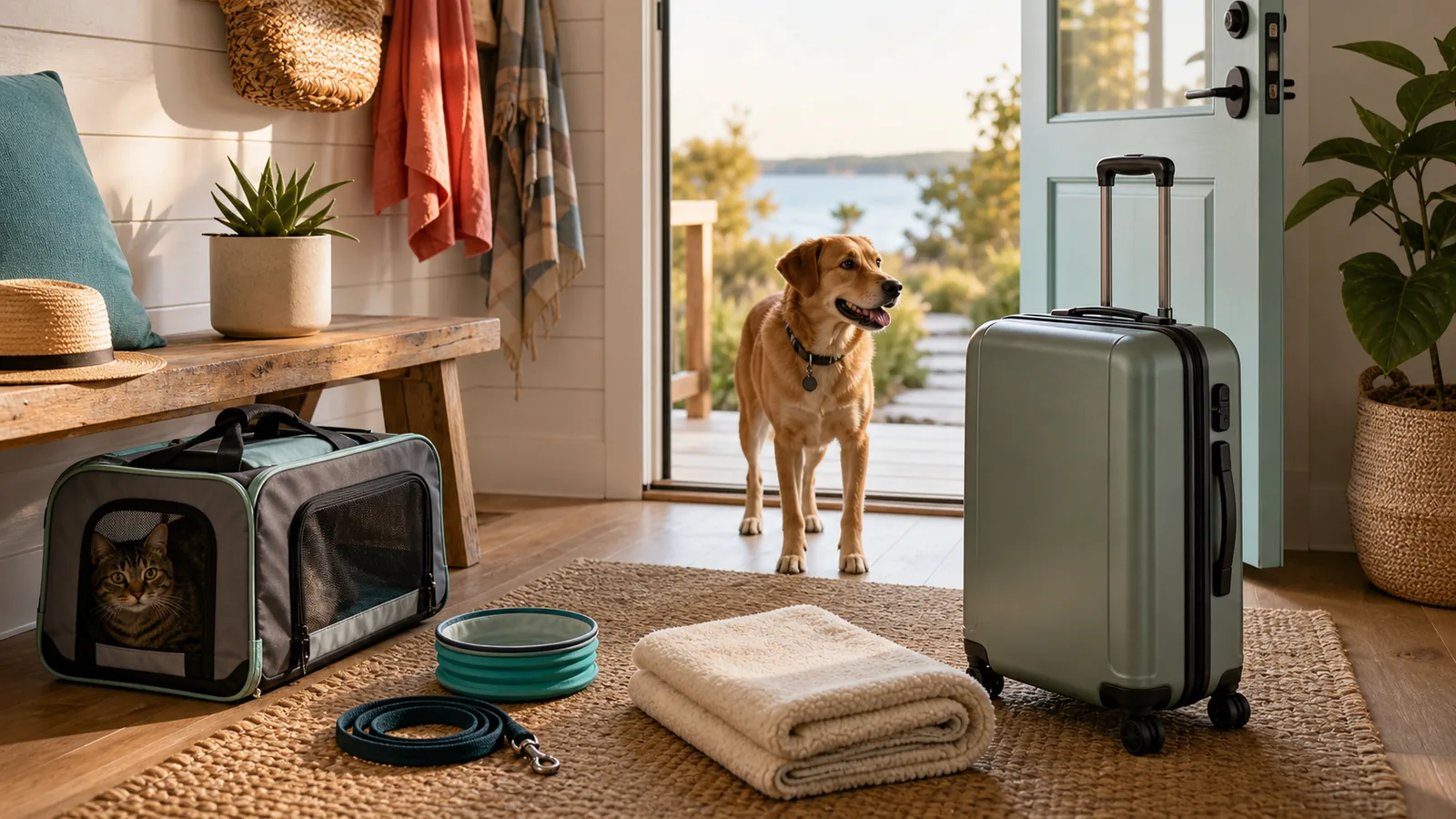
For dogs, pack food, bowls, leash, harness, collar ID, waste bags, towels, a washable blanket, medications, vaccination records if needed, a familiar bed or mat, and a crate if your dog is crate trained. Add paw wipes or extra towels for rain, sand, snow, or mud.
For cats, pack food, bowls, litter, scoop, waste bags, a travel litter box, carrier, medications, familiar bedding, and a few safe toys. Bring more litter than you think you need, especially if the rental is far from stores.
For both dogs and cats, carry recent photos and microchip information. A rental is unfamiliar territory, and a scared pet can move fast. A collar tag with your current phone number is still useful even if the pet is microchipped.
Step 5: Set Up The Space On Arrival
Before letting your pet explore, do a quick safety sweep. Look for open doors, loose screens, low balconies, pest traps, cleaning chemicals, small objects, exposed cords, fragile decor, gaps behind furniture, and food left by previous guests.
For dogs, choose one entry route for potty breaks and place towels near that door. Set up food and water where bowls will not damage floors. Use your own blanket on furniture only if the rules allow pets there.
For cats, start with one closed room. Put the litter box, food, water, carrier, and bedding inside. Let the cat decompress before opening the rest of the rental. This is often safer than letting a nervous cat vanish under a bed in the first five minutes.
Take photos of any pre-existing damage when you arrive. This is not about being suspicious; it is about avoiding confusion later if there are scratches, stains, or loose screens already present.
Step 6: Prevent Odor And Damage During The Stay
Most rental problems come from small issues that were not handled quickly: wet paws on fabric, a food spill under a cabinet, litter tracking into rugs, or an accident that was covered with fragrance instead of cleaned.
Keep pets off beds and furniture unless the listing clearly permits it. Use washable covers where allowed. Wipe paws before your dog comes inside. Scoop litter at least daily. Bag waste tightly and place it where the host instructs.
If an accident happens, act quickly and tell the host when appropriate. Blot first, avoid harsh products on unknown surfaces, and use a pet-safe cleaner if you brought one. For a deeper home routine, see our guide on how to remove pet odor, but remember that rental surfaces may need host-approved products.
Do not hide damage. A small honest message is usually easier to resolve than a surprise after checkout.
Step 7: Plan For Meals, Outings, And Alone Time
Before the trip, decide whether your pet will come with you during meals and activities. Many rentals prohibit leaving pets unattended unless crated, and some do not allow unattended pets at all. Even if the rule allows it, your pet may bark, scratch, or panic in an unfamiliar place.
Search nearby options before you arrive: dog-friendly trails, emergency veterinary clinics, pet supply stores, boarding facilities, and restaurants with pet-friendly outdoor seating. Do not assume every patio allows dogs. Local health rules and restaurant policies vary.
If your pet is anxious, keep the first day simple. A long drive, new smells, new sounds, and a different sleeping area can be enough. Give your pet time to settle before adding busy outings.
Advanced Tips For Smoother Stays
Book fewer transitions when traveling with pets. Two longer stays are usually easier than four quick check-ins, especially for cats, senior dogs, and anxious pets.
Choose flooring intentionally. Tile, sealed wood, and low-pile washable rugs are easier than wall-to-wall carpet if your pet sheds, tracks dirt, or has occasional accidents.
Read reviews for indirect pet clues. Mentions of thin walls, strict neighbors, unfenced roads, steep stairs, or poor cleaning can matter more than a generic pet-friendly badge.
Have a backup plan. Know where you would go if the rental is unsafe for your pet, the air conditioning fails, a fence is broken, or your pet becomes too stressed to stay.
FAQ
Are pet friendly vacation rentals usually okay for cats?
Not always. Many listings are written with dogs in mind. Ask the host directly whether cats are allowed and whether there are hiding, screen, balcony, or pest-treatment concerns.
What pet fees should I expect?
Fees vary by listing. Some rentals charge per stay, per night, or per pet, while others use deposits or damage charges. Confirm the exact amount before booking.
Can I leave my pet alone in a vacation rental?
Only if the listing allows it and your pet can handle it. Some hosts require crating, some prohibit unattended pets, and some buildings have noise rules.
What should I do if my pet damages something?
Document it, prevent further damage, and message the host through the booking platform or agreed channel. Honest, quick communication is usually better than hoping it goes unnoticed.
Are service animals treated the same as pets?
No. Service animals and pets are legally and practically different, and emotional support animal rules can vary by platform, property type, and location. Check current platform policy and applicable law before booking.
Bottom Line
The best pet friendly vacation rentals are not just pretty places that allow animals. They are listings whose rules, layout, floors, outdoor access, and host expectations match your pet’s real behavior. Read carefully, ask specific questions, pack for cleanup and comfort, and set up the rental before your pet has a chance to make a stressful first impression.
You might also like
United Airlines Pet Policy: A Practical Checklist
Check United's pet rules, carrier fit, booking steps, documents, and comfort prep before flying with a dog or cat.
United Pet Policy: Carrier Checklist for Flights
Use this United pet policy checklist to size a carrier, plan your seat, pack calmly, and avoid airport surprises.

Pet Friendly Restaurants Near Me: How To Check
A practical guide to finding dog-friendly restaurant patios, confirming rules, and deciding when your pet should stay home.