Best Pet Hair Vacuum: Picks by Home Type
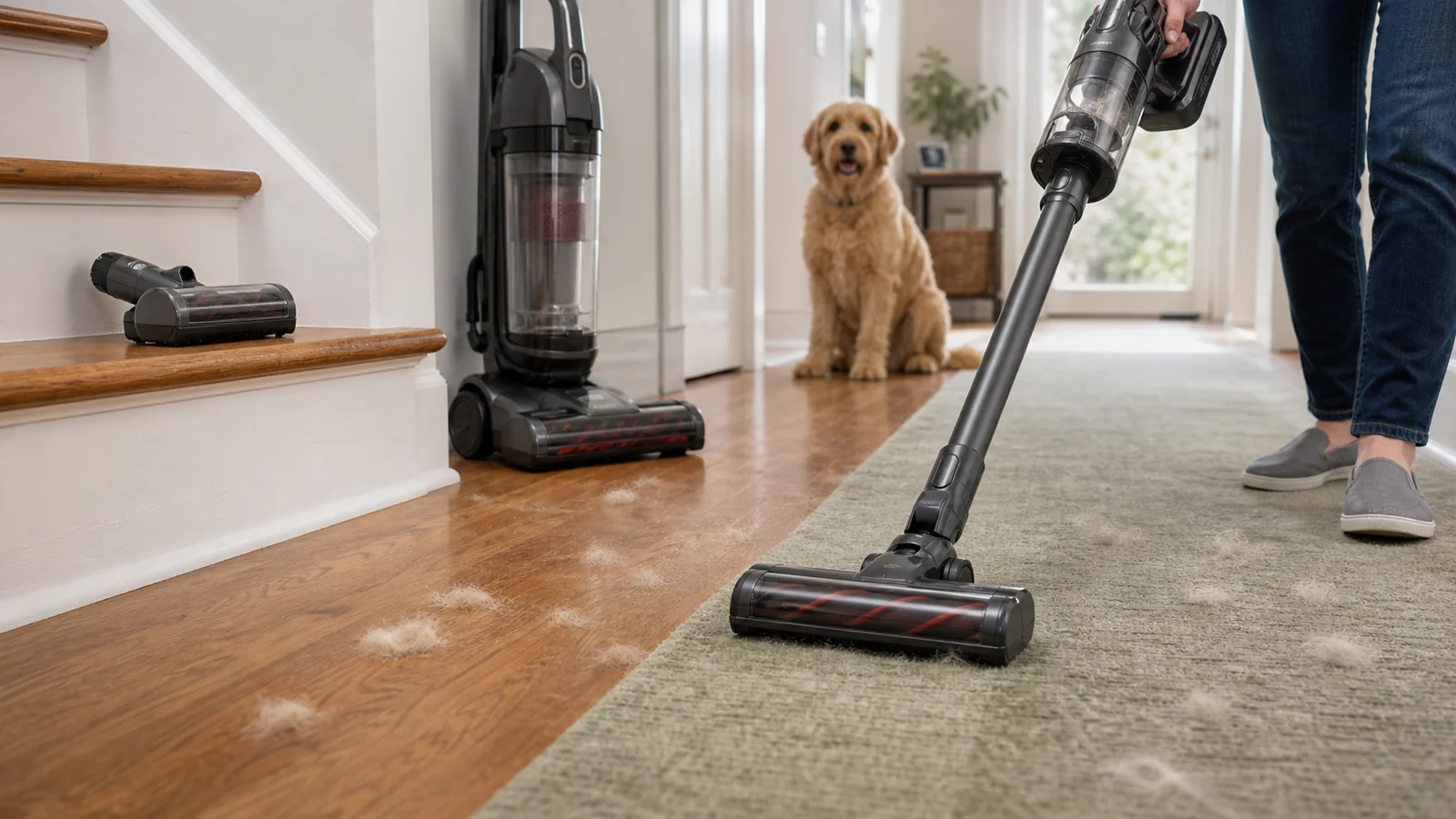
The Best Pet Hair Vacuum Depends On Your Floors
The best pet hair vacuum is not always the most expensive cordless model or the vacuum with the biggest “pet” label. It is the one that matches your flooring, shedding level, furniture, allergies, storage space, and cleaning habits.
We reviewed current vacuum testing and buying guidance from major cleaning labs and product review teams, then compared the common patterns: strong pet-hair pickup, brush-roll design, sealed filtration, usable attachments, carpet performance, hard-floor control, weight, bin size, and maintenance. This guide uses real models as examples, but the buying logic matters more than one ranking.
Quick Picks
| Home need | Best vacuum style | What to prioritize |
|---|---|---|
| Heavy dog hair on carpet | Full-size upright | Strong brush roll, suction, large bin, pet tool |
| Mixed hard floors and rugs | Cordless stick or hybrid upright | Easy floor switching and anti-tangle design |
| Cats, stairs, and furniture | Canister or handheld plus main vacuum | Motorized mini tool and flexible hose |
| Allergy-sensitive household | Bagged or sealed HEPA-style system | Clean emissions and low dust release |
| Daily maintenance | Robot vacuum plus weekly deep cleaner | Hair management and easy bin emptying |
| Budget pet home | Simple upright with pet tool | Reliable pickup over smart features |
If you have one shedding dog and wall-to-wall carpet, start with a strong upright. If you have mostly hard floors, a cordless stick may be easier to use every day.
Best Overall For Most Pet Homes: A Strong Upright
A full-size upright is still the safest first choice for many pet homes. Consumer Reports’ vacuum guidance emphasizes testing across carpet, bare floors, pet hair, suction, ease of use, noise, and emissions. That mix matters because pet hair rarely stays in one place.
Look for:
- Excellent pet-hair pickup on carpet and bare floors
- Brush roll that resists hair wrap
- A hose with enough reach for furniture
- Motorized pet tool or upholstery tool
- Sealed filtration if allergies matter
- Bin or bag capacity large enough for heavy shedding
- Weight you can manage on stairs
Models frequently appearing in pet-hair testing include Shark lift-away uprights, Kenmore pet-focused uprights, and Bissell Pet Hair Eraser-style uprights. The exact model names change, so compare current test results and specs before buying.
An upright is not always the easiest daily vacuum, but it is hard to beat when fur is embedded in carpet or rugs.
Best For Carpet And Rugs: Upright With A Real Brush Roll
Carpet traps pet hair in fibers. Suction alone is not enough. You need agitation from a brush roll that can pull hair loose without becoming a tangled mess after every room.
Prioritize:
- Strong carpet test performance
- Adjustable suction or brush settings
- Anti-hair-wrap brush design
- Easy brush-roll access
- Large dust cup or bag
- Edge cleaning near baseboards
- Pet upholstery tool
If your dog has long hair, check how easy it is to cut or remove wrapped hair from the brush roll. “Self-cleaning” helps, but no brush roll is magic.
For deep carpet cleaning, a corded upright may beat a lightweight cordless stick. Cordless vacuums are convenient, but high-power modes can drain batteries quickly in large homes.
Best For Hard Floors: Cordless Stick With Hair Control
Hard floors need a different balance. You want enough suction to collect hair, dander, crumbs, and litter dust, but not a head that scatters debris across the room.
A cordless stick can be a strong fit if:
- You clean a little every day
- Your home is mostly hardwood, tile, or vinyl
- You have low-pile rugs rather than thick carpet
- Storage space is tight
- You need quick access after brushing or litter tracking
- You are willing to empty a smaller bin often
The Dyson V15 Detect is one premium cordless model often highlighted in pet-hair testing because of its strong pickup and motorized tools. It is not the only good choice, and it may be more vacuum than some homes need. Compare battery life, replacement filters, attachment storage, and weight before paying for premium features.
For hard floors with shedding pets, a fluffy roller or soft floor head can help collect fine debris while protecting floors. For rugs, you still want a motorized brush.
Best For Allergies: Sealed Filtration And Cleaner Emptying
Pet hair is visible. Dander and fine dust are not. If someone in your home is sensitive to allergens, filtration and emptying matter almost as much as pickup.
Look for:
- Sealed HEPA-style filtration
- Strong clean-emissions testing
- Bagged design if dust release is a major concern
- Easy filter replacement
- Gaskets that seal well
- No messy cloud when emptying
Bagless bins are convenient, but dumping a bin can release dust. A bagged upright or canister may be better for allergy-sensitive homes if you are willing to buy bags.
Also remember that a vacuum is one part of the routine. Washable bedding, grooming, and air filtration help too. Our guide to the best pet air purifier for dog and cat homes explains how CADR, HEPA-style filtration, and carbon fit into a pet cleaning plan.
Best For Stairs And Furniture: Canister Or Motorized Hand Tool
Pet hair on stairs, couches, car seats, and pet beds needs a different tool than open floors. A heavy upright can clean carpet well but feel awkward on stairs.
For stairs and furniture, choose:
- Flexible hose
- Motorized mini brush
- Crevice tool
- Upholstery tool
- Lightweight body or lift-away pod
- Cord length that reaches the staircase
- Easy attachment changes
Canister vacuums can be excellent here because the hose and wand do the work while the main body stays lower. Pet-focused canisters from brands such as Miele and Kenmore often appear in testing because they combine strong tools with better reach.
If you already like your main vacuum, a separate handheld pet vacuum may solve the furniture problem. Just make sure it has a motorized or rubberized pet tool, not only a basic crevice attachment.
Best Robot Vacuum For Pet Hair: Maintenance Helper, Not Deep Cleaner
A robot vacuum can be useful in a pet home, especially for daily loose hair. It is not a full replacement for a deep cleaner.
Choose a robot if:
- You want daily maintenance between real vacuuming
- Your floors are mostly hard surface or low-pile rugs
- Pet toys and cords can be kept off the floor
- You can clean the brush roll regularly
- You accept that corners and furniture still need manual work
For pet owners, the best robot features are not gimmicks. Look for hair-resistant rollers, obstacle handling, strong app scheduling, good mapping, and an easy-to-empty bin or dock.
Homes with frequent pet accidents need extra caution. A robot that runs through a mess can create a much bigger cleaning problem.
Best Budget Choice: Simple Upright With Good Tools
Budget pet vacuums should focus on pickup, not smart features. A lower-priced upright with a decent brush roll and pet tool can outperform a weak cordless vacuum that looks nicer.
Check:
- Pet-hair testing from credible reviewers
- Brush roll access
- Replacement belt or filter availability
- Cord length
- Hose reach
- Dust cup size
- Weight
- Warranty and parts support
Good Housekeeping’s current pet-hair vacuum guide includes value-oriented upright picks alongside premium models, which is a useful reminder: you do not need every feature to clean pet hair well.
The tradeoff is convenience. A budget upright may be louder, bulkier, or less pleasant to carry. If that means you avoid using it, spend more on a vacuum you will actually pull out.
Features That Matter Most
Pet branding can hide weak basics. Check these features before any color, app, or marketing claim.
Brush-Roll Design
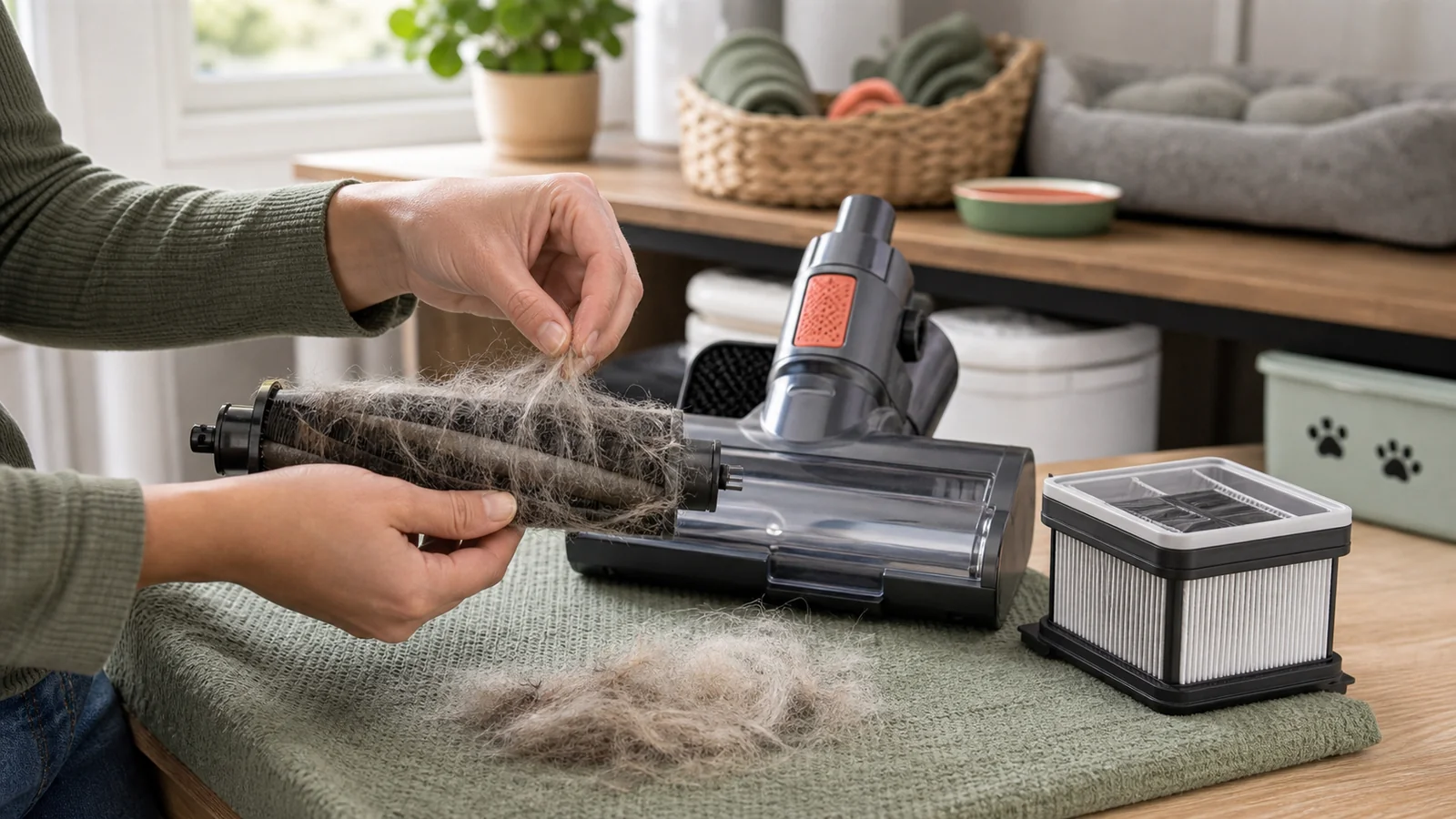
Pet hair wraps around bristles. Anti-tangle or self-cleaning brush rolls can reduce maintenance, but you still need access for cleaning.
Suction And Airflow
Strong suction helps, but airflow, head design, and sealing all work together. Look at tested performance, not only motor watts.
Filtration
Sealed filtration helps keep dust from leaking back into the room. This matters for dander, litter dust, and allergy-sensitive owners.
Attachments
Pet hair lives on upholstery, stairs, bedding, and car seats. A motorized mini tool can be more useful than several weak accessories.
Bin Or Bag Capacity
Heavy shedders fill bins fast. A tiny cordless bin may be fine for quick passes but frustrating for whole-house cleaning.
Weight And Storage
The best vacuum on paper is not useful if it is too heavy or awkward for your home. Try to compare handle weight, stair use, and storage height.
Maintenance Tips For Pet Hair Vacuums
Even a good vacuum gets worse if it is clogged with fur.
Keep performance up by:
- Emptying the bin before it is packed tight.
- Replacing or washing filters on schedule.
- Cutting hair from the brush roll.
- Checking hoses for clogs.
- Cleaning the mini motorized tool.
- Replacing worn belts or rollers.
- Vacuuming pet beds before washing them.
If your laundry is full of pet hair, deal with fabric separately too. Our Maytag Pet Pro washer review explains why washers and vacuums solve different parts of the same shedding problem.
What To Avoid
Avoid buying by one feature alone.
Be careful with:
- Very small vacuums for whole-house shedding
- Cordless models with short high-power runtime
- Weak robot vacuums in homes with thick rugs
- Bagless vacuums for severe dust sensitivity
- Brush rolls that are hard to access
- Unknown brands with no filter availability
- Vacuums that scatter litter on hard floors
- Heavy uprights if stairs are your main problem
Also avoid assuming “pet” in the model name proves strong pet-hair performance. Look for testing and practical design.
FAQ
What Type Of Vacuum Is Best For Pet Hair?
For heavy carpet hair, a strong upright is usually best. For daily hard-floor cleanup, a cordless stick may be easier. For stairs and furniture, prioritize a hose or motorized hand tool.
Is A Cordless Vacuum Enough For Pet Hair?
It can be enough for small homes, hard floors, and daily maintenance. For thick carpets, multiple pets, or long cleaning sessions, a corded upright may perform better.
Do Robot Vacuums Work For Pet Hair?
Yes, for daily loose hair on open floors. They do not fully replace manual vacuuming, upholstery tools, stair cleaning, or deep carpet passes.
Do I Need HEPA Filtration For Pets?
HEPA-style sealed filtration is helpful if dander, dust, or allergies matter. If no one is sensitive, pickup and maintenance may matter more.
How Often Should I Vacuum With Pets?
High-shedding homes may need quick daily passes plus deeper weekly cleaning. Low-shedding homes may need less, but pet beds and furniture still collect hair.
Bottom Line
The best pet hair vacuum is the one that solves your actual mess. Choose a strong upright for carpet, a cordless stick for daily hard-floor cleanup, a canister or mini motorized tool for stairs and furniture, and a robot only as maintenance support. Match the vacuum to your pet, floors, and cleaning routine, then maintain the filters and brush roll so it keeps working after the first week.
You might also like
Best Vacuum Cleaner for Pet Hair at Home
Choose a pet hair vacuum by floor type, brush design, filtration, attachments, and the mess your dog or cat leaves behind.
Best Low-Maintenance Pet Reptiles for Beginners
Compare beginner pet reptiles by feeding, space, humidity, handling, and upkeep so you can choose the easiest fit.
Best Pet Air Purifier for Dog and Cat Homes
Choose a pet air purifier by CADR, room size, HEPA filtration, carbon, noise, filter cost, and safe pet-home features.