Best Pet Air Purifier for Dog and Cat Homes
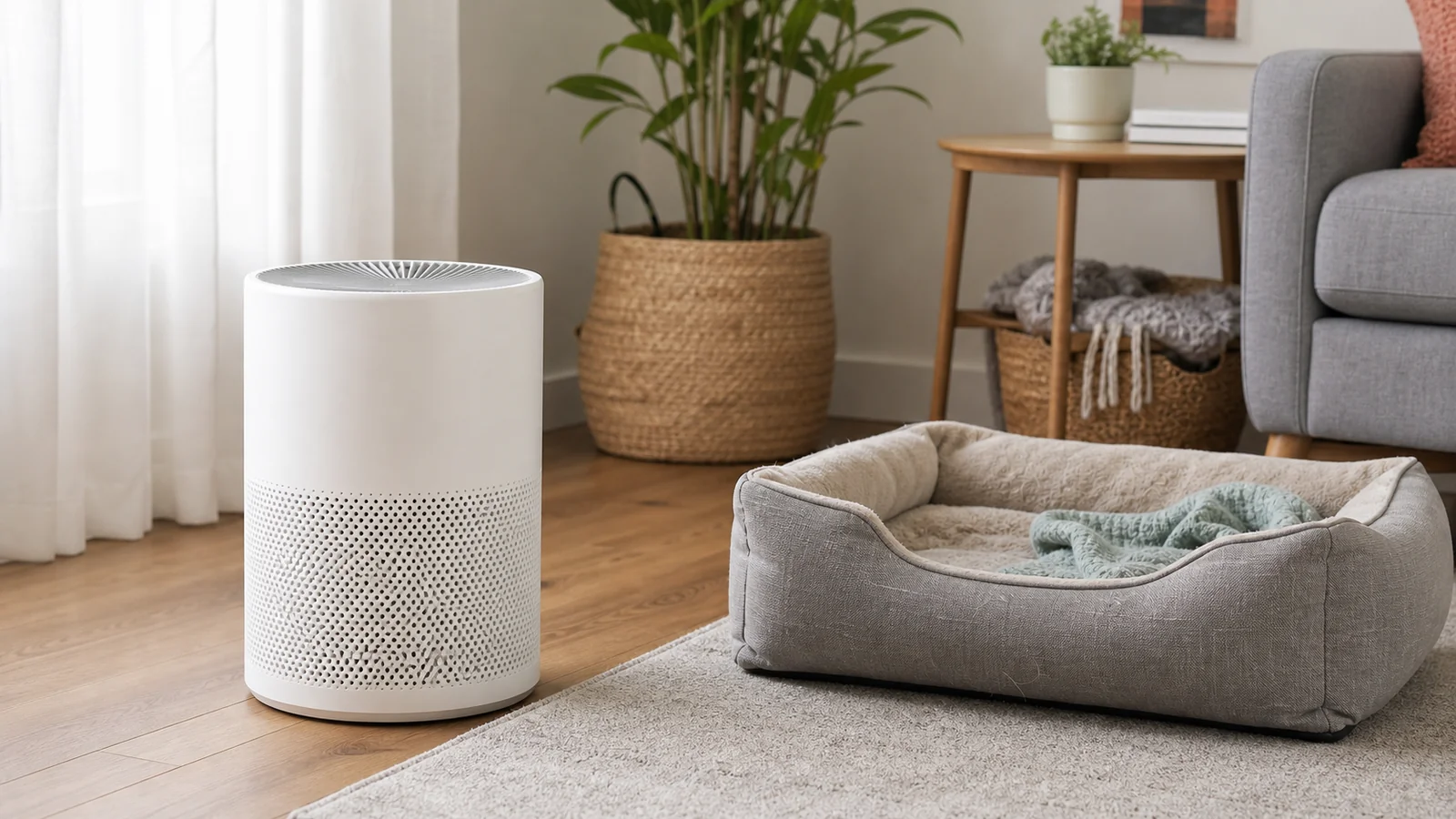
A Pet Air Purifier Should Match The Room, Not The Marketing
The best pet air purifier for your home is usually the one that moves enough air for the room, uses a real particle filter, has enough carbon for mild odor support, and is quiet enough that you will actually run it. Pet hair, dander, litter dust, outdoor pollen, and general pet smell are related, but they are not the same problem.
Air purifiers can help reduce airborne particles from pets. They cannot remove urine residue from carpet, wash a dog bed, scoop a litter box, or replace grooming. Think of an air purifier as support after cleaning and source control, not as a cure for every pet-home smell.
This guide focuses on pet owners shopping by use case instead of one-size-fits-all rankings. We looked at EPA guidance on portable air cleaners, AHAM CADR principles, California air-cleaner safety rules, and common features in major HEPA-style air purifiers.
Quick Picks By Pet-Home Need
| Need | Best air purifier style | What to prioritize |
|---|---|---|
| Main living room with a shedding dog | Large-room HEPA-style purifier | High CADR, washable prefilter, quiet medium speed |
| Bedroom with a cat | Quiet HEPA-style purifier | Sleep mode that still moves air, low light, easy filter access |
| Litter box area | HEPA plus meaningful carbon | Odor control support, but not ozone or fragrance |
| Allergy-sensitive owner | Verified particle performance | CADR matched to room size and consistent runtime |
| Budget apartment setup | Simple medium-room purifier | Affordable replacement filters and no gimmicks |
| Multi-pet home | One purifier per key zone | Proper placement over one oversized unit hidden in a corner |
These are buying categories, not lab-tested winners. A purifier that fits your room and routine will usually beat a famous model used in the wrong place.
Best Overall: A Large-Room HEPA-Style Purifier With Strong CADR
For most dog and cat homes, start with a large-room purifier that lists a Clean Air Delivery Rate, or CADR, for smoke, dust, and pollen. CADR is useful because it gives you a better sense of cleaned airflow than vague room-size claims.
EPA guidance for portable air cleaners emphasizes choosing a unit sized for the room and running it properly. A purifier that looks impressive but sits on low speed all day in an oversized living room may not do much. A properly sized unit running steadily can make a clearer difference.
Look for:
- CADR numbers that fit the room
- A true particle filter or HEPA-style filter from a credible brand
- A prefilter that catches larger hair and dust
- Replacement filters that are easy to buy
- Medium-speed noise you can live with
- No required ionizer or ozone feature
This style is best for open living rooms, bedrooms where pets sleep, and family rooms where pet bedding, rugs, and couches collect dander.
Best For Heavy Shedding: Washable Prefilter Plus Main Particle Filter
Pet hair is large compared with fine airborne particles. Much of it falls onto floors, bedding, and furniture rather than staying in the air. That is why a vacuum, brush, and washable covers still matter. But a prefilter can protect the main filter from larger hair and household dust.
A washable or easy-clean prefilter is helpful if you have a double-coated dog, long-haired cat, or multiple pets. It lets you remove visible fuzz before it clogs the expensive main filter.
Choose this setup if:
- You see hair on furniture every day
- Your purifier sits near a pet bed or couch
- You already vacuum often but still see floating dust
- You want to stretch main filter life
- You are willing to clean a prefilter regularly
Pair it with better laundry habits too. If washable pet bedding is the main source of hair, our Maytag Pet Pro washer review explains why pet-hair laundry still needs sorting and filter cleanup.
Best For Pet Dander: Verified Particle Filtration
Pet dander is made of tiny skin flakes and particles that can become airborne and settle into fabric. A purifier with strong particle filtration can help reduce what remains suspended in the room, especially when it runs continuously.
For dander, placement and runtime matter. Put the purifier in the room where the pet spends the most time, not in a hallway far away from the source. Keep doors partly open or closed depending on the room plan and product guidance. Avoid blocking the intake or outlet with furniture, curtains, or pet beds.
Also keep expectations realistic. A purifier cannot make a high-allergen home allergen-free. You still need:
- Regular vacuuming with an appropriate filter
- Washable pet bedding
- Grooming that fits the pet’s coat
- Dusting surfaces where dander settles
- Keeping pets off pillows if allergies are serious
- HVAC filter changes if the home has central air
If allergies are severe, talk with a medical professional. A pet air purifier can be part of a plan, but it should not be the whole plan.
Best For Litter Box Areas: HEPA Plus Carbon, Not Fragrance
Cat litter areas need a slightly different strategy. Fine litter dust and dander are particle problems. Waste odor is a source-control problem. A purifier can help with airborne dust and mild background smell, but it cannot compensate for a dirty box, too few boxes, or poor ventilation.
For litter areas, look for a purifier with particle filtration plus a real activated carbon layer. Thin carbon sheets may help a little with mild odor, but serious odor control usually needs more carbon media and regular replacement.
Avoid relying on fragrance cartridges, perfume sprays, or ozone generators. Fragrance can mask a problem without removing it, and ozone is not a pet-home feature to seek out. California’s air-cleaner rules are built around limiting ozone emissions from indoor air cleaning devices, which is a useful safety reminder for any pet owner.
Better litter-area habits include:
- Scoop daily
- Use enough boxes for the number of cats
- Wash or replace scratched plastic boxes
- Keep the purifier close enough to help, but not where cats block it
- Avoid blowing air directly into loose litter
- Replace filters on schedule
If odor is already embedded in floors, walls, or fabric, start with cleaning. Our guide to how to remove pet odor explains why filtration works best after the odor source is handled.
Best For Bedrooms: Quiet Operation You Will Actually Use
Bedroom purifiers need to be quiet, dark, and easy to live with. The best unit on paper is not useful if you turn it off every night because the fan or display annoys you.
For a bedroom with pets, choose a purifier with enough capacity to run below maximum speed most of the time. Many purifiers get loud at high speed. A stronger unit on medium can be more livable than an undersized unit running full blast.
Check:
- Noise ratings by fan speed
- Whether display lights can turn off
- Filter replacement cost
- Tip-over stability around cats and dogs
- Cord placement
- Whether the intake will clog against bedding or curtains
If your pet sleeps in the bedroom, keep the pet bed washable and placed where airflow can circulate. Do not put a purifier in a tight corner behind a nightstand and expect it to clean the whole room.
Best Budget Choice: Simple Filter, Clear Replacement Costs
Budget buyers should skip flashy claims and focus on total cost. A cheap purifier can become expensive if replacement filters cost too much, are hard to find, or need changing constantly.
A good budget pet air purifier should have:
- A room-size claim backed by useful CADR information
- A filter you can replace easily
- A prefilter or intake screen you can clean
- Plain controls
- No required app subscription
- No mandatory ionizer
- A shape that fits where pets will not knock it over
Do not buy the smallest unit because it is inexpensive. If the room is too large, you may run it constantly and still feel disappointed. It is usually better to buy one appropriately sized purifier for the main problem room than several weak units that do little.
Features That Matter More Than Pet Branding
Many purifiers use pet photos in marketing. The useful features are more practical.
CADR And Room Size
CADR helps compare how much clean air a purifier can deliver. Match the unit to the room where you will use it. Be careful with room-size claims based on low air changes per hour, because pet homes often benefit from more frequent air movement.
Filter Type
Look for credible particle filtration. HEPA language can be confusing, so read the filter description and replacement details. If a brand avoids giving useful specs, keep shopping.
Carbon For Odor
Activated carbon can help with mild smells, but it saturates. If odor is a major concern, look for meaningful carbon capacity and plan for replacement. Do not expect carbon to fix dirty bedding, urine spots, or a neglected litter box.
Noise
Check the sound level at the speed you will actually use. High speed is often for short bursts. Medium or low speed is what most households tolerate for daily operation.
Filter Cost
Pet homes can load filters faster than pet-free homes. Calculate yearly replacement cost before buying. A purifier is not a one-time purchase.
Safety Around Pets
Avoid unstable tower shapes if your dog bumps furniture or your cat jumps on appliances. Keep cords out of chewing range. Choose models that do not require ozone, fragrance, or exposed UV features for normal operation.
How To Use A Pet Air Purifier Better
The right purifier still needs the right routine.
- Put it in the room where the pet problem starts.
- Give the intake and outlet open space.
- Run it long enough to matter.
- Use higher speed during cleaning, brushing, or litter changes.
- Clean prefilters before they mat with hair.
- Replace main filters on schedule.
- Keep washing bedding and vacuuming floors.
Air movement can stir settled dust at first, especially when you clean. That does not mean the purifier is failing. It means the room needs a whole routine: source control, surface cleaning, airflow, and filtration.
FAQ
Do Air Purifiers Help With Pet Hair?
They can capture some airborne hair and dust, but most pet hair settles on surfaces. Use a purifier with a prefilter, and keep vacuuming, brushing, and washing pet bedding.
What Type Of Filter Is Best For Pet Dander?
A strong particle filter, often described as HEPA or HEPA-style, is the key feature. Match the purifier’s CADR and room size to where your pet spends time.
Will A Pet Air Purifier Remove Litter Box Smell?
It may reduce mild background odor if it has enough activated carbon, but it will not replace scooping, box washing, and good litter habits.
Are Ionizers Safe Around Pets?
Be cautious. Pet owners should avoid purifiers that rely on ozone or require ionizing features. Choose mechanical filtration you can run without optional ion or ozone modes.
Where Should I Put An Air Purifier In A Pet Home?
Place it in the room where pets sleep, shed, or use the litter box, with open space around the intake and outlet. Do not hide it behind furniture.
Bottom Line
The best pet air purifier is not simply the one with a paw print on the box. Choose by room size, CADR, particle filtration, carbon needs, noise, filter cost, and pet-safe operation. For most dog and cat homes, a steady HEPA-style purifier with a cleanable prefilter is the strongest starting point. Use it alongside grooming, vacuuming, washable bedding, and odor cleanup, and it can make pet rooms feel fresher without pretending to do every job.
You might also like
Best Vacuum Cleaner for Pet Hair at Home
Choose a pet hair vacuum by floor type, brush design, filtration, attachments, and the mess your dog or cat leaves behind.
Best Low-Maintenance Pet Reptiles for Beginners
Compare beginner pet reptiles by feeding, space, humidity, handling, and upkeep so you can choose the easiest fit.
Best Pet Hair Vacuum: Picks by Home Type
Choose the best pet hair vacuum for carpet, hard floors, stairs, allergies, robots, and daily dog or cat cleanup.