Best Vacuum Cleaner for Pet Hair at Home
Start With The Mess, Not The Vacuum Label
The best vacuum cleaner for pet hair is the one that matches your floors, your pet’s coat, and the places hair actually collects. A vacuum with “pet” in the name can still be frustrating if the brush roll tangles, the filter leaks dust, or the hose cannot reach your sofa.
We looked at common testing patterns from vacuum review labs, retailer product data, and practical pet-home cleaning needs. The strongest guides compare pet-hair pickup, carpet performance, bare-floor control, filtration, attachments, weight, bin size, battery life, and maintenance. That mix is more useful than chasing one universal winner.
If you want a broader shortlist by home type, our best pet hair vacuum guide covers upright, cordless, canister, robot, and budget categories. This guide goes deeper on how to choose the right vacuum cleaner before you buy.
Quick Match By Home Type
| Your pet home | Best vacuum cleaner style | Why it works |
|---|---|---|
| Wall-to-wall carpet and heavy shedding | Full-size upright | Strong brush agitation and larger capacity |
| Mostly hard floors with rugs | Cordless stick or hybrid upright | Easy daily cleanup and floor switching |
| Stairs, couches, and car seats | Canister or lift-away upright | Hose reach and motorized mini tools matter |
| Allergy-sensitive household | Bagged or sealed HEPA-style vacuum | Cleaner exhaust and less dust release |
| Daily loose hair between deep cleans | Robot plus manual vacuum | Good maintenance, not a full replacement |
| Small apartment with one cat | Compact cordless or small canister | Light, easy storage, quick access |
The right choice may be a two-tool setup. Many pet homes do best with one strong deep cleaner and one fast daily cleaner.
What Makes A Vacuum Good For Pet Hair?
Pet hair creates three separate problems. Long hair wraps around brushes. Short hair embeds in carpet and upholstery. Dander, litter dust, and fine debris move through the vacuum and can escape if the seal is weak.
A good pet hair vacuum cleaner needs:
- A brush roll that agitates carpet without constant tangles
- Strong pickup on both carpet and hard floors
- A floor head that does not scatter kibble or litter
- A motorized mini tool for couches and stairs
- Sealed filtration when allergies matter
- A bin or bag that does not fill after one room
- Easy access to filters, rollers, and clogs
- Weight and storage that fit your real routine
Pet homes also need repeatability. If the vacuum is too heavy, too loud, too messy to empty, or too annoying to clean, it will not get used often enough.
Best For Heavy Shedding On Carpet: Full-Size Upright
For dogs and cats that shed into carpet, a full-size upright is usually the safest first category to compare. Carpet needs agitation. Suction alone cannot pull every hair out of fibers, especially in high-traffic rooms, bedroom rugs, and stair treads.
Look for an upright with adjustable suction, a strong brush roll, a wide cleaning path, and a hose that reaches furniture. Lift-away designs can help if you clean stairs often. A larger dust cup or bag also matters in homes with double-coated dogs or multiple pets.
Be careful with very light vacuums that feel easy in the store but have weak carpet performance. They may skim surface hair while leaving embedded fur behind.
Best For Hard Floors: Cordless Stick With Good Floor Control
Hard floors are easier in one way and harder in another. Hair is visible and loose, but litter, crumbs, and kibble can scatter if the vacuum head is poorly designed.
A cordless stick can be a strong fit when you clean small messes every day. It is easy to grab after brushing a dog, sweeping around a litter box, or cleaning under a feeding station. The tradeoff is capacity and runtime. High-power modes can drain batteries quickly, and small bins fill fast in heavy-shedding homes.
For hard floors, compare:
- Soft or multi-surface roller design
- Debris scatter control
- Edge cleaning near baseboards
- Battery life on the mode you will use
- Easy bin emptying
- Filter washing or replacement schedule
- Wall mount or closet storage
If your hard-floor home also has thick rugs, make sure the cordless vacuum has a motorized head strong enough for those rugs.
Best For Stairs And Furniture: Hose Reach And Mini Tools
Pet hair often collects where a standard floor head cannot help: couch seams, stair corners, pet beds, car seats, and fabric crates. For those areas, attachment design matters more than the main vacuum shape.
Prioritize a motorized mini brush or a strong rubberized upholstery tool. A basic crevice tool is useful, but it will not replace an active brush on fabric. Canister vacuums, lift-away uprights, and some cordless systems can all work if the hose and tool design are practical.
Check how the vacuum feels on stairs before you buy. A heavy upright with a short hose can be awkward. A canister may be easier because the body stays on a lower step while you clean with the wand.
Best For Allergies: Sealed Filtration And Cleaner Emptying
Pet hair is only the visible part. Dander, dust, pollen, and litter particles can matter more for allergy-sensitive homes.
Look for sealed filtration, not only a HEPA-style filter label. A filter helps only if the vacuum body also keeps air from leaking around it. Bagged vacuums can be a cleaner choice because the dirt stays contained during disposal. Bagless models can still work, but emptying may release dust.
For allergy-focused homes, also compare noise, exhaust direction, replacement filter cost, and how often the vacuum needs maintenance. If your home also struggles with airborne pet odor or dust, our guide to the best pet air purifier for dog and cat homes explains how vacuuming and filtration support each other.
Robot Vacuums Help, But They Do Not Replace Deep Cleaning
A robot vacuum can be useful for daily loose hair on open floors. It is less useful for stairs, upholstery, thick carpet, corners, and pet beds.
Choose a robot vacuum for maintenance if your floors are usually clear of toys, cords, socks, and bowls. For pets, the most useful robot features are hair-resistant rollers, reliable mapping, obstacle handling, strong edge cleaning, and an easy bin or self-empty dock.
Do not rely on a robot around pet accidents. A robot that runs through a mess can spread it across the room. If accidents are possible, use schedules carefully and supervise new routines.
Bagged Vs Bagless For Pet Hair
Bagless vacuums are convenient because you do not need to buy bags. They also let you see when the bin is full. The downside is dust release during emptying and more frequent filter care.
Bagged vacuums cost more over time because bags need replacement, but they can be cleaner to empty. They are often worth considering for allergy-sensitive homes or owners who hate dust clouds.
Here is the simple split:
| Choice | Better for | Watch out for |
|---|---|---|
| Bagless | Convenience, no bag purchases, visible fill level | Dusty emptying and frequent filter cleaning |
| Bagged | Cleaner disposal, allergies, heavy debris | Ongoing bag cost and bag availability |
Neither format is automatically better for pickup. The floor head, suction, airflow, and sealing matter more.
Corded Vs Cordless For Pet Owners
Cordless vacuums make quick cleaning easier. That is a real advantage in pet homes because hair returns every day. A vacuum you use often can beat a stronger one that stays in the closet.
Corded vacuums still have advantages for whole-home cleaning. They do not lose power because a battery is low, and many full-size models offer stronger carpet cleaning for the price.
Choose cordless if you have mostly hard floors, a smaller home, or frequent quick messes. Choose corded if you have thick carpet, multiple shedding pets, or long cleaning sessions.
Many owners land in the middle: a cordless stick for daily hair and a corded upright or canister for weekly deep cleaning.
Maintenance Matters More Than Marketing
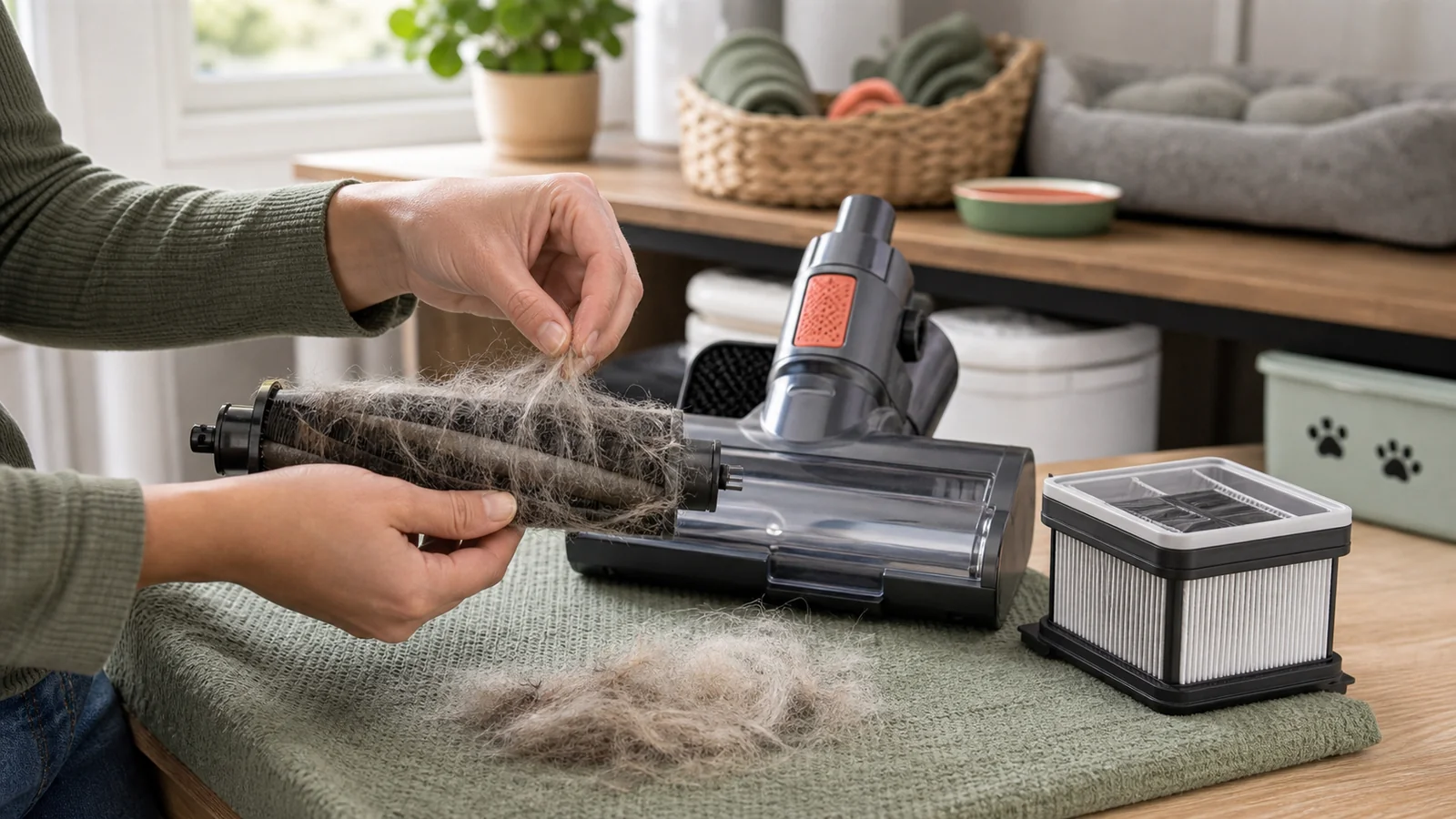
Pet hair vacuums need regular care. Even an excellent vacuum gets weaker when the brush roll is wrapped, the filter is packed, or the hose is partly clogged.
Build a simple routine:
- Empty the bin or replace the bag before it is packed tight.
- Cut hair from the brush roll after heavy cleaning.
- Wash or replace filters on the schedule in the manual.
- Check the mini motorized tool for wrapped hair.
- Inspect hoses if suction drops suddenly.
- Wipe sensors on robot vacuums.
- Keep replacement filters and bags available.
For long-haired pets, brush-roll access is not a small detail. If you need tools and ten minutes just to reach the roller, you may avoid maintenance until performance drops.
Buying Checklist
Before choosing a vacuum cleaner for pet hair, answer these questions:
- Are your floors mostly carpet, hard surface, or mixed?
- Does your pet shed long hair, short hair, undercoat, or all of the above?
- Do you clean stairs, couches, or car seats often?
- Does anyone in the home have dust or dander sensitivity?
- Do you prefer bagged disposal or bagless convenience?
- Can you carry the vacuum comfortably?
- Is there space to store attachments where you will use them?
- Are replacement filters, bags, and rollers easy to find?
- Does the return policy let you test it in your actual home?
The return policy matters because pet homes vary. A vacuum that works beautifully on one rug may scatter litter on another floor.
Common Mistakes To Avoid
Avoid buying only by suction claims. Airflow, head design, brush agitation, and sealing all affect real pickup.
Also avoid these traps:
- Choosing a tiny cordless vacuum for a large, hairy carpeted home
- Assuming every “pet” model has a useful mini motorized tool
- Ignoring brush-roll maintenance
- Buying a robot vacuum as your only cleaner
- Choosing bagless if dust clouds bother you
- Forgetting stairs and furniture
- Paying for smart features while skipping basics
The best vacuum cleaner for pet hair should make the weekly routine easier, not add another fussy product to manage.
FAQ
What Type Of Vacuum Cleaner Is Best For Pet Hair?
For heavy carpet hair, a full-size upright is usually best. For daily hard-floor hair, a cordless stick can be easier. For stairs and upholstery, prioritize a hose and motorized mini tool.
Is A Cordless Vacuum Strong Enough For Pet Hair?
It can be strong enough for small homes, hard floors, rugs, and daily cleanup. For thick carpet, multiple pets, or long sessions, a corded upright or canister may perform better.
Do I Need HEPA Filtration For Pet Hair?
HEPA-style sealed filtration is most helpful when dander, dust, or allergies matter. If allergies are not a concern, brush design and pickup may matter more.
Are Robot Vacuums Good For Pet Hair?
Robot vacuums are useful for daily loose hair on open floors. They do not replace manual cleaning for stairs, sofas, corners, pet beds, or deep carpet.
How Often Should I Clean The Brush Roll?
Check it after heavy pet-hair cleaning or whenever pickup drops. Long-haired dogs and cats may require weekly brush-roll cleaning during shedding season.
Bottom Line
The best vacuum cleaner for pet hair is not one specific model for every home. Start with your floors, shedding level, allergies, and cleaning habits. Then compare brush-roll design, filtration, attachments, capacity, weight, and maintenance access. A practical vacuum that fits your routine will remove more hair over time than a powerful model you rarely want to use.
You might also like
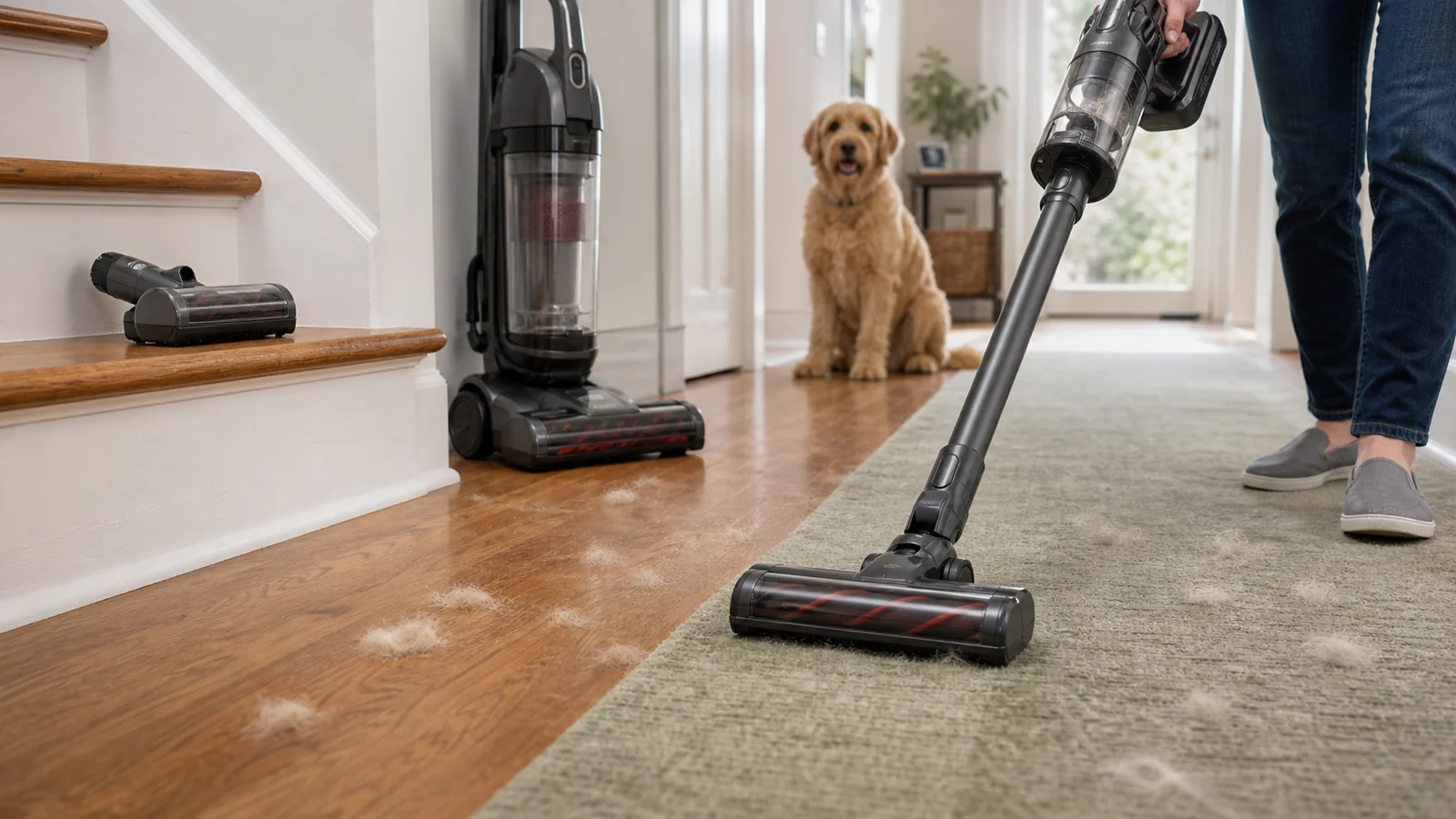
Best Pet Hair Vacuum: Picks by Home Type
Choose the best pet hair vacuum for carpet, hard floors, stairs, allergies, robots, and daily dog or cat cleanup.
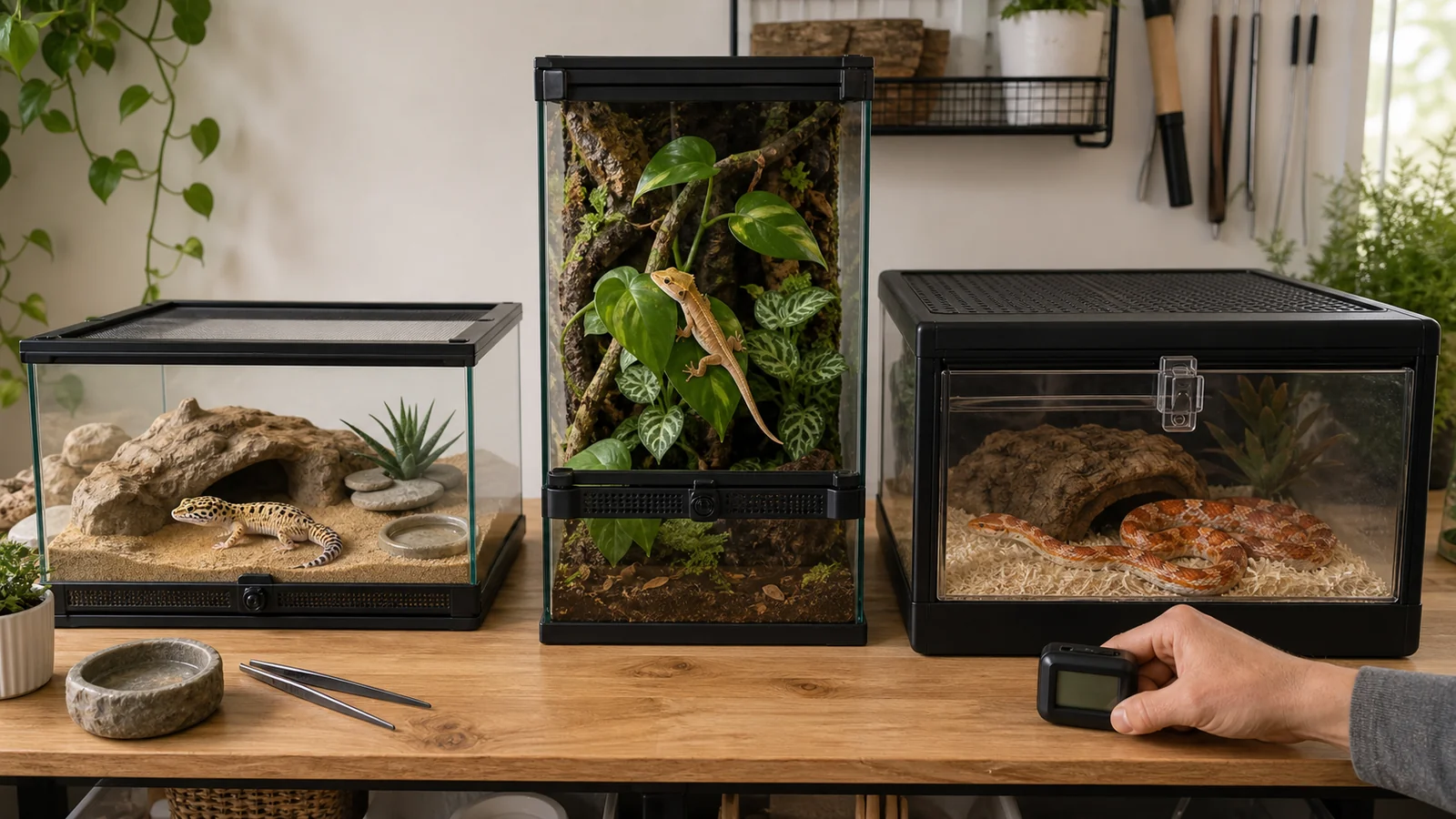
Best Low-Maintenance Pet Reptiles for Beginners
Compare beginner pet reptiles by feeding, space, humidity, handling, and upkeep so you can choose the easiest fit.
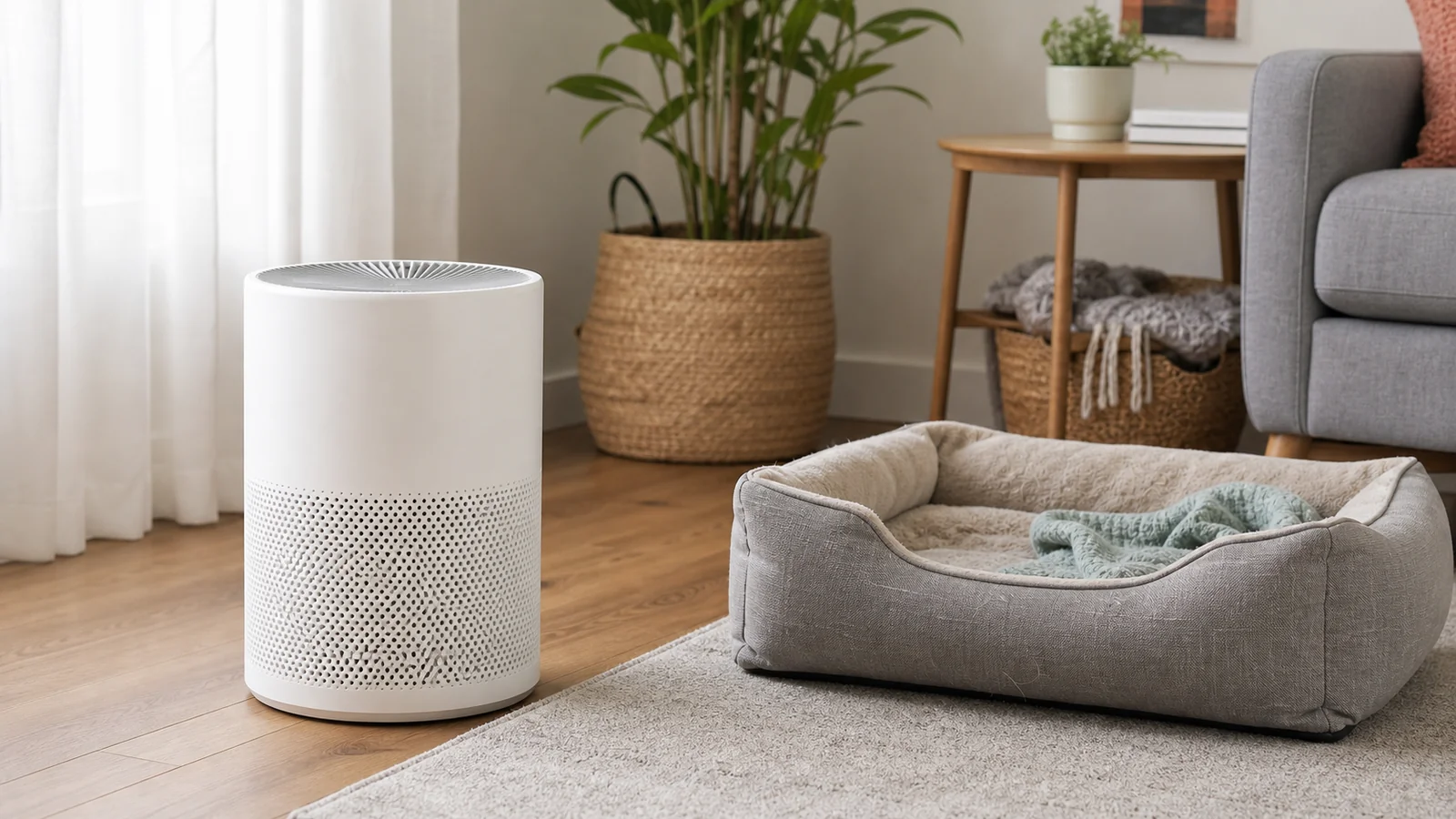
Best Pet Air Purifier for Dog and Cat Homes
Choose a pet air purifier by CADR, room size, HEPA filtration, carbon, noise, filter cost, and safe pet-home features.