Can I Pet That Dog? A Safer Way To Ask
The Short Answer
“Can I pet that dog?” is a good question, but it is only the first step. A safer greeting needs three yeses: the handler says yes, the dog looks comfortable, and the dog chooses to come closer. If any one of those is missing, the polite answer is to admire the dog from a distance.
Many friendly dogs enjoy attention from strangers. Others are nervous, in training, recovering from an injury, guarding personal space, overwhelmed by noise, or simply not interested. A wagging tail does not automatically mean a dog wants to be touched, and a quiet dog is not always a relaxed dog.
The goal is not to make every greeting complicated. It is to slow the moment down enough for the dog and handler to communicate clearly. That small pause can prevent fear, jumping, snapping, and awkward pressure on the person holding the leash.
Step 1: Ask The Handler First
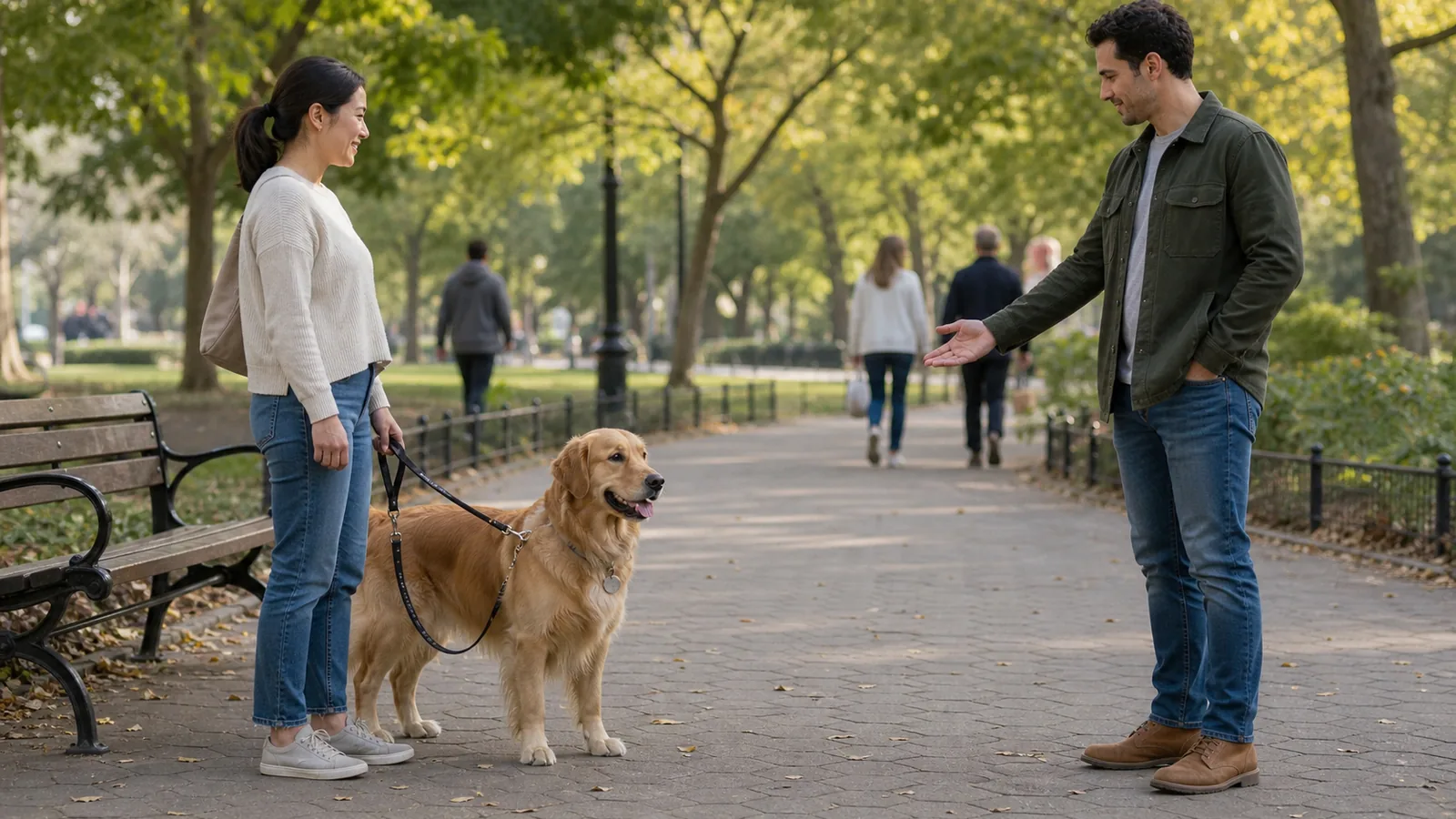
Ask the person before you move toward the dog. Keep your body relaxed, stay a few steps away, and use a simple question: “Is your dog comfortable saying hello?” That wording is better than assuming the dog is friendly because it gives the handler an easy way to say no.
If the handler says no, accept it immediately. Do not ask why, do not negotiate, and do not tell them that dogs usually love you. A no may mean the dog is nervous, reactive, working, elderly, in pain, newly adopted, or practicing calm leash skills.
If the handler says yes, keep waiting. Permission from the person is not the same as permission from the dog. The next step is reading whether the dog wants the interaction too.
Step 2: Check The Dog’s Body Language
Look at the whole dog, not just the tail. A comfortable dog usually has loose muscles, soft eyes, a relaxed mouth, a neutral or gently wagging tail, and the ability to move away. The dog may curve toward you, sniff, or glance back at the handler without looking trapped.
Pause if you see stiff posture, a tucked tail, ears pinned back, closed mouth, whale eye, yawning, lip licking, turning away, backing up, hiding behind the handler, growling, barking, or repeated jumping. Some of those signals can have more than one meaning, but they all tell you to slow down.
Also consider the environment. A dog who might greet calmly in a quiet driveway may struggle on a crowded sidewalk, outside a school, near bicycles, or around other dogs. Noise, tight spaces, and fast movement make greetings harder.
Step 3: Let The Dog Choose To Approach
Instead of stepping into the dog’s space, turn slightly sideways and invite the dog to come to you. Keep your hands low and relaxed. You do not need to shove a hand toward the dog’s nose; dogs can smell you without a formal handshake.
If the dog does not come closer, that is your answer. Smile, thank the handler, and move on. A dog who stays behind the handler or leans away is making a choice, even if the owner has said the dog is friendly.
If the dog approaches loosely, let them sniff for a moment. Stay calm and avoid high-pitched squeals, sudden bending over the dog, or direct staring. Many dogs find face-to-face leaning intense, especially from strangers.
Step 4: Pet In A Low-Pressure Way
Start with a brief touch on the chest, shoulder, or side rather than reaching over the top of the head. Many dogs tolerate head pats, but that does not mean they prefer them. Pet for two or three seconds, then stop and see what the dog does.
This pause is sometimes called a consent check. If the dog leans in, stays loose, or nudges for more, you may continue. If the dog turns away, steps back, freezes, licks lips, or looks to the handler, stop. The dog does not owe you more contact.
Keep greetings short. A good dog interaction can be five calm seconds. Long greetings increase the chance of crowding, overexcitement, leash tangles, and mixed signals.
What Kids Should Do Differently
Children need more structure because they often move fast, stare directly, hug tightly, or reach for a dog’s face. Teach kids to ask the adult first, stand still, keep hands close to their own body, and wait for the dog to come to them.
Young children should not pet an unfamiliar dog without close adult supervision. Even with the family dog, children should learn not to bother a dog who is eating, sleeping, chewing a toy, hiding, injured, in a crate, or caring for puppies.
Avoid hugs and kisses. Humans often see hugs as affection, but many dogs experience them as restraint. A child can show kindness by tossing a treat with the handler’s permission, waving from a distance, or helping give the dog space.
For shy kids, it is fine to say hello without touching. Not every positive dog interaction needs petting.
When You Should Not Ask At All
Do not ask to pet a dog who is wearing a service dog vest, guiding a handler, performing a task, or clearly working. Distracting a working dog can interfere with the person’s safety and independence. If the handler invites interaction, follow their lead; otherwise, give the team room.
Skip greetings when the dog is behind a fence, inside a car, tied outside a store, eating, carrying a toy, injured, nursing, being corrected, or reacting to another dog. Also skip greetings in crowded doorways, elevators, narrow hallways, checkout lines, and restaurant paths where the dog cannot easily move away.
Do not reach through car windows, over fences, into crates, or toward a dog whose handler is not present. A dog may defend a small space even if they are friendly elsewhere.
What If The Dog Jumps, Barks, Or Pulls?
If a dog jumps, turn slightly away and stop giving attention until all four paws are on the ground. Do not push the dog down or add excitement. Let the handler manage the situation.
If the dog barks or pulls toward you, increase distance. Pulling can be excitement, frustration, fear, or a mix of signals. Either way, the greeting is already too intense.
If the handler seems embarrassed, be kind. A simple “No worries, I’ll give you space” helps more than advice from a stranger. Dog training is easier when people nearby do not add pressure.
If a dog growls, freezes, or shows teeth, stop immediately and move away calmly. Do not scold the dog. Warning signals are useful information, and punishing them can make future situations less predictable.
Advanced Tips For Better Greetings
Approach in an arc instead of straight at the dog. Direct head-on movement can feel confrontational to some dogs, while a curved path is softer.
Keep the leash setup in mind. A tight leash can make a dog feel trapped or more reactive. If the handler is holding the dog close, do not step closer to “help.”
Watch for the dog checking out. A dog may enjoy the first few seconds and then be done. Turning away, sniffing the ground, or moving behind the handler is enough reason to stop.
Use your voice less. Calm, quiet greetings are usually better than loud praise from a stranger. The more exciting you become, the harder it may be for the dog to stay settled.
FAQ
Is it okay to ask to pet any dog?
It is okay to ask the handler in many casual situations, but it is not okay to pressure them. Do not ask when the dog is working, confined, eating, injured, or clearly stressed.
Where should I pet a dog I do not know?
If the handler and dog both agree, start with a brief touch on the chest, shoulder, or side. Avoid looming over the dog or reaching straight over the head.
Does a wagging tail always mean a dog is friendly?
No. Tail movement can signal excitement, tension, uncertainty, or friendliness depending on the rest of the body. Look for loose posture and voluntary approach.
What should I teach my child to say?
Teach a simple script: “May I say hi to your dog?” Then teach the child to wait, stay still, and accept no immediately.
Why do some owners say no even when the dog looks calm?
They may know something you cannot see: the dog is in training, sensitive to strangers, recovering from pain, working, or close to becoming overwhelmed.
Bottom Line
“Can I pet that dog?” is safest when it becomes a respectful process, not a quick reach. Ask the handler, read the dog, let the dog approach, pet briefly, and stop before the moment gets too intense. The best dog lovers are not the ones who pet every dog. They are the ones who make dogs feel safe enough to choose.
You might also like
Pet Okay? A Quick Safety Checklist for Owners
Use this pet okay checklist to judge products, rooms, foods, greetings, symptoms, and when to call a veterinarian.
Pet Friendly Weed Killer: Safe Yard Use Guide
Use pet friendly weed killer more safely with label checks, spot treatment, dry-time rules, and yard routines.
January 1 California Pet Law: What Owners Should Do
A practical checklist for California pet owners covering 2026 cat declawing, pet sales, dog imports, and emergency rules.