January 1 California Pet Law: What Owners Should Do
What Changed On January 1
The January 1 California pet law people are asking about is not just one rule. For 2026, several California animal welfare and consumer protection laws took effect together, and they matter most for cat owners, people buying or adopting a dog, cat, or rabbit, rescue groups, sellers, and families preparing for wildfire or other evacuation risk.
For everyday pet owners, the practical takeaway is simple: keep better records, ask more questions before money changes hands, do not treat declawing as a routine behavior fix, and include pets in your emergency plan. These laws are meant to make pet sales more transparent, reduce puppy-mill-style broker sales, improve documentation for certain dogs entering California, and clarify how pets should be handled during evacuations.
This guide is general information for dog and cat owners, not legal advice. If you are dealing with a contract dispute, a breeder or broker problem, a shelter transfer, stalking threats, or a local evacuation order, check the current California law and talk with a qualified professional.
Step 1: Know Which Rule Applies To You
Start by matching your situation to the law category. Most owners will not need to memorize bill numbers, but you should know which daily decisions changed.
If you own a cat, the big change is the ban on non-therapeutic declawing. A veterinarian may still discuss medically necessary claw removal for a real therapeutic reason, but scratching furniture or convenience is not the same as medical need.
If you are buying a dog, cat, or rabbit while located in California, the sales transparency rules matter. You should expect clearer information about where the animal came from and what medical history is known. Contracts that require a nonrefundable deposit for covered transfers may create serious legal problems for the seller.
If you are getting a dog from outside California for sale, adoption, resale, or another change of ownership, the health certificate rules matter. The certificate process is aimed at certain transferred dogs entering the state, not at a family simply traveling with its own dog.
If you live in a fire, flood, or evacuation-prone area, local emergency planning changes matter. Cities and counties are expected to build pet rescue and pet-information procedures into emergency plan updates, but that does not mean owners have an absolute right to reenter an evacuation zone.
Step 2: Replace Declawing With A Scratching Plan
For cat owners, the January 1 California pet law conversation often starts with declawing. The safer way to think about it is not “What surgery is still allowed?” but “What does my cat need so scratching becomes manageable?”
Scratching is normal feline behavior. Cats scratch to stretch, maintain claws, mark territory, and release stress. If your cat is damaging furniture, start with setup before punishment or surgery. Put sturdy vertical and horizontal scratchers near the places your cat already scratches. Try different materials such as sisal, cardboard, carpet texture, or wood because cats have preferences.
Trim nails regularly if your cat tolerates it. Ask your veterinarian or groomer to show you how if you are unsure. Nail caps can also help some households, especially when a cat scratches people by accident or a family needs a temporary furniture-protection bridge while training improves.
Make the unwanted surface less rewarding. Furniture tape, washable covers, better scratcher placement, and positive reinforcement usually work better than yelling or spraying water. If scratching suddenly becomes intense, ask your veterinarian about pain, stress, skin problems, or anxiety before assuming the cat is simply misbehaving.
Step 3: Ask Better Questions Before Buying A Pet
The new pet sale rules are meant to make it harder for unhealthy or poorly sourced animals to be sold through vague listings, high-pressure deposits, or broker arrangements. That helps only if buyers slow down before sending money.
Before paying a deposit or signing anything, ask for the animal’s original source, age, known medical history, vaccination or treatment records, and the name of the person or organization actually responsible for the animal. If the seller cannot clearly explain where the pet came from, treat that as a warning sign.
Be especially careful with online listings that show cute photos but avoid direct answers. A responsible breeder, shelter, or rescue should be willing to explain the animal’s history, health records, transfer terms, and what happens if a veterinary exam finds a problem.
Do not let urgency override paperwork. Phrases like “many people are interested,” “deposit today only,” or “we can meet in a parking lot” should make you pause. For a routine family pet, you should have enough time to read the contract, verify the seller, and compare the medical information before money changes hands.
Step 4: Watch For Pet Broker Red Flags
California’s 2026 changes also target third-party pet brokers for covered animals: dogs under one year old, cats, and rabbits. In plain language, a broker is not always the person who bred, sheltered, or directly cared for the animal. A broker may arrange, process, or facilitate a sale for profit while the animal was bred by someone else.
For owners, the practical issue is trust. If the listing acts like a local home breeder but the seller cannot show where the animal was born, who provided care, or who holds records, the transaction may not be as direct as it appears.
Look for these red flags:
- The seller offers many breeds or litters at once
- The animal is shipped or handed off by a third party
- Photos look reused, inconsistent, or too polished
- The seller avoids video calls or location-specific details
- Medical records are missing, generic, or promised later
- The contract emphasizes deposits more than animal health
- You cannot tell who actually bred or housed the pet
None of those signs proves a violation by itself, but several together should slow you down. A good seller can answer ordinary questions without making you feel guilty for asking.
Step 5: Check Health Certificates For Certain Dogs Entering California
If you are adopting or buying a dog from outside California and ownership will change, ask how the Certificate of Veterinary Inspection will be handled. Under the 2026 dog importation rules, certain dogs entering California for sale, resale, adoption, or another change of ownership need a health certificate completed by a licensed veterinarian, dated no more than 10 days before the dog enters California, and submitted electronically to the California Department of Food and Agriculture and the buyer.
That does not mean every road trip with your own dog needs this filing. The rule is aimed at dogs entering California for transfer of ownership. If you are moving, traveling, or temporarily visiting with a dog you already own, verify travel and local requirements, but do not assume the sales-transfer certificate rule applies.
Ask the rescue, breeder, transport group, or seller:
- Is this dog entering California from another state?
- Is ownership changing after entry or as part of the transport?
- Who issued the veterinary inspection certificate?
- When was it issued?
- Has it been submitted electronically?
- Will I receive a copy before or at transfer?
Keep the certificate with your adoption or purchase records. If your dog is also microchipped, make sure your contact information is current. Our HomeAgain Pet Recovery Review explains why registration details matter more than the chip brand during a real lost-pet situation.
Step 6: Update Your Pet Emergency Plan
The emergency-planning changes are especially relevant in wildfire, flood, smoke, and evacuation-prone parts of California. Local governments are expected to update emergency plans with pet rescue procedures and public contact information as plans are updated. Owners should still plan as if help may be delayed or conditions may prevent reentry.
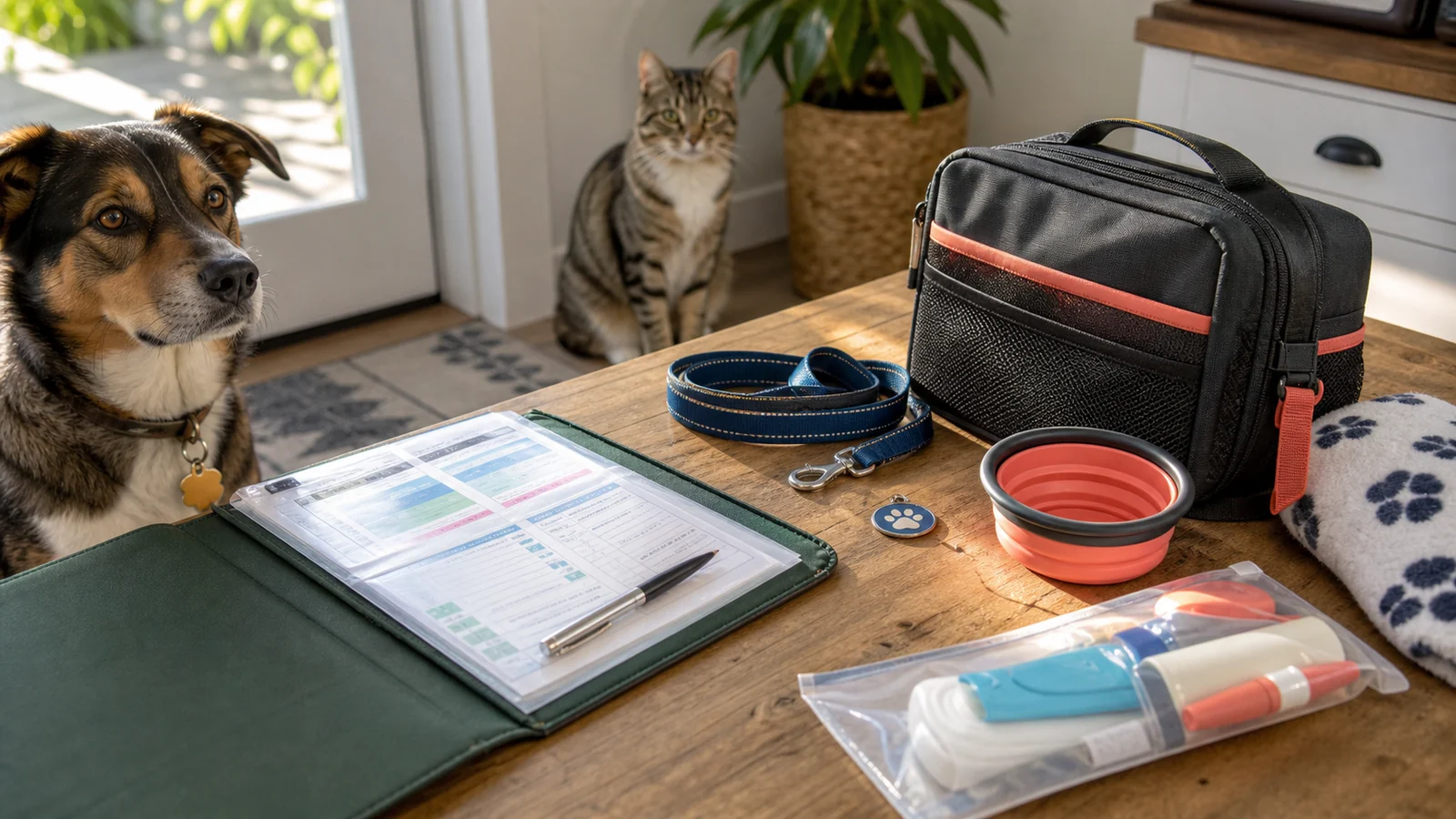
Prepare a pet go-bag with food, water, medications, leashes, carriers, waste bags, litter supplies, recent photos, vaccine records, microchip numbers, and written care notes. Put digital copies in cloud storage and keep paper copies in the bag.
For cats, keep carriers easy to reach. A carrier buried in the garage is not useful when evacuation time is short. For dogs, keep a leash, harness, and ID tag near the door. If your pet hides when stressed, practice calm carrier or leash routines before an emergency.
Also choose two destinations: one nearby and one farther away. Confirm which hotels, relatives, friends, boarding facilities, or shelters can take pets. The same habit helps during travel. Our pet friendly vacation rentals checklist uses a similar rule-first approach: confirm the details before your pet is already at the door.
Step 7: Document Threats Involving Pets
Another 2026 change expands California stalking law language around credible threats to include threats involving a person’s pet, service animal, emotional support animal, or horse. Most pet owners will never need this, but it matters if someone uses an animal to intimidate or control a person.
If you receive threats involving your pet, save messages, voicemails, screenshots, photos, dates, times, witness names, and incident notes. Do not edit the original records. If you are in immediate danger, contact emergency services. If the situation involves domestic violence, stalking, housing conflict, or a restraining order, talk with a qualified advocate or attorney about the safest next step.
Pet safety can be part of personal safety. Have a backup caregiver, keep medical and ownership records accessible, and make sure your pet’s microchip and ID tags do not point only to someone you no longer trust.
Problems And Practical Fixes
If a seller refuses to provide medical records, pause the transaction. Ask once in writing for the source and health information. If the answer stays vague, walk away and keep screenshots.
If a contract says your deposit is nonrefundable, do not assume the clause is enforceable just because it is written down. Get advice before signing or paying, especially if the transfer involves a dog, cat, or rabbit and you are located in California.
If your cat is scratching furniture and you feel stuck, make the plan more specific. One tiny scratcher in a corner is rarely enough. Put a sturdy scratcher next to the damaged furniture, reward use, trim nails, protect the target surface, and ask your vet about stress or pain if the behavior is new.
If an out-of-state dog arrives without clear paperwork, contact the rescue, seller, or transport organizer immediately. Ask for the veterinary inspection certificate and medical records in writing. Keep the dog separated from vulnerable pets until your veterinarian advises otherwise.
If an evacuation order is issued and your pet is behind, follow official instructions. The new planning rules do not guarantee that you can reenter a closed zone. Call the designated local contact, animal control, emergency management office, or shelter resource if one has been posted.
Advanced Tips For Staying Organized
Create a single pet records folder. Include adoption or purchase paperwork, vaccination records, microchip registration, medication notes, emergency contacts, insurance information if you have it, and recent photos. A simple folder is often better than a complicated app you never update.
Use written questions for pet purchases. Text or email creates a record and slows the conversation down. Ask direct questions about source, medical history, deposits, transport, and return terms.
Check local rules too. State law is only part of the picture. Counties, cities, landlords, shelters, rescues, and homeowners associations may have additional pet rules. If you rent, review your lease before adding a pet. Our pet friendly apartments checklist covers the questions renters should ask before applying.
Review your plan once a year. January is a useful reminder because many laws and local policies update around the new year. Refresh your pet records, confirm your emergency contacts, and replace expired food or medication in the go-bag.
FAQ
What is the January 1 California pet law?
For 2026, the phrase usually refers to several California pet and animal welfare laws that took effect on January 1, including rules on cat declawing, pet sale disclosures, pet brokers, imported dog health certificates, emergency planning, and threats involving pets.
Does California now ban cat declawing?
California bans non-therapeutic cat declawing. A veterinarian may still address a genuine medical need, but declawing for convenience, furniture protection, or routine behavior management is not the same thing.
Do I need a health certificate to bring my own dog into California?
The 2026 dog certificate rule is focused on certain dogs entering California for sale, resale, adoption, or another change of ownership. Traveling or moving with a dog you already own is different, though other travel or local requirements may still apply.
What should I ask before buying a dog, cat, or rabbit in California?
Ask for the animal’s original source, known medical history, vaccination and treatment records, deposit terms, transfer contract, and the identity of the person or organization responsible for the animal.
Do emergency pet rules let me reenter an evacuation zone?
No. Local plans may include pet rescue procedures and contact information, but reentry depends on incident conditions and approval by emergency authorities. Plan to evacuate pets early whenever possible.
Bottom Line
The January 1 California pet law changes are easiest to follow when you turn them into habits: use humane scratching management for cats, ask for source and health records before buying a pet, be cautious around broker-style listings, confirm health certificate paperwork for covered out-of-state dog transfers, and keep emergency records ready. The law sets a floor. Your everyday preparation is what protects your pet when a decision has to be made quickly.
You might also like
Pet Okay? A Quick Safety Checklist for Owners
Use this pet okay checklist to judge products, rooms, foods, greetings, symptoms, and when to call a veterinarian.

Pet Friendly Weed Killer: Safe Yard Use Guide
Use pet friendly weed killer more safely with label checks, spot treatment, dry-time rules, and yard routines.
Pet Friendly Houses For Rent: A Practical Checklist
Compare pet friendly houses for rent with this checklist for policies, fees, yards, flooring, noise, and move-in gear.