Pet Okay? A Quick Safety Checklist for Owners
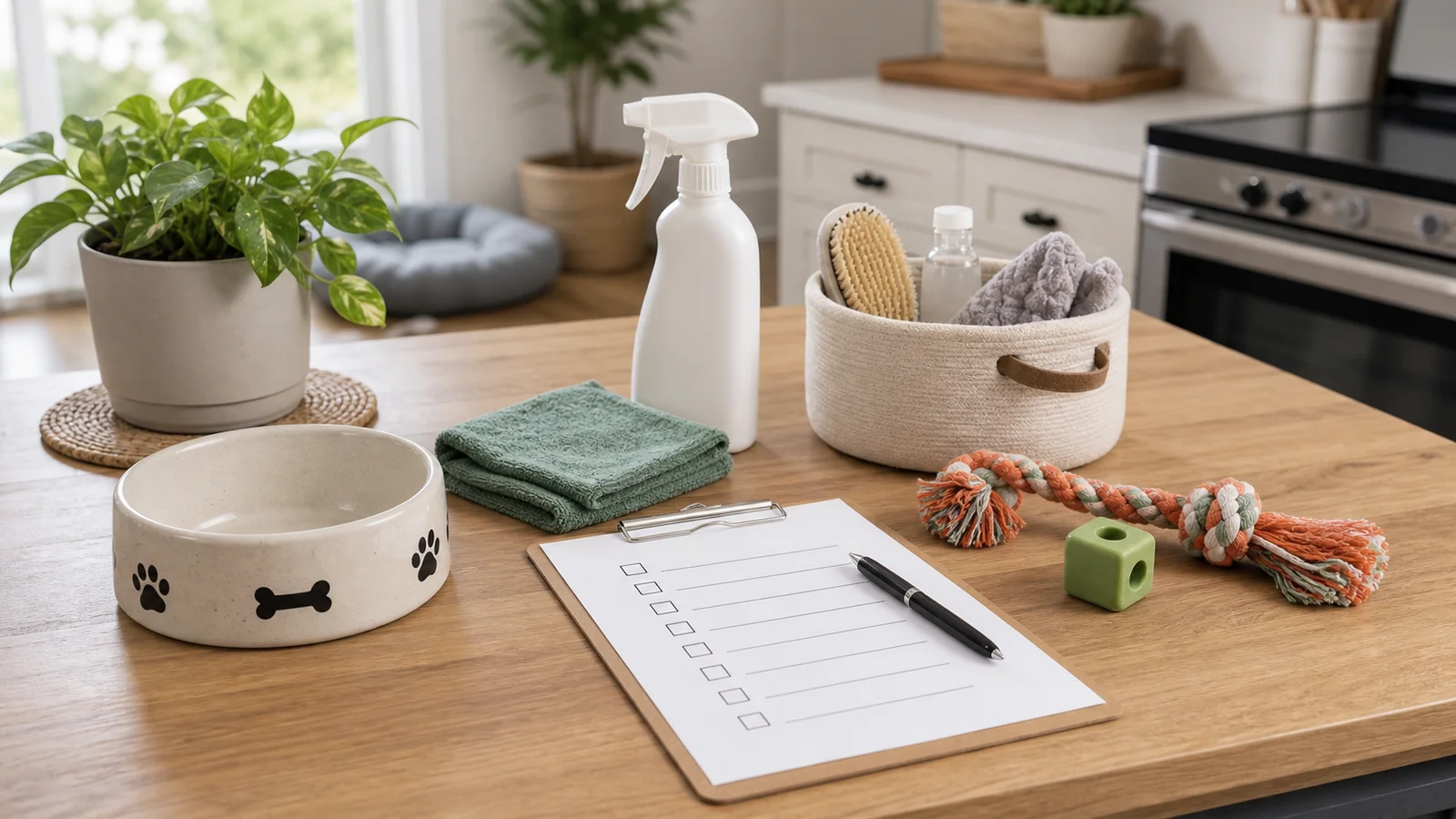
“Pet Okay” Is A Question, Not A Guess
When a pet owner asks “is this pet okay?” the answer depends on what “this” is. It might be a new bed, a cleaning product, a plant, a treat, a rental home, a dog greeting, a grooming appointment, or a symptom after something went wrong. The safest answer starts with a checklist, not a vibe.
Use this guide when you are making everyday decisions for dogs and cats. It will not diagnose illness or replace your veterinarian. It will help you slow down, check the right details, and know when “probably fine” is not good enough.
If your pet ate something suspicious, is struggling to breathe, collapses, has seizures, seems extremely weak, or is in obvious pain, skip the checklist and call a veterinarian or emergency clinic now.
Quick Pet Okay Screen
| Question | If yes | If no |
|---|---|---|
| Is the item clearly labeled for dogs, cats, or household pet use? | Read the full directions. | Pause and research before using. |
| Could your pet chew, lick, swallow, inhale, or get tangled in it? | Supervise or choose safer gear. | Risk may be lower, but still inspect. |
| Is there a species warning? | Follow it strictly. | Still check ingredients and use limits. |
| Would a small dog, senior pet, kitten, or cat be more vulnerable? | Use extra caution. | Match the decision to your actual pet. |
| Are there symptoms or behavior changes? | Call your veterinarian if concerning. | Keep monitoring after new exposures. |
| Are you relying on a marketing phrase like “natural” or “pet friendly”? | Verify the label. | Good; keep checking specifics. |
The goal is not to be anxious about everything. It is to make small decisions with enough context.
Step 1: Identify What You Are Checking
Start by naming the category. A pet bed, food, plant, cleaner, yard product, rental space, and greeting all have different safety questions.
Ask:
- Is this a product my pet will touch every day?
- Is this something my pet might eat or lick?
- Is this a room or outdoor space my pet will use unsupervised?
- Is this a service where another person handles my pet?
- Is this a social interaction with another animal or person?
- Is this a symptom after a possible exposure?
The clearer the category, the better your next step becomes. For example, a washable rug is mostly a slip, chew, cleaning, and sizing question. A houseplant is a toxicity question. A weed killer is a label and reentry-time question. A grooming salon is a handling and communication question.
Step 2: Check Species First
Dogs and cats are not interchangeable. Something that is fine for a dog may be unsafe for a cat, and the reverse can also be true. Cats groom residue from their fur, are sensitive to certain products, and can be at special risk from some plants. Dogs may chew larger pieces, raid trash, eat dropped food, or drink from treated outdoor areas.
Always check:
- Dog-specific warnings
- Cat-specific warnings
- Weight limits
- Age limits
- Chew risk
- Medical conditions
- Whether the item is meant for supervised use only
Do not use dog flea products, supplements, shampoos, or medications on cats unless your veterinarian specifically says they are cat-safe. Do not guess by body size.
Step 3: Read The Label Beyond The Front Claim
Front-of-package phrases can be helpful, but they are not enough. “Pet safe,” “natural,” “gentle,” “eco,” “non-toxic,” and “pet friendly” can mean different things depending on the category.
Read:
- Ingredients or materials
- Directions for use
- Drying or reentry times
- Warning statements
- Species restrictions
- Size or weight guidance
- Cleaning instructions
- What to do if swallowed
- Contact information for the manufacturer
This matters for yard products, cleaners, bedding, toys, supplements, and grooming products. A product can be safer when used as directed and risky when overused, mixed with another product, applied to the wrong species, or left where a pet can chew it.
For outdoor products, our pet friendly weed killer safety guide shows why the label and reentry time matter more than the front claim.
Step 4: Think Like Your Pet
A pet okay decision changes when you imagine your actual dog or cat using the item.
For dogs, ask:
- Will my dog chew this?
- Could a strap, handle, fringe, or cord become a hazard?
- Could my dog swallow pieces?
- Is the item too small, high, slippery, or unstable?
- Will my dog guard it from people or other pets?
For cats, ask:
- Will my cat scratch, chew, or climb it?
- Could claws get caught?
- Could the cat knock it over?
- Is there string, elastic, tinsel, ribbon, or loose fiber?
- Could plant leaves, pollen, or water be accessible?
Many problems are not about the product category. They are about the individual pet. A soft bed may be fine for one dog and unsafe for a dog that eats fabric. A plant on a high shelf may be unreachable for a senior dog and easy work for a young cat.
Step 5: Use The “Small, Sharp, Stringy, Sticky, Scented” Test
When you are unsure, scan for five common risk patterns.
Small: Could your pet swallow it whole?
Sharp: Could it cut paws, gums, eyes, or skin?
Stringy: Could it wrap around the tongue, gut, paw, or neck?
Sticky: Could it trap fur, irritate skin, or be hard to remove?
Scented: Could fragrance, essential oil, cleaner, or food smell encourage licking?
This quick test works for toys, decor, seasonal items, grooming gear, bedding details, gift baskets, and household storage. It is not perfect, but it catches many everyday hazards before they become vet calls.
Step 6: Know When Food Or Treats Are Not Okay
Food safety deserves its own pause. FDA and CDC pet-food guidance emphasizes safe handling, storage, and contamination risk. Pet food and treats can carry bacteria, and raw diets add risk for both pets and people.
Before giving food or treats, check:
- Is it made for your pet’s species?
- Is the package intact and not expired?
- Does it match your pet’s size and chewing ability?
- Does your pet have allergies or medical restrictions?
- Is it a new food that should be introduced slowly?
- Could it contain a known toxic human-food ingredient?
- Are your hands, bowls, scoops, and storage containers clean?
Do not use treats as a test when you are unsure. If a food, plant, medication, supplement, or household item may be toxic, call your veterinarian or a poison-control resource instead of waiting to see what happens.
Step 7: Decide Whether The Space Is Pet Okay
Rooms, rentals, patios, yards, and cars need a different checklist.
Look for:
- Escape routes
- Loose cords
- Low windows or weak screens
- Toxic plants
- Open trash
- Cleaning products
- Small objects
- Slick floors
- Hot surfaces
- Poor ventilation
- Gaps behind appliances
- Unsafe balconies or fences
For renters, “pet friendly” does not mean the space is truly easy for your pet. Our pet friendly apartments checklist and pet friendly houses for rent checklist help you compare policies, flooring, relief areas, and move-in risks.
Step 8: Check Body Language Before Social Contact
“Is it okay to pet this animal?” is a safety question too. A pet may be healthy and friendly but still not want contact right now.
Before greetings, look for:
- Loose posture
- Soft eyes
- Voluntary approach
- Ability to move away
- Relaxed mouth and tail
- Handler permission
Pause if you see stiff posture, tucked tail, pinned ears, hiding, growling, hissing, whale eye, lip licking, repeated yawning, or attempts to move away. For unfamiliar dogs, use our Can I Pet That Dog? guide: handler permission, dog comfort, and voluntary approach all need to line up.
Do not force greetings between pets. A slow introduction is usually safer than hoping they “work it out.”
Step 9: Know The Red Flags That Mean Call
Some questions are not shopping decisions. They are medical decisions.
Call your veterinarian, an emergency clinic, or a pet poison-control line if your pet:
- Ate medication, chemicals, plants, batteries, rodent bait, or unknown substances
- Has trouble breathing
- Collapses, has seizures, or cannot stand
- Vomits repeatedly
- Has severe diarrhea or blood
- Drools excessively after a possible exposure
- Has swollen face, hives, or sudden weakness
- Shows pain, bloating, or unproductive retching
- Acts suddenly confused, extremely lethargic, or unlike themselves
- Has eye exposure to a chemical or irritant
The AVMA points pet owners toward veterinarians and poison-control resources for suspected household hazards. ASPCA Animal Poison Control and Pet Poison Helpline also provide 24/7 support, though fees may apply.
Do not induce vomiting or give home antidotes unless a veterinarian or poison-control professional tells you to. Some substances cause more harm on the way back up.
FAQ
What Does Pet Okay Mean?
It usually means something appears suitable for a pet, but you still need specifics: species, size, ingredients, supervision, chewing risk, label directions, and your pet’s health.
Is Pet Friendly The Same As Pet Safe?
No. Pet friendly can mean allowed, marketed for pets, or lower-risk when used correctly. Pet safe should still be checked against the label and your actual pet.
How Do I Know If A Product Is Okay For Cats?
Look for cat-specific labeling, avoid dog-only products, check ingredients, and ask your veterinarian if the item involves medication, flea control, supplements, essential oils, or ingestion.
When Should I Call A Vet Instead Of Waiting?
Call promptly for suspected poisoning, breathing trouble, collapse, seizures, repeated vomiting, severe diarrhea, pain, bloating, eye exposure, or sudden major behavior changes.
Are Natural Products Always Okay For Pets?
No. Natural products can still irritate skin, upset stomachs, or be toxic. Essential oils, strong vinegar, certain plants, and concentrated cleaners all need caution.
Bottom Line
“Pet okay” is a useful question when it leads to better checking. Identify the category, check the species, read the full label, think like your pet, and watch for medical red flags. For everyday gear and spaces, a calm checklist can prevent trouble. For possible poisoning, illness, or injury, call a professional quickly and keep the product label or exposure details nearby.
You might also like
Pet Friendly Weed Killer: Safe Yard Use Guide
Use pet friendly weed killer more safely with label checks, spot treatment, dry-time rules, and yard routines.
Pet Play: Safe Enrichment for Dogs and Cats
Build safer pet play with the right toys, supervision, rotation, and simple enrichment routines for dogs and cats.
Pet Groomers Near You: Booking Checklist
Compare pet groomers with a practical checklist for reviews, safety questions, pricing, first visits, and special-care pets.