Pet Friendly Weed Killer: Safe Yard Use Guide
Pet Friendly Weed Killer Still Needs A Safety Plan
Pet friendly weed killer is not a free pass to spray the yard and let your dog or cat walk through it five minutes later. It usually means the product is positioned as lower-risk when used exactly as directed. The label, the surface, the drying time, and your pet’s habits still matter.
The safest approach is to use the least aggressive method that solves the weed problem. Sometimes that is hand pulling. Sometimes it is mulch. Sometimes it is a carefully shielded spot treatment on patio cracks. A full-lawn spray is rarely the first move in a pet household.
Use this guide as a practical routine for dog and cat homes. It is about safer use, not a promise that any herbicide is harmless.
Step 1: Decide Whether You Need A Spray At All
Before choosing a pet friendly weed killer, identify the weed, the surface, and the risk. A few weeds in a flower bed do not need the same answer as invasive growth in driveway cracks or broadleaf weeds across a lawn.
Start with non-spray options when they make sense:
- Pull weeds after rain, when roots release more easily
- Use a dandelion tool for taproots
- Add mulch in beds where pets sniff or rest
- Cut weeds before they flower and seed
- Pour boiling water only on hardscape cracks, away from plants and pets
- Repair thin lawn areas so weeds have less room to spread
Non-spray methods take more effort, but they avoid residue where paws, noses, tongues, and fur touch the ground.
Step 2: Read The Label Like It Is The Product
The front label may say “pet friendly,” “natural,” “organic,” or “safe around pets.” Those claims are not enough. The useful instructions are usually in the full label: active ingredient, where to use it, protective gear, drift warnings, storage rules, and when people or pets can return.
Look for:
- Active ingredient
- Lawn, garden bed, patio, or driveway use
- Whether it kills grass too
- Pet and child reentry instructions
- Dry-time language
- Protective glove or eyewear requirements
- Mixing instructions
- Storage and disposal rules
- First-aid directions
National pesticide safety guidance consistently points back to the label. If the label says to keep pets away until sprays dry, do that at minimum. If it gives a longer wait, follow the longer wait.
Step 3: Match The Product To The Surface
A weed killer that fits patio cracks may be wrong for grass. A lawn herbicide may be wrong for a vegetable bed. A vinegar-based contact spray can burn visible leaves, but it can also injure nearby desirable plants and irritate skin or eyes during use.
Use this quick surface check:
| Surface | Safer first choice | What to avoid |
|---|---|---|
| Patio cracks | Hand tool, boiling water, shielded contact spray | Overspray onto lounging areas |
| Flower beds | Pulling, mulch, narrow weeding tool | Broad spraying where pets dig |
| Lawns | Mowing height, overseeding, labeled lawn product if needed | Nonselective sprays that kill grass |
| Gravel strips | Pulling, string trimming, shielded spot treatment | Spray drift along fence patrol routes |
| Dog runs | Mechanical removal and surface repair | Routine herbicide use in high-contact zones |
If your dog rolls in one sunny patch every day or your cat dust-bathes under a shrub, treat that spot as high contact. Avoid spraying it unless there is no better option.
Step 4: Prep The Yard Before Applying
Preparation does most of the safety work. A careful setup prevents accidental exposure during and after application.
Before you apply any weed killer:
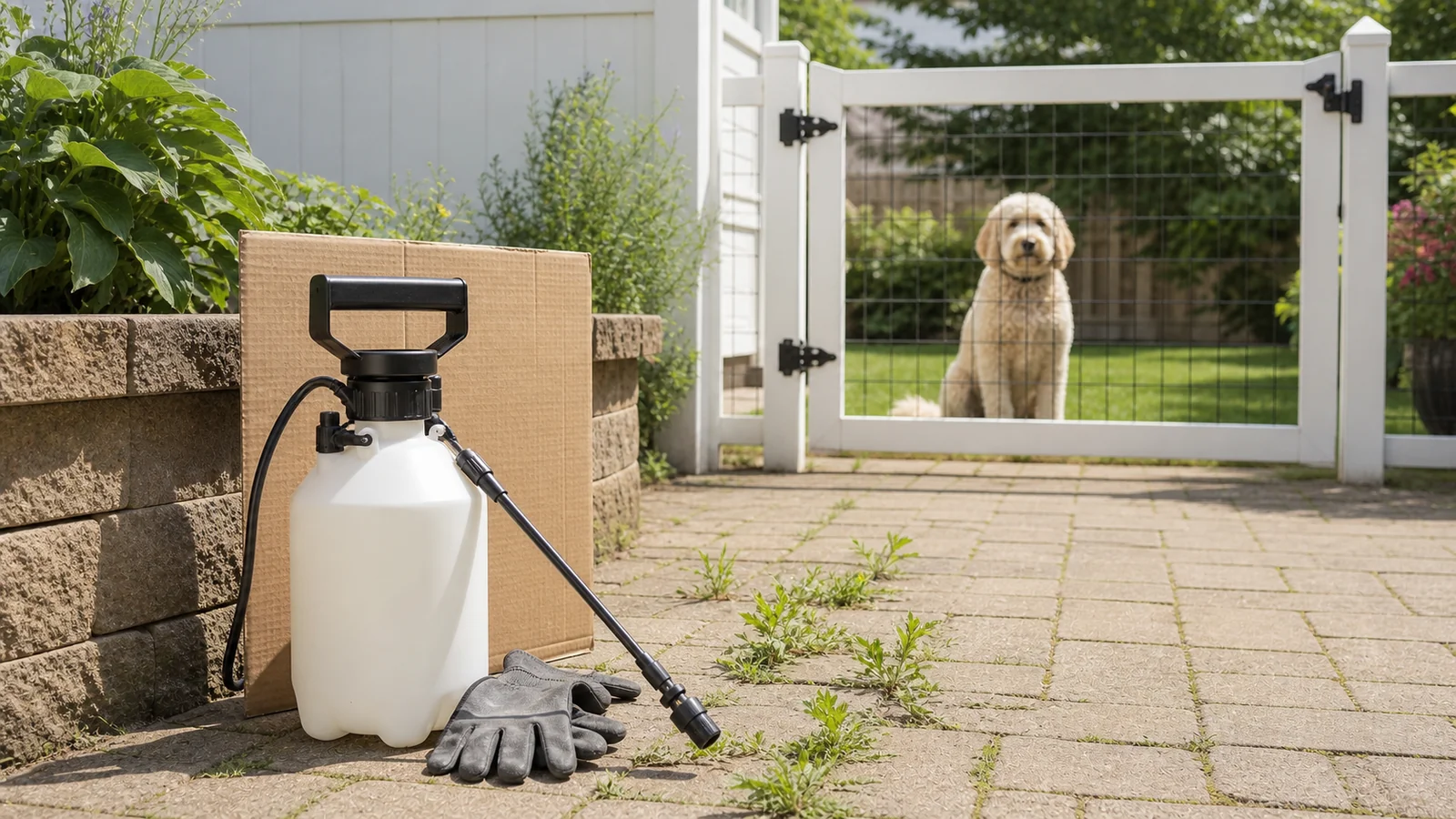
- Bring pets indoors or secure them away from the area.
- Remove water bowls, food bowls, toys, chews, beds, and training gear.
- Close gates so pets cannot wander back outside.
- Check wind, rain, and temperature directions on the label.
- Put on the protective gear the label requires.
- Mix only if the product label tells you how.
- Keep the original container nearby so first-aid information is available.
Do not spray when a pet is watching from a few feet away. Curious dogs and cats investigate smells, wet leaves, containers, gloves, and shoes.
Step 5: Spot Treat Instead Of Blanket Spraying
For pet homes, spot treatment is usually the smarter default. Spray only the weed leaves you need to treat, and use a cardboard shield, spray cone, or careful hand position to reduce drift.
This matters because pets have low contact with the ground. A dog walking through treated grass can pick up residue on paws and fur. A cat may later groom treated material from its coat. Smaller treated zones are easier to avoid, monitor, and clean.
Good spot-treatment habits include:
- Keep the nozzle close to the target weed
- Spray on calm days
- Avoid puddling
- Keep product off pet paths, toys, bowls, and resting spots
- Mark the treated area if other people use the yard
- Rinse tools only where the label allows
If weeds cover the whole yard, pause before spraying everything. The real problem may be thin turf, poor drainage, compacted soil, bare patches, or mowing height.
Step 6: Wait For The Correct Reentry Time
“Dry” is the common minimum for many liquid pesticide labels, but it is not the only rule. Follow the product’s specific pet reentry instructions. If the label gives a longer wait than drying time, use the longer wait.
For granular products, drying may not be the relevant standard. Some granules need watering in, and pets should stay away from piles or visible residue. ASPCA safety guidance warns that liquid products should be dry before pet access and granular products should be watered in well when applied.
Before pets return, check:
- Leaves and grass are dry
- No puddles remain
- No granules or piles are visible
- Bowls and toys are still indoors
- Gates are secure
- Shoes and gloves are stored away
- The label’s reentry directions are satisfied
When in doubt, wait longer. A few extra hours indoors is easier than worrying about a pet licking treated paws.
Step 7: Clean Up The High-Contact Details
After application, think like your pet. What will they lick, roll on, chew, or carry indoors?
Wipe or move anything that could have caught drift. Check porch edges, gate thresholds, garden tools, hose handles, and shoes. Keep the product sealed in its original container and stored where pets cannot reach it.
Watch pets after they return outside. If your dog tries to eat treated grass or your cat rubs against wet plants, remove them and reassess the setup. If you suspect exposure and your pet vomits, drools, coughs, has irritated paws, seems weak, or behaves unusually, contact your veterinarian or a poison-control resource and have the product label ready.
Advanced Tips For A Lower-Spray Yard
A safer yard plan reduces how often you need weed killer.
Keep lawns dense by mowing at the right height for the grass type, watering deeply when appropriate, and overseeding thin patches at the right season. Bare soil invites weeds.
Use mulch in beds, but choose pet-aware materials. Avoid cocoa mulch around dogs, and do not pile any mulch against stems or trunks. Keep digging pets out of freshly mulched areas until the surface settles.
Create pet paths where your dog already runs. Stepping stones, mulch paths, gravel chosen for paw comfort, or reinforced turf can reduce worn strips that turn into weed patches.
Separate food-growing areas from pet traffic. If you grow herbs or vegetables, use barriers and non-chemical weed control first.
Review our best pet safe weed killer guide if you need help comparing broad product types, from vinegar-based contact sprays to iron-based lawn products.
Common Mistakes To Avoid
The biggest mistake is treating “natural” as the same thing as safe. Horticultural vinegar, citric acid, fatty acids, essential oils, and salt mixtures can still irritate pets or damage surfaces when misused.
Other mistakes include:
- Spraying on windy days
- Letting pets outside before the area is dry
- Leaving granules in piles
- Spraying near food bowls or water bowls
- Using salt-heavy homemade recipes in soil
- Storing products in unlabeled bottles
- Assuming a yard service uses pet-safe products without asking
- Forgetting that cats groom their paws and fur
If a lawn company treats your yard, ask for the product name, active ingredient, label, and pet reentry instructions before the appointment.
FAQ
What Makes A Weed Killer Pet Friendly?
Usually it means the product is marketed as lower-risk for homes with pets when used as directed. You still need to read the label, keep pets away during application, and follow reentry instructions.
How Long Should Pets Stay Off Weed Killer?
Follow the label. For many liquid products, pets should stay away until the spray is completely dry, but some labels require more time. Use the longer instruction.
Is Vinegar Weed Killer Safe For Dogs And Cats?
It is not automatically safe. Horticultural vinegar can be much stronger than kitchen vinegar and may irritate eyes, skin, noses, and paws. Keep pets away during use and until the area is dry.
Can I Use Weed Killer In A Dog Run?
Avoid it when possible. Dog runs are high-contact areas where paws, noses, toys, and water bowls are close to the ground. Pull, dig, trim, mulch outside the run, or repair the surface first.
What Should I Do If My Pet Walks Through Wet Weed Killer?
Move your pet away, prevent licking, rinse paws or fur if safe to do so, and check the label. Contact your veterinarian or a poison-control resource if your pet shows symptoms or you are unsure what they contacted.
Bottom Line
Pet friendly weed killer is safest when it is used sparingly, precisely, and according to the label. Pull weeds where you can, spot treat only where needed, remove pet gear before applying, wait for the correct reentry time, and store products securely. A cleaner yard is useful, but your pet’s daily contact with that yard should shape every weed-control decision.
You might also like
Pet Okay? A Quick Safety Checklist for Owners
Use this pet okay checklist to judge products, rooms, foods, greetings, symptoms, and when to call a veterinarian.
January 1 California Pet Law: What Owners Should Do
A practical checklist for California pet owners covering 2026 cat declawing, pet sales, dog imports, and emergency rules.
Can I Pet That Dog? A Safer Way To Ask
Learn when it is okay to pet an unfamiliar dog, what body language to watch, and how to teach kids safer dog greetings.