How To Remove Pet Odor From Your Home For Good
A Practical Way To Remove Pet Odor
Pet odor usually lingers because the source is still present somewhere: urine salts in carpet padding, damp bedding, saliva on fabric, litter dust near a box, or moisture trapped under a rug. Air freshener can make the room smell better for an hour, but it will not solve the problem if the odor source is still active.
The best way to handle pet smell is to work in order. Find the source, remove loose debris, choose the right cleaner for the material, let it dry fully, and then adjust the routine that allowed the odor to build up. This guide focuses on everyday homes with dogs and cats, not disaster-level remediation.
Before you start, gather white towels, disposable gloves, a blacklight if urine spots are hard to locate, an enzymatic pet cleaner, mild dish soap, a bucket, a soft brush, baking soda, washable laundry bags, and a fan. Keep pets away from the cleaning area until surfaces are dry and product directions say the space is safe.
Find The Odor Source First
Start with the rooms where your pet sleeps, eats, uses the litter box, or waits by the door. Smell rises and spreads, so the strongest odor is not always at nose height. Check baseboards, rug edges, couch skirts, crate mats, dog beds, litter mats, laundry piles, and the underside of washable rugs.
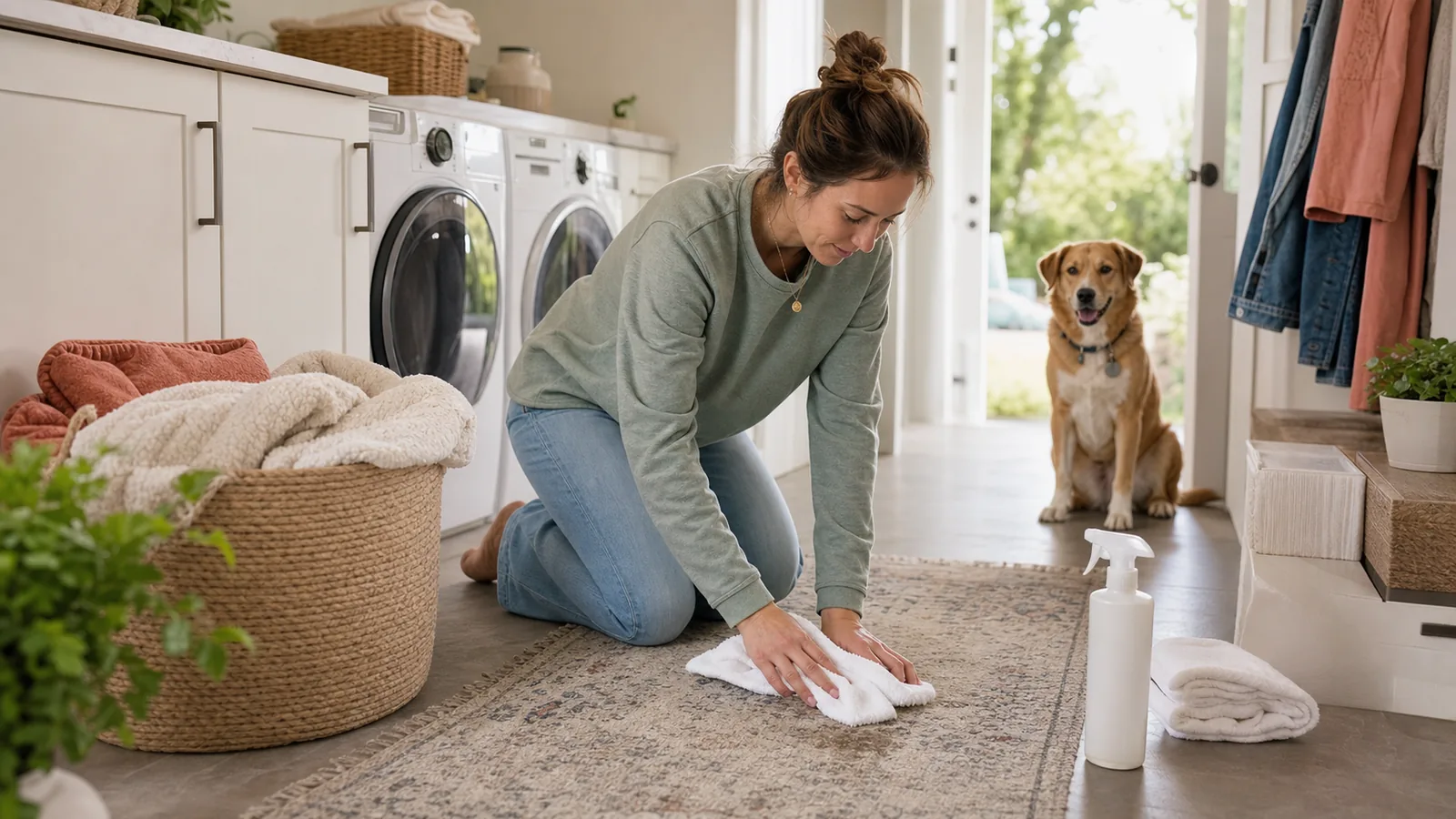
For urine, use your eyes and hands before using products. Blot wet spots with plain white towels. Press down with body weight rather than rubbing, because rubbing can push urine deeper into fibers. If the spot is old and invisible, a blacklight can help reveal possible urine residue, though it can also highlight other household stains.
If you cannot find one obvious source, treat the room by zones. Start with pet bedding and soft goods, then floors, then furniture, then air flow. This keeps the job manageable and prevents you from overusing cleaner on every surface.
Clean Fresh Accidents The Right Way
Fresh urine or vomit should be handled quickly, but not aggressively. Remove solids first, then blot liquid until the towel comes up nearly dry. Apply an enzymatic pet cleaner according to the label and use enough product to reach the same depth as the accident. A light mist on top of a deep urine spot is rarely enough.
Give enzyme cleaners time. Many need to stay damp for a while so the formula can work on odor-causing residue. Covering the spot loosely with a clean towel can slow evaporation, but do not seal it under plastic unless the product label specifically allows that.
Avoid ammonia-based cleaners on urine. The scent can resemble urine to some pets and may encourage repeat marking. Also be careful with steam on untreated urine spots. Heat can make some stains and odors harder to remove from carpet or upholstery, especially when residue has already soaked into padding.
After treatment, let the area dry completely. Odor often smells stronger while a spot is damp because moisture reactivates residue. Use a fan, open a window when weather allows, and keep pets away until the surface is fully dry.
Remove Odor From Washable Items
Washable items are the easiest win. Dog beds with removable covers, crate mats, blankets, plush toys, slipcovers, and towels should be washed before you tackle the rest of the room. Otherwise, clean floors will keep picking up odor from dirty fabrics.
Shake loose hair outside or into a trash bag before washing. Use the hottest water that the care label allows, but do not use heat on items with fresh urine that has not been pretreated. Pre-soak strong-smelling fabrics with an enzyme laundry additive or pet-safe odor product if the label permits it.
Dry thoroughly. Damp bedding can smell musty even after a good wash, and thick bolsters may trap moisture inside. If a bed still smells after washing, check whether the inner cushion is washable. A clean cover over a sour insert will not solve the odor.
Set a routine for the future. High-use pet bedding often needs weekly washing, while lower-use blankets may be fine every two to three weeks. Homes with senior pets, puppies, kittens, allergies, or heavy shedders usually need a tighter schedule.
Treat Carpet, Rugs, And Upholstery
Carpet and upholstery need patience because odor can sit below the visible surface. After blotting, test any cleaner in a hidden area. Then apply the product evenly and let it dwell for the time listed on the label. Use a soft brush only when the fabric can handle it; scrubbing delicate upholstery can fuzz or discolor the surface.
For old urine in carpet, repeat treatment may be necessary. If the smell returns after drying, the residue may be in the pad below the carpet. At that point, surface cleaning can reduce odor but may not remove it completely. Serious repeat spots may require professional cleaning or, in severe cases, replacing the pad.
Baking soda can help with general dog smell on dry fabric, but it is not a substitute for enzyme cleaner on urine. Sprinkle lightly, let it sit, and vacuum thoroughly. Keep pets away while it is down, especially curious cats and dogs that might lick or inhale it.
Washable rugs make odor control easier because they can be cleaned more often than fixed carpet. If you are building a cleaner entry routine, a low-pile rug near the door can help catch moisture and dirt before it reaches the rest of the house. Our Aldi Pet Friendly Rug Review covers that kind of practical entryway use case.
Clean Hard Floors And Hidden Edges
Hard floors seem simple, but odor can hide in seams, grout, baseboards, and the gap where flooring meets trim. Wipe visible mess first, then clean with a product that is safe for your floor type. Do not soak hardwood, laminate, or seams where moisture can swell the material.
For tile, pay extra attention to grout. Grout can absorb urine and litter box moisture, so a quick surface mop may not be enough. Use a floor-safe cleaner and a small brush where needed, then rinse and dry.
Around litter boxes, move the box completely and clean the surrounding floor, wall, and mat. Fine litter dust can mix with moisture and create a persistent smell even when the box itself is scooped. Replace cracked plastic litter boxes, deeply scratched liners, or mats that hold odor after washing.
For dog areas, check door thresholds and crate corners. A dog that lies in the same spot every day can leave saliva, skin oil, and outdoor odor on nearby trim and flooring. Regular wiping prevents that slow buildup.
Fix The Airflow And Moisture Problem
Once the source is clean, improve airflow. Pet odor is worse in closed rooms, damp basements, laundry areas, and corners where beds or crates sit against a wall. Pull beds a few inches from walls, open doors when possible, and use a fan to dry cleaned areas.
Humidity matters. A clean room can still smell stale if bedding stays damp or litter areas never dry. In humid homes, a dehumidifier may help in basements, laundry rooms, or mudrooms. In small apartments, rotating washable mats and opening windows briefly can make a noticeable difference.
Air purifiers can reduce dander and general stale smell, but they do not remove urine residue, dirty bedding, or litter box buildup. Think of filtration as support after cleaning, not the main solution.
Stop Pet Odor From Coming Back
The prevention plan depends on the source. For urine accidents, rule out medical issues, stress, litter box access problems, or house-training gaps. Sudden accidents in a trained dog or cat are a reason to contact a veterinarian.
For everyday dog smell, build a simple wash cycle: bedding weekly, entry rug as needed, collars monthly, and food mats every few days. Wipe paws after muddy walks and dry wet coats before your dog settles onto fabric furniture.
For cat odor, focus on the litter box. Scoop daily, wash the box regularly, keep enough boxes for the number of cats in the home, and avoid placing boxes in damp, airless corners. If a cat avoids the box, do not just add fragrance. Investigate box size, litter texture, cleanliness, location, and health.
For furniture, use washable covers where pets lounge. Vacuum hair and dander before they settle into fabric. If your pet has a favorite couch spot, a dedicated throw that gets washed weekly is easier to maintain than the whole sofa.
Troubleshooting Stubborn Smells
If the odor smells like urine only on humid days, residue may be deep in carpet padding, under a rug, or along a baseboard. Re-treat the exact area and give it longer contact time. If it still comes back, surface cleaning may not reach the problem.
If the room smells sour after washing, check for damp bedding, wet towels, clogged vacuum filters, or a dirty washing machine gasket. Pet odor sometimes moves from the pet area into cleaning tools.
If the smell is strongest near the litter box, replace old plastic parts and clean the surrounding wall or floor. A box can look clean but still hold odor in scratches.
If your pet keeps returning to one spot, block access after cleaning and change the meaning of the area. Feed treats nearby, place furniture over the spot temporarily, or use a washable mat while you address the underlying behavior.
FAQ
What is the fastest way to remove pet odor?
The fastest useful method is to remove the source first: blot wet messes, wash soft goods, and use an enzymatic cleaner on urine or organic residue. Fragrance alone is temporary.
Does baking soda remove dog and cat urine smell?
Baking soda can help absorb general dry fabric odor, but urine usually needs an enzymatic cleaner. Use baking soda only on dry surfaces and vacuum it thoroughly.
Why does pet odor come back after cleaning?
Odor often returns when urine or moisture remains below the surface, especially in carpet padding, upholstery foam, grout, or baseboards. Damp weather can reactivate old residue.
Should I use steam to clean pet urine?
Do not use steam as the first treatment on urine. Blot and use an appropriate enzyme cleaner first, because heat can make some stains and odors harder to remove.
When should I call a professional?
Call a professional if odor remains after repeated targeted cleaning, if urine reached carpet padding, if you suspect subfloor damage, or if the affected material is delicate or expensive.
Bottom Line
Learning how to remove pet odor is mostly about sequence. Find the source, clean the right material with the right method, dry it completely, and then adjust the routine that allowed the smell to build up. A home with pets does not need to smell like cleaning products or perfume. It just needs washable zones, good airflow, and quick attention to the places where odor actually starts.
You might also like
Pet Friendly Houses For Rent: A Practical Checklist
Compare pet friendly houses for rent with this checklist for policies, fees, yards, flooring, noise, and move-in gear.
Pet Friendly Apartments: What To Check Before Applying
A renter-friendly checklist for comparing pet friendly apartments, understanding fees, and setting up a dog or cat in a smaller home.
Mary S Roberts Pet Adoption Center Visit Checklist
Planning a Mary S Roberts Pet Adoption Center visit? Use this checklist to prepare questions, gear, home setup, and adoption-day basics.