Pet Friendly Apartments: What To Check Before Applying
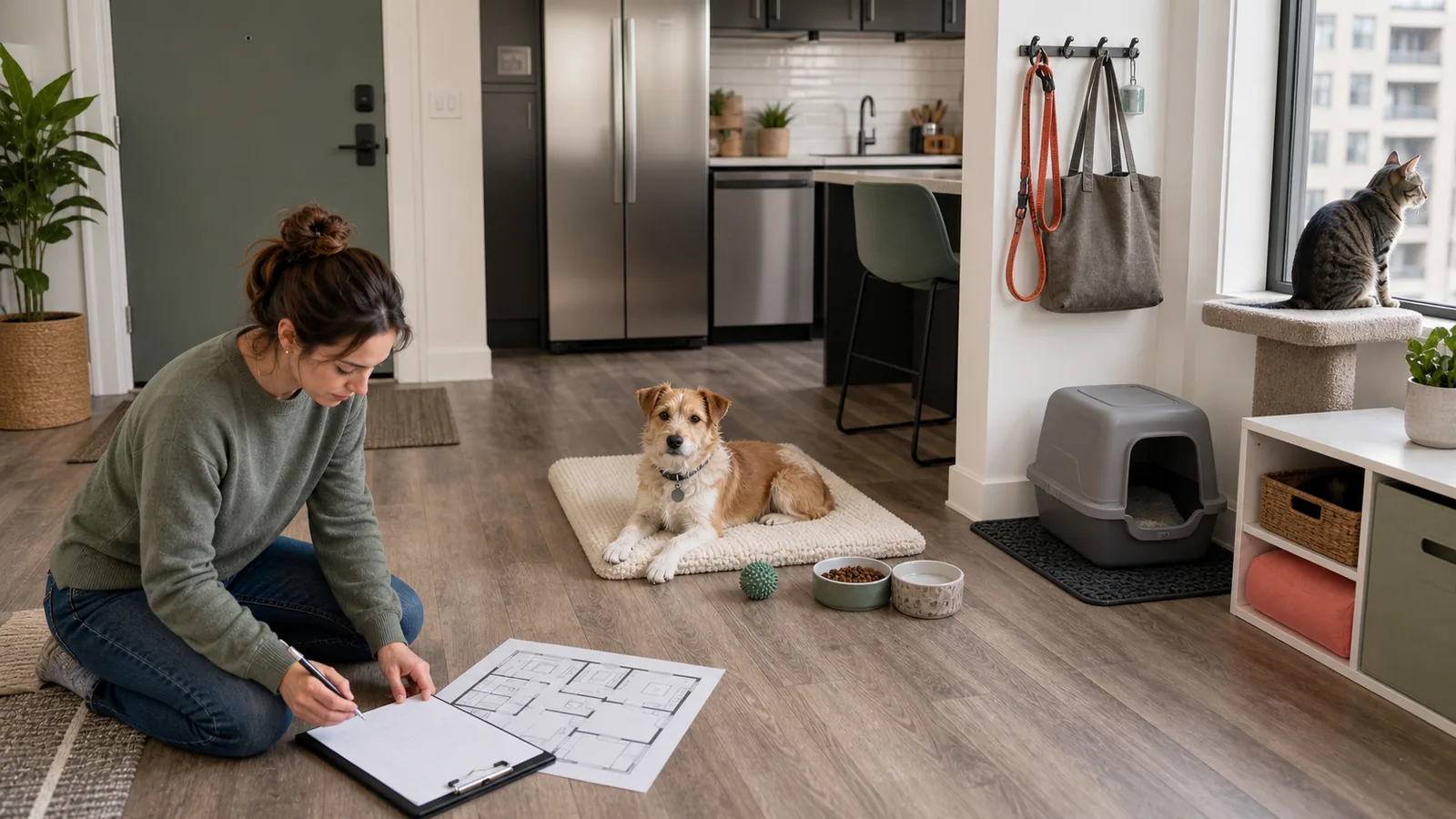
Look Beyond The Pet Friendly Label
Pet friendly apartments can vary dramatically. One building may welcome cats but restrict dogs by weight. Another may allow dogs but charge monthly pet rent, require renters insurance, and limit certain common areas. A third may advertise as pet friendly online but have stricter rules in the lease.
Before applying, treat the pet policy as part of the apartment search, not a detail to handle after approval. Ask for the written policy, confirm all fees, and think about whether the building will work for your actual pet’s noise level, bathroom routine, exercise needs, and comfort with neighbors.
This guide is for ordinary pet ownership, not legal advice. Service animals and assistance animals are handled differently from pets, and housing rules can change. If your situation involves disability accommodation, check current federal, state, local, and property-specific requirements or talk with a qualified housing professional.
Step 1: Get The Full Pet Policy In Writing
Ask for the pet policy before you apply. A leasing agent’s friendly answer is useful, but the lease, addendum, or written community rules are what you need to compare.
Look for:
- Allowed pet types
- Maximum number of pets
- Weight limits
- Breed or insurance restrictions
- Pet deposit
- One-time pet fee
- Monthly pet rent
- Required vaccination records
- Spay or neuter requirements
- Renters insurance requirements
- Rules for balconies, elevators, hallways, lawns, and pet relief areas
- Fines for waste, noise, damage, or off-leash behavior
If the policy seems vague, ask clear follow-up questions. “Are cats allowed?” “Is the weight limit per pet or total household pets?” “Are visiting pets allowed?” “Are pets allowed in all buildings or only certain units?”
Step 2: Compare The True Monthly Cost
Pet costs are not always obvious from the headline rent. A building may charge a nonrefundable pet fee, a refundable deposit, monthly pet rent, and cleaning or damage charges if problems occur.
Make a simple monthly comparison:
- Base rent
- Pet rent
- Renters insurance increase
- Parking or elevator fees if relevant
- Pet care costs caused by the location, such as dog walking or daycare
Then compare move-in costs separately:
- Application fees
- Pet application or screening fees
- Pet deposit
- One-time pet fee
- First month of pet rent
This matters because a lower-rent apartment with high pet fees may cost more than a slightly higher-rent building with simpler rules. The best pet friendly apartments are not always the cheapest; they are the ones where the total cost and restrictions fit your household.
Step 3: Match The Building To Your Pet
Think about your pet’s day inside the building. A quiet senior cat may do well in a smaller unit with sunny windows and a closed bedroom. A young dog who barks at hallway noise may struggle next to an elevator. A large dog may be allowed by weight but still need better outdoor access than the property provides.
For dogs, check the path from your door to the relief area. Are there long hallways, busy elevators, slick stairs, or doors that open directly onto traffic? Is there a safe place for quick late-night potty breaks? What happens in rain, snow, or extreme heat?
For cats, check windows, screens, hiding places, closet access, and litter box placement. A cat-friendly apartment needs more than permission on paper. It needs a place for a litter box that is private, ventilated, and easy to clean.
If your dog will meet neighbors or other pets in narrow common areas, practice polite distance. Our guide to asking “Can I Pet That Dog?” is a useful reminder that hallway greetings should be calm and optional, not automatic.
Step 4: Ask About Noise Before It Becomes A Problem
Noise complaints are one of the biggest apartment risks for dog owners. Ask how the property handles barking complaints, quiet hours, and repeated reports. Then be honest about your pet.
If your dog barks at footsteps, elevators, mail carts, or other dogs, choose a unit carefully. End units, top floors, or buildings with fewer hallway triggers may help. White noise, window film, enrichment toys, and a predictable walk schedule can reduce stress, but they cannot fix a layout that constantly overwhelms your dog.
Cats can create noise too, especially at night. Hard floors can amplify running, jumping, food bowl movement, and litter box digging. Rugs, mats, and furniture placement can soften sound while also protecting floors.
If your pet has separation anxiety, do not rely on hope. Ask whether the apartment allows dog walkers, pet sitters, or daycare pickup. Practice short departures before leaving for a full workday.
Step 5: Inspect Floors, Doors, And Windows
During a tour, look at the apartment as your pet would use it. Floors, doors, windows, and balcony access matter more than staged decor.
Check for slick flooring that could bother senior dogs, carpet that may hold odor, door gaps that could tempt a cat, low window screens, balcony openings, exposed cords, and sharp transitions between flooring types. If you have a puppy, kitten, senior pet, or pet with mobility issues, these details are not minor.
Ask what changes you are allowed to make. Can you add removable window film? Install freestanding gates? Use washable rugs? Put a litter mat in the bathroom? Add a tension-mounted screen? Avoid anything that violates the lease or damages walls, doors, floors, or trim.
For odor prevention, plan washable zones from day one. Entry mats, washable throws, litter mats, and a regular bedding routine are easier than trying to fix a smell later. Our guide on how to remove pet odor covers the cleaning sequence if an accident happens, but renters should always use products that are safe for the specific surface and allowed by the lease.
Step 6: Prepare A Strong Pet Application
Some pet friendly apartments use pet screening forms. Others simply ask for records. Either way, a clean pet profile can help show that you are a responsible renter.
Prepare:
- A recent photo
- Breed or mix description if known
- Current weight
- Age
- Vaccination records
- Spay or neuter status if requested
- Microchip information if available
- Training notes
- References from a previous landlord, dog walker, trainer, or veterinarian if useful
Do not exaggerate or hide details. If the policy restricts a pet like yours, ask before paying application fees. Surprises late in the process waste time and money.
Step 7: Set Up The Apartment For Fewer Conflicts
Once you move in, make pet behavior easy to manage. Put leashes and waste bags near the door. Place food and water bowls where spills will not damage flooring. Use a mat under litter boxes and food stations. Give cats vertical space and hiding spots. Give dogs a bed away from hallway noise when possible.
Create a cleaning routine before there is a complaint. Scoop litter daily. Wash dog bedding weekly or as needed. Wipe muddy paws at the entry. Vacuum hair before it drifts into hallways or shared laundry rooms.
Be courteous in common areas. Keep dogs leashed, avoid blocking elevators, clean up waste immediately, and do not let pets approach neighbors without permission. In apartment living, good pet manners are part of keeping the building pet friendly for everyone.
Advanced Tips For Apartment Hunting With Pets
Tour at the time your pet would experience the building. Evening hallway traffic, weekend dog activity, and morning elevator rush can feel very different from a quiet midday showing.
Ask where other pet owners live in the property. You do not need a social map, but it helps to know whether pets are common or whether your unit would be next to residents who chose a pet-light area.
Think vertically for cats and compactly for dogs. Window perches, wall-safe scratching options, covered beds, folding gates, and washable mats can make a small apartment easier without adding clutter.
Read reviews for pet clues. Mentions of slow maintenance, thin walls, elevator issues, poor waste cleanup, or strict fines may matter more than a general pet-friendly label.
FAQ
What does pet friendly apartment usually mean?
It usually means the property allows some pets under specific rules. It does not guarantee that every species, breed, size, or number of pets is allowed.
Are pet deposits and pet rent the same thing?
No. A deposit is usually paid upfront and may be refundable depending on the lease and local rules. Pet rent is a recurring monthly charge.
Should I mention my pet before applying?
Yes. Confirm the written pet policy before paying application fees. Waiting until later can create delays, denials, or unexpected costs.
Are assistance animals treated like regular pets?
No. Assistance animals and service animals are handled separately from ordinary pets. Rules can change and vary by situation, so confirm current requirements with reliable housing resources.
What apartment features matter most for dogs and cats?
For dogs, focus on noise, outdoor access, flooring, stairs, and common areas. For cats, focus on windows, hiding places, litter box placement, and secure screens.
Bottom Line
The best pet friendly apartments are the ones where the written rules, total cost, building layout, and daily routine fit your pet. Do not rely on a filter alone. Ask for the policy, compare the real costs, tour with your pet’s needs in mind, and set up the unit so cleanliness, noise control, and neighbor courtesy are built into everyday life.
You might also like
Pet Friendly Houses For Rent: A Practical Checklist
Compare pet friendly houses for rent with this checklist for policies, fees, yards, flooring, noise, and move-in gear.
How To Remove Pet Odor From Your Home For Good
A practical room-by-room guide to finding pet odor, cleaning the source, and keeping dog and cat smells from coming back.
Mary S Roberts Pet Adoption Center Visit Checklist
Planning a Mary S Roberts Pet Adoption Center visit? Use this checklist to prepare questions, gear, home setup, and adoption-day basics.