Bearded Dragon Pet Setup Guide for Beginners
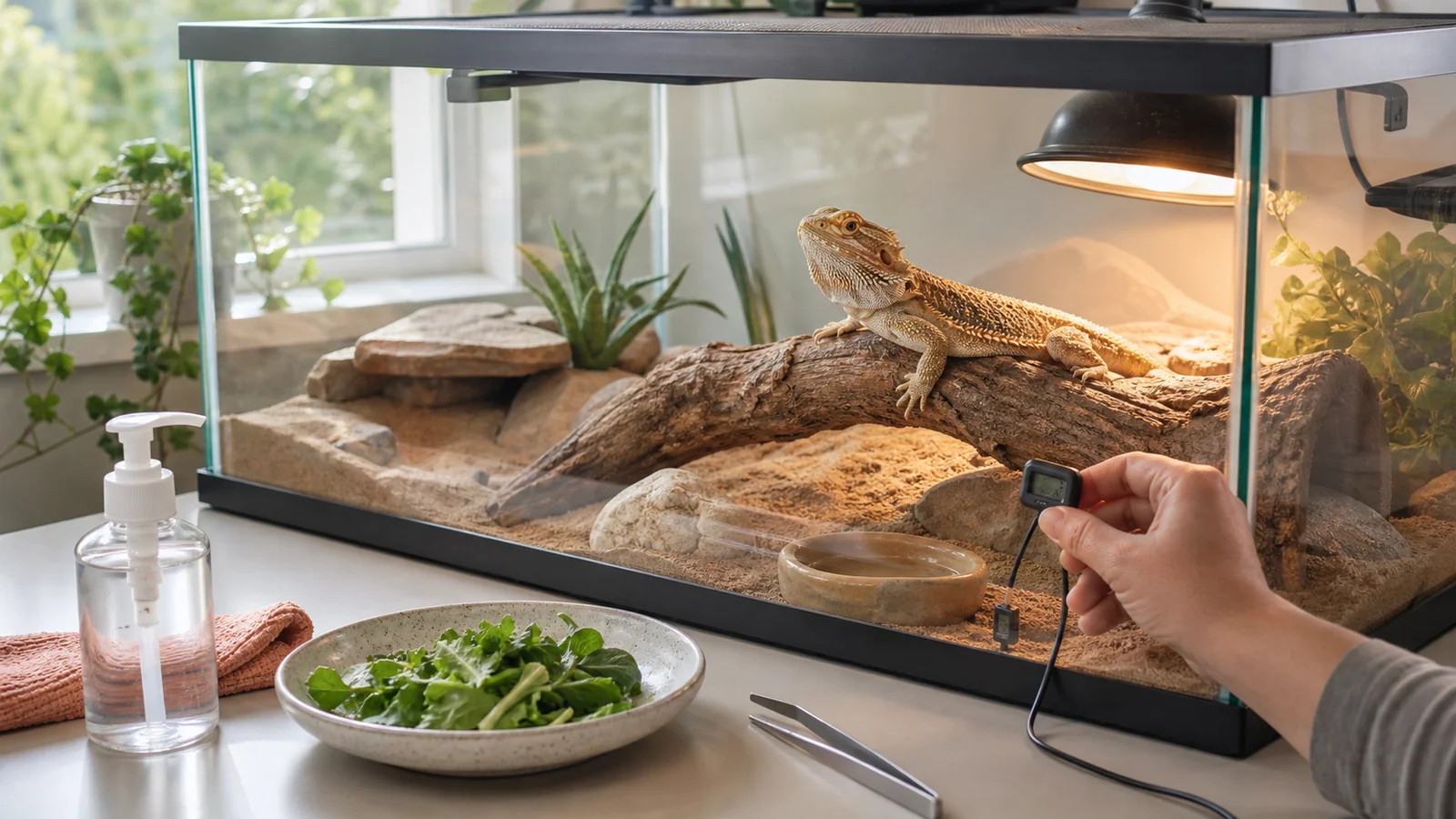
A Bearded Dragon Is Beginner-Friendly Only With The Right Setup
A bearded dragon pet can be calm, visible, and easier to handle than many reptiles. That does not make one low-effort. Bearded dragons need a properly sized enclosure, reliable heat, UVB lighting, careful diet, safe handling, and steady cleaning. The gear matters because the habitat is part of the animal’s health care.
This guide is for dog and cat owners who are considering a first reptile and want a practical buying and setup view. We reviewed reptile veterinary guidance, CDC reptile safety advice, and beginner care recommendations from veterinary and animal-care sources. Use this as a planning guide, then work with a reptile veterinarian or experienced local reptile specialist for animal-specific care.
Quick Verdict
A bearded dragon can be a good pet if you want an alert reptile, have space for a large enclosure, and are willing to monitor heat, light, food, and hygiene every day.
It is not a good impulse pet for:
- Very small apartments without room for a full enclosure
- Children who may handle pets without supervision
- Homes that cannot manage live insects
- Owners who want a cuddly animal
- Anyone unwilling to replace bulbs and check temperatures
- Households with high salmonella risk and weak handwashing routines
If you mainly want a low-maintenance pet, a bearded dragon may disappoint you. If you enjoy habitat setup and routine care, it can be rewarding.
What A Bearded Dragon Needs Before Coming Home
Do not bring the animal home before the enclosure is working. Reptile setups need a test period because heat and light levels can be wrong even when the equipment looks right.
At minimum, plan for:
| Setup need | Why it matters |
|---|---|
| Large enclosure | Adults need room to bask, move, and choose warmer or cooler zones. |
| Basking heat | Digestion, activity, and normal behavior depend on correct heat. |
| UVB lighting | UVB helps reptiles use calcium properly. |
| Temperature gradient | Your dragon needs warmer and cooler areas to regulate its body. |
| Thermometers | Guessing by touch is not accurate enough. |
| Safe substrate | Loose or dusty materials can create risk if used poorly. |
| Hides and climbing surfaces | Dragons need security, enrichment, and basking positions. |
| Food and supplements | Insects, greens, calcium, and vitamin routines vary by age. |
| Cleaning supplies | Reptile hygiene protects both the animal and the household. |
Set up the enclosure, run the lights, measure temperatures, and adjust the layout before adoption day.
Enclosure Size And Layout
Baby bearded dragons are small, but adults are not tiny pets. Many beginners underestimate the enclosure size and then need to upgrade quickly. A cramped setup can make heat gradients harder, reduce movement, and lead to stress.
A practical adult enclosure should give your bearded dragon enough floor space to walk, turn, bask, hide, and cool down. Exact minimums can vary by source and local standards, but the principle is simple: buy for the adult animal when you can, not just the baby.
Inside the enclosure, create zones:
- Basking side with a stable branch or platform
- Cooler side away from direct heat
- Hide or sheltered area
- Food area that stays easy to clean
- Open movement space
- Safe climbing surfaces that cannot collapse
Avoid sharp decor, unstable stacked rocks, and narrow gaps where the lizard can get stuck. Heavy objects should rest on the enclosure floor, not on loose substrate.
Heat, UVB, And Temperature Checks
Heat and UVB are the most important gear categories. A bearded dragon cannot thrive in a room-temperature tank with a random bulb.
You need a basking area, a cooler area, and a way to measure both. Use digital thermometers with probes or a reliable temperature gun for surface checks. Do not rely on stick-on dials alone.
UVB lighting also needs planning. The bulb type, fixture, distance, mesh screen, and replacement schedule all matter. A bulb may still glow after its useful UVB output has dropped, so mark replacement dates on a calendar.
Common setup mistakes include:
- Heat lamp too far from the basking surface
- No real cool side
- UVB blocked by glass or poor placement
- Old UVB bulb still being used
- Thermometer placed in the wrong spot
- Night heat used when the room does not need it
- Bright lights left on without a day-night rhythm
If your dragon is lethargic, not eating, hiding constantly, or holding unusual posture, check the habitat and contact a reptile veterinarian.
Food, Water, And Supplements
Bearded dragons eat a mix of insects and plant foods, with needs changing as they grow. Young dragons usually need more insect protein than adults. Adults often rely more heavily on greens and vegetables. Exact feeding plans should come from current reptile care guidance and your veterinarian.
Plan for:
- Staple leafy greens
- Safe vegetables in rotation
- Appropriately sized feeder insects
- Calcium supplementation
- Vitamin supplementation when advised
- A shallow water dish if your setup uses one
- Separate tools for reptile feeding and cleaning
Do not feed insects larger than your dragon can safely manage. Do not use wild-caught insects because pesticide and parasite risks are hard to control.
Live insects are a real part of the commitment. If someone in the home is not comfortable storing or handling feeder insects, discuss that before buying the reptile.
Handling And Household Safety
Many bearded dragons tolerate handling, but that does not mean every dragon enjoys it or that handling is risk-free. Move slowly, support the body, and avoid grabbing from above like a predator would.
CDC guidance is clear that reptiles can carry salmonella even when they look healthy. That means handwashing is not optional. Reptiles should stay away from kitchens, dining surfaces, baby items, and food-prep sinks.
Use these habits:
- Wash hands after touching the reptile, enclosure, food dishes, or cleaning tools.
- Supervise children around the animal.
- Keep reptiles out of food areas.
- Do not kiss reptiles or hold them near your face.
- Clean reptile gear away from kitchen sinks.
- Keep the enclosure secure from dogs and cats.
- Quarantine new reptiles as advised by a veterinarian or rescue.
If your home includes young children, older adults, pregnant people, or immunocompromised family members, talk with a healthcare professional before bringing a reptile home.
Bearded Dragons With Dogs And Cats
If you already have dogs or cats, treat a bearded dragon enclosure like a protected habitat, not a shared play space. A dog may stare, bark, paw, or knock equipment over. A cat may climb onto the enclosure lid or swipe through openings.
Plan for:
- A sturdy stand that cannot wobble
- A secure screen top
- Cords routed away from chewing
- A room where dogs and cats can be kept out
- Supervised access only
- No nose-to-nose introductions
- No free-roaming reptile time around predators
Even a gentle dog or cat can injure a reptile by accident. The safest approach is separation.
If you are still deciding between reptile types, our guide to beginner low-maintenance pet reptiles compares the tradeoffs more broadly.
Cleaning And Odor Control
A healthy bearded dragon setup should not smell strongly. Odor often means waste, damp substrate, leftover food, or poor cleaning routines.
Build a cleaning kit:
- Paper towels
- Reptile-safe disinfectant
- Dedicated scrub brush
- Disposable gloves if preferred
- Trash bags
- Separate feeding tongs
- Spare food and water dishes
- Hand soap near the cleaning area
Spot clean waste daily. Remove old food before it spoils. Deep clean on a schedule that fits the enclosure, substrate, and animal. Always follow disinfectant instructions, including contact time and rinsing when required.
Do not clean reptile dishes in the same sink where you wash human dishes. If you must use a household sink, sanitize the sink afterward and keep tools separate.
Budget: The Animal Is Not The Expensive Part
The purchase or adoption fee may be the smallest part of the first-year cost. The enclosure, lighting, heating, thermostat or dimming controls, thermometers, decor, supplements, food, and veterinary care add up.
Budget for:
- Adult-size enclosure
- Heat fixtures and replacement bulbs
- UVB fixture and replacement bulbs
- Thermometers or infrared temperature gun
- Basking platforms and hides
- Food dishes and feeding tools
- Supplements
- Feeder insects and greens
- Cleaning supplies
- Reptile vet exam and emergencies
Cheap starter kits can be tempting, but they may include undersized tanks, weak gauges, or bulbs that do not fit your final setup. Compare each item, not just the bundle price.
Signs The Setup Needs Adjustment
Watch your dragon and your measurements together. Behavior alone is not enough, and numbers without observation can miss stress.
Check the setup if you notice:
- Poor appetite
- Constant hiding
- Glass surfing
- Lethargy
- Trouble shedding
- Weak grip or unusual movement
- Staying only on one side of the enclosure
- Dark stress coloration that does not resolve
- Runny stool or repeated digestive problems
Some issues are husbandry-related, but illness can look similar. If a problem persists, contact a reptile veterinarian instead of endlessly changing gear.
FAQ
Is A Bearded Dragon A Good Beginner Pet?
It can be a good beginner reptile for an owner who can manage heat, UVB, diet, cleaning, and safe handling. It is not a low-effort pet.
Do Bearded Dragons Need UVB Light?
Yes. UVB lighting is a core part of most bearded dragon setups because it supports calcium metabolism. Placement, bulb type, and replacement timing matter.
Can A Bearded Dragon Live With Dogs Or Cats?
No. Keep the reptile separated from dogs and cats. Predatory curiosity, pawing, barking, or enclosure damage can harm the dragon.
Are Bearded Dragons Safe For Kids?
They require supervision and careful hygiene. Reptiles can carry salmonella, so children must wash hands and should not handle reptiles without an adult.
What Should I Buy Before Bringing One Home?
Prepare the enclosure, heat, UVB, thermometers, hides, basking surface, food supplies, supplements, and cleaning tools before the animal arrives.
Bottom Line
A bearded dragon pet is a habitat commitment first and a handling pet second. If you can provide a large enclosure, measured heat, correct UVB, safe food, clean routines, and separation from dogs and cats, it can be a fascinating pet. If you want a simple cage, occasional feeding, and casual handling, choose a different animal.
You might also like

The Dalles Pet Limits: Owner Checklist
Check The Dalles pet limits, dog licensing, housing rules, and daily gear before bringing a dog or cat home.

Pet Retailer Chapter 11: Shopping Checklist
A practical checklist for pet owners handling orders, gift cards, autoship, returns, and backups during retailer Chapter 11.
Pet Play: Safe Enrichment for Dogs and Cats
Build safer pet play with the right toys, supervision, rotation, and simple enrichment routines for dogs and cats.