Jumping Spider Pet: Beginner Setup And Care Guide
Is A Jumping Spider Pet Right For You?
A jumping spider pet can be a fascinating choice if you want a tiny, visual, low-space animal to observe. Jumping spiders are active daytime hunters. They do not need walks, grooming, or a large enclosure. Many keepers enjoy how alert they seem when they turn toward movement, climb, build silk retreats, and stalk feeder insects.
That does not make them a hands-on pet in the dog or cat sense. A jumping spider is delicate, short-lived, and easy to injure with a fall, a large prey insect, poor ventilation, or too much moisture. The best owners are patient observers who enjoy building a small habitat and watching behavior instead of expecting cuddling or frequent handling.
This guide focuses on beginner care for commonly kept jumping spiders such as regal jumping spiders and bold jumping spiders. Species needs can vary, so confirm the care range for the exact spider you buy and ask the breeder or seller what the spider has already been eating.
Step 1: Choose The Spider Before You Buy Supplies
Do not start with the cutest enclosure online. Start with the spider’s size, age, and species. A spiderling needs smaller prey and tighter escape prevention than an adult. A mature adult may be calmer to watch but may also have a shorter remaining lifespan. Many jumping spiders live roughly one to two years, and the age at purchase matters.
For beginners, captive-bred spiders are usually the cleaner choice. You are more likely to get feeding history, molt stage, approximate age, and species information. Wild-caught spiders may carry parasites, be stressed by captivity, or be illegal or inappropriate to collect depending on local rules.
Ask these questions before buying:
- What species is it?
- Is it captive-bred or wild-caught?
- What size or life stage is it?
- What has it been eating?
- When did it last molt?
- Has it been housed alone?
- What temperature and humidity has it been kept in?
If the seller cannot answer basic care questions, slow down. A jumping spider pet is small, but it still needs a stable setup and a reliable food plan.
Step 2: Build A Small Vertical Enclosure
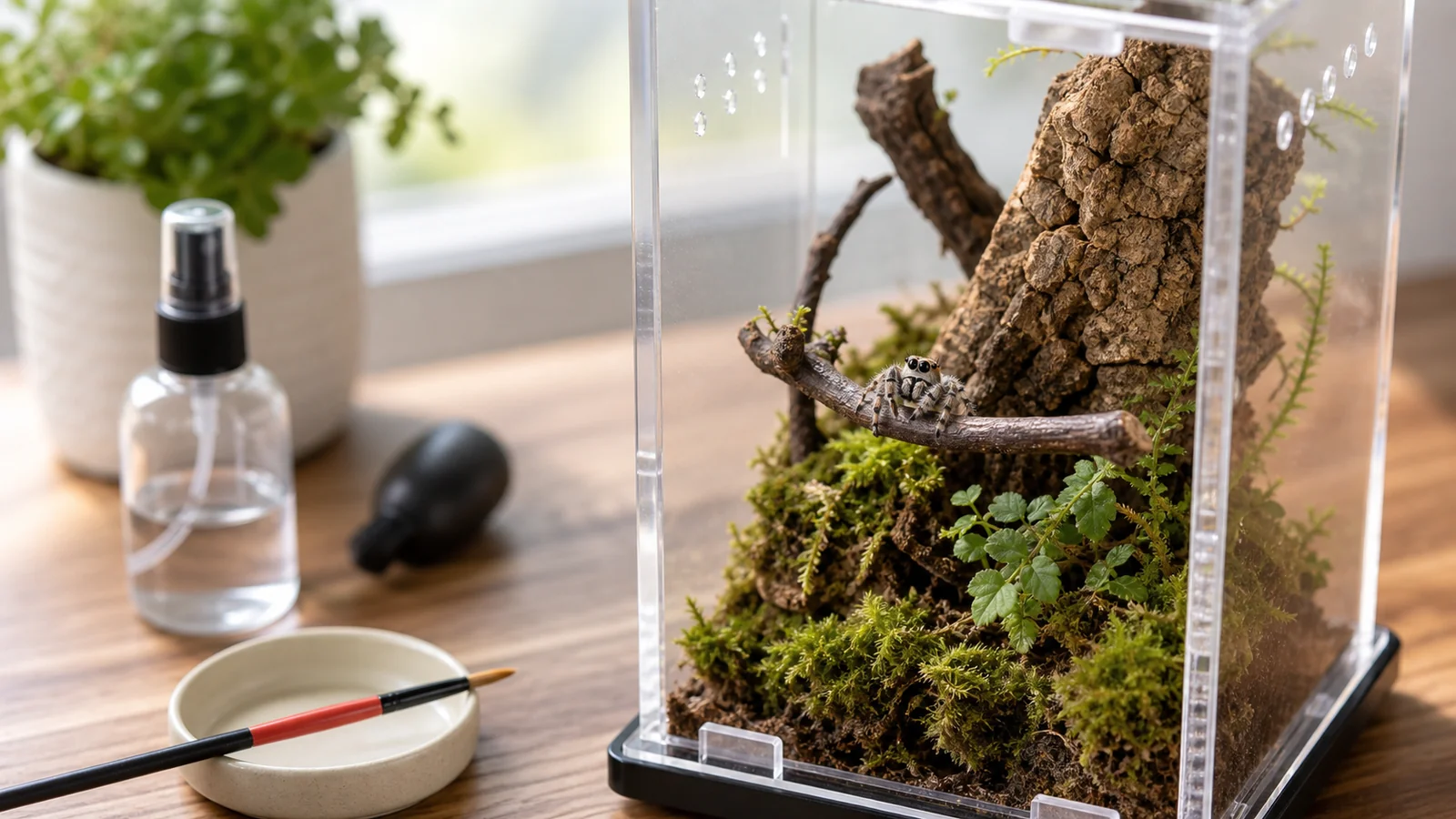
Most beginner jumping spiders need a small, secure, vertical enclosure with cross-ventilation. Taller is usually better than wide because jumping spiders climb, perch, hunt from raised surfaces, and build silk retreats near the top or in protected corners.
A common beginner mistake is buying an enclosure that is too large. A huge habitat may look beautiful, but a tiny spider can struggle to find prey, water droplets, and safe resting spots. Start with a size that fits the spider’s body and hunting ability, then upgrade if needed.
Look for:
- A secure lid or door with no escape gaps
- Ventilation holes on more than one side
- Clear viewing panels
- Room for vertical cork, twigs, or textured climbing pieces
- A layout that lets you open the enclosure without destroying the spider’s top web retreat
- No sharp decor, sticky tape, loose fibers, or exposed glue
Set the enclosure in bright indirect light, not direct sun. Direct sun can overheat a small acrylic or glass habitat quickly. A normal room day-night cycle is usually enough, but avoid a dark shelf where the spider cannot hunt well.
Step 3: Add Climbing, Hides, And Safe Texture
Jumping spiders do not build big prey-catching webs like orb weavers. They use silk as a dragline when jumping and make small hammock-like retreats for resting, molting, and hiding. Your setup should support that behavior.
Use cork bark, clean twigs, small branches, artificial leaves, dried botanicals, or safe live plants if you know how to manage moisture. Build upward. Give the spider several routes from the floor to the top and at least one sheltered top corner.
Keep the bottom simple. A thin layer of clean substrate, sphagnum moss, or paper towel can help with humidity and cleaning, but it should not stay wet. Too much damp material can grow mold and create a poor environment.
Secure decor before the spider moves in. A loose branch that shifts during feeding can injure a spider. Let any safe adhesive cure fully before use, and avoid strong odors inside the enclosure.
Step 4: Manage Temperature, Light, And Humidity
For many commonly kept jumping spiders, ordinary comfortable room temperatures work better than aggressive heating. Avoid heat lamps on tiny enclosures unless you have a species-specific reason and a way to measure the result. Small habitats change temperature fast.
Humidity is more about balance than soaking. The enclosure should offer drinking droplets and enough moisture to support molting, but it should not stay foggy, wet, or stale. Light misting on one wall or one side of the enclosure is usually safer than spraying the spider directly.
Use a small thermometer and hygrometer if your room is dry, cold, or inconsistent. Watch the enclosure after misting. If large droplets pool, wipe them down. If condensation lingers for hours, improve ventilation or mist less.
Never put a deep water dish in a small jumping spider setup. Tiny spiders can drown in water that looks harmless to us. If you use a water source, keep it extremely shallow and escape-friendly, and rely mainly on fine droplets on enclosure walls.
Step 5: Feed The Right Size Prey
Jumping spiders are active hunters. They need live, appropriately sized feeder insects. Common options include fruit flies for spiderlings, small flies, small crickets, tiny roaches, mealworms, or other feeder insects sized for the spider. The prey should usually be smaller than the spider’s body or easy for the spider to handle safely.
Do not feed wild insects from outside. They may carry pesticides, parasites, or other contaminants. Buy from a reliable feeder source or maintain a clean feeder colony.
Feed based on body condition and appetite, not a rigid calendar. Many keepers feed adults every several days to about once a week, but age, prey size, temperature, and individual appetite matter. A very plump abdomen is a reason to wait. Overfeeding can make falls more dangerous and may stress growing spiders.
Remove uneaten prey. Crickets and some other insects can injure a spider, especially during premolt or molting. If your spider ignores food, do not leave a live cricket roaming in the enclosure overnight.
Step 6: Handle Rarely And Low To The Ground
Some jumping spiders tolerate gentle handling. Others do not. Treat handling as optional enrichment, not a requirement. The spider’s safety matters more than your wish to hold it.
If you handle, do it over a table, bed, or low soft surface. Move slowly. Let the spider walk onto you rather than grabbing it. Keep other pets, fans, open windows, and curious children away.
Do not handle a spider that is hiding, molting, newly molted, refusing food, weak, or stressed. Do not pinch the body. Do not cup it tightly in your hand. A bite from a jumping spider is usually not medically serious for most people, but bites can happen if the spider is trapped or crushed. More importantly, rough handling can hurt the spider.
For children, observation is usually better than holding. A magnifying viewer, a feeding routine with adult supervision, or a simple care log can make the pet interesting without putting the spider at risk.
Step 7: Protect The Molt
Molting is one of the most important care moments. A growing jumping spider sheds its old exoskeleton and hardens after the molt. During that time it is vulnerable, soft-bodied, and easy to injure.
Signs of premolt can include hiding more, building a thicker silk retreat, refusing food, or becoming less active. When you see those signs, stop offering risky prey, keep moisture steady, and leave the retreat alone.
During and after molt:
- Do not handle the spider
- Do not open the retreat
- Do not leave live prey inside
- Mist lightly if the enclosure is too dry
- Wait until the spider is active again before feeding
If a spider looks stuck in a molt, avoid pulling on it. That can cause serious injury. Improve safe humidity and contact an experienced keeper or exotic veterinarian if help is available, but understand that medical options for very small arachnids are limited.
Common Problems And What To Do
If your spider will not eat, first check molt stage. Many jumping spiders refuse food before and after molting. If the spider is not molting, try smaller prey, a different feeder insect, or feeding at a brighter time of day.
If the enclosure smells musty or shows mold, it is too damp or poorly ventilated. Remove moldy substrate or decor, improve airflow, and mist less. A jumping spider needs moisture access, not a swamp.
If the spider falls often, simplify the enclosure. Add more textured surfaces, reduce the height for an older spider, and avoid slick walls as the only climbing route. Senior spiders may need a less vertical setup as their grip and silk use decline.
If prey hides in the enclosure, use a feeding cup or offer a different feeder. The spider should not have to search through deep moss for a cricket.
If your spider stays at the top, that is often normal. Many jumping spiders prefer elevated perches and top retreats. Make sure you can open the enclosure without tearing that home apart.
Advanced Tips For Better Care
Keep a simple care log. Note feeding dates, prey type, misting, molts, and behavior changes. Patterns help you avoid overfeeding and catch problems early.
Use tongs carefully. Some spiders accept tong feeding, while others are startled by it. If the spider backs away, do not chase it around the enclosure.
Quarantine new spiders. If you keep more than one, house them separately and keep tools clean. Jumping spiders are solitary and should not share an enclosure.
Think about your household before choosing any exotic pet. If you want a more traditional beginner exotic with established care resources, our guide to the best beginner low-maintenance pet reptiles may help you compare the trade-offs.
Do not release a captive spider outdoors unless it is native to your exact area and local guidance supports release. Captive animals can carry problems into the wild, and non-native species should not be introduced.
FAQ
Are jumping spiders good pets for beginners?
They can be good beginner invertebrates for careful owners who want an observation pet. They are not a good fit for people who want frequent handling or a long-lived companion.
What size enclosure does a jumping spider need?
It depends on the spider’s size and species, but beginners usually do best with a small vertical enclosure that is secure, ventilated, and not so large that the spider cannot find prey or water droplets.
What do pet jumping spiders eat?
They eat live feeder insects such as fruit flies, small flies, small crickets, tiny roaches, mealworms, or other appropriately sized prey. Avoid wild-caught insects.
Do jumping spiders bite?
They can bite if trapped or crushed, but they do not seek out people. For most people, the bigger risk in handling is injuring the spider, not being bitten.
How often should I mist a jumping spider enclosure?
Mist lightly enough to create small drinking droplets without soaking the habitat. Frequency depends on species, ventilation, room humidity, and molt stage. Watch the enclosure rather than following a blind schedule.
Bottom Line
A jumping spider pet is best for someone who enjoys tiny details: a clean enclosure, safe feeder insects, careful misting, and patient observation. Set up the habitat before buying the spider, keep handling rare and low-risk, and treat molts as quiet time. If you want a small pet with visible behavior and minimal space needs, a captive-bred jumping spider can be rewarding. If you want a pet to cuddle, carry around, or keep for many years, choose a different companion.
You might also like
Pet Lizards for Beginners: Setup And Care Basics
Learn how to choose a beginner pet lizard, build the right habitat, feed safely, and handle with less stress.
How To Handle A Pet Snake Safely
Handle a pet snake with calmer timing, better body support, safer hygiene, and fewer beginner mistakes.
Petting Bearded Dragon Safely: Calm Handling Basics
Learn when and how to pet a bearded dragon, read stress signals, support the body, and keep handling hygienic.